Chinese Study: Replacing 15% of Chemical Fertilizer with Organic Fertilizer Can Reduce N₂O Emissions from Tobacco Fields
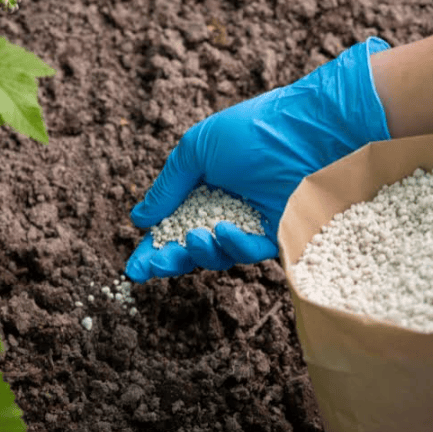
en.Wedoany.com Reported - A new study from Nanjing Agricultural University shows that partially replacing mineral nitrogen fertilizer with organic fertilizer can help tobacco farmers maintain an active soil nitrogen cycle while reducing nitrous oxide (N₂O) emissions.
Nitrogen fertilizer is essential for crop production, but excessive application can lead to soil degradation, nutrient loss, and nitrous oxide emissions. Nitrous oxide is a greenhouse gas with a warming effect far stronger than carbon dioxide over a 100-year timescale.
The study was published in the journal Nitrogen Cycling. Corresponding author Zhengqin Xiong stated that organic substitution not only reduces the amount of mineral fertilizer applied but also reshapes the microbial processes controlling soil nitrogen production, consumption, and release, creating opportunities for more climate-friendly nutrient management.
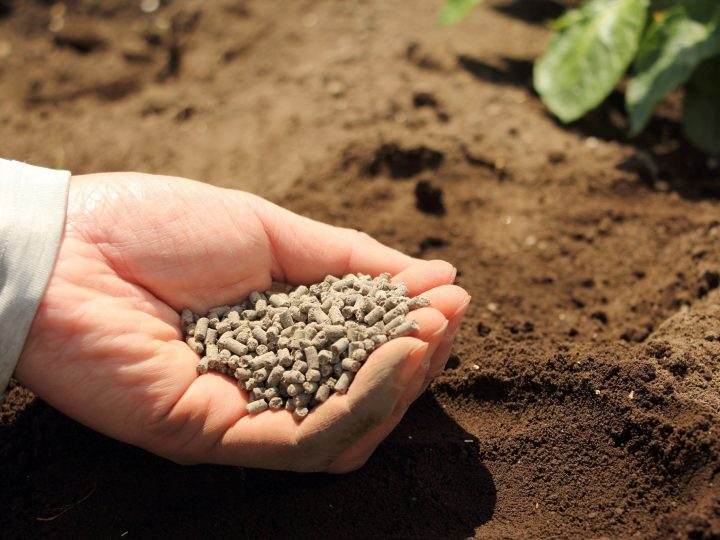
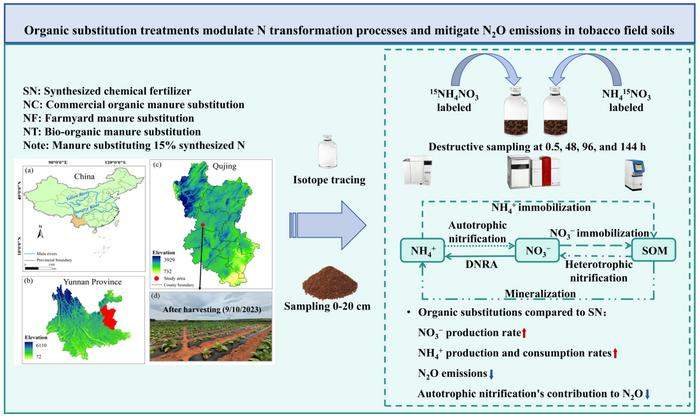
Researchers conducted experiments in tobacco fields in Qujing City, Yunnan Province, where tobacco is commonly grown on acidic red soils. These soils have limited organic matter content and are prone to acidification, low nitrogen use efficiency, and greenhouse gas losses. The study compared four fertilization treatments: application of mineral nitrogen fertilizer alone, and replacement of 15% of mineral nitrogen input with commercial organic fertilizer, traditional farmyard manure, or bio-organic fertilizer containing the beneficial fungus Trichoderma viride.
After tobacco harvest, researchers collected soil samples and used nitrogen-15 isotope tracing techniques to track nitrogen migration across different soil pools. Compared with mineral fertilizer alone, all three organic substitution treatments increased total nitrate production rates, ammonium production rates, and ammonium consumption rates. Autotrophic nitrification, the microbial process converting ammonium to nitrate, was particularly active in soils treated with farmyard manure and bio-organic fertilizer.
Despite higher nitrogen transformation activity, cumulative nitrous oxide emissions from organic substitution treatments were significantly lower than those from the mineral fertilizer treatment. The cumulative emissions ranked as follows: mineral fertilizer, farmyard manure, commercial organic fertilizer, and bio-organic fertilizer, but the differences among the three organic treatments were not statistically significant. Isotope analysis indicated that autotrophic nitrification was the largest source of nitrous oxide, accounting for 60% to 67% of total emissions across treatments, but organic substitution reduced the amount of nitrous oxide produced through this pathway.
The bio-organic fertilizer treatment exhibited the highest ammonium production rate and nitrate consumption rate, along with the lowest cumulative nitrous oxide emissions in the experiment. Researchers believe that bio-organic fertilizer may improve soil structure, aeration, carbon availability, and microbial activity, supporting rapid nitrogen cycling while reducing the proportion of nitrogen lost as nitrous oxide. The study also found that organic substitution altered the abundance of microbial genes involved in nitrification and denitrification processes.
The authors noted that higher tracer additions were used in the isotope incubation experiments to ensure measurement accuracy, and the reported transformation rates are potential rates under controlled conditions. However, comparisons among treatments still provide clear evidence that partial organic substitution can improve soil nitrogen dynamics and reduce nitrous oxide emissions from tobacco fields. These findings offer practical support for fertilization strategies that reduce reliance on mineral nitrogen, improve soil quality, and mitigate agricultural greenhouse gas emissions.
Related Products


714CD Series C-Band Weather Radar
Chengdu Zhongdian Jinjiang Information Industry Co., Ltd.
4HS-8 High-efficiency Peanut Inverted-laying Harvester
Hebei Yongfa Hongtian Agricultural Machinery Manufacturing Co., Ltd.
Industrial and Commercial Point-Type Gas Detector
Jinan Benan Technology Development Co., Ltd.