IMDEA in Spain and Lawrence Berkeley in the US Develop Algorithm to Analyze 3D Printer Variability
en.Wedoany.com Reported - IMDEA Materials Institute in Spain, in collaboration with the Lawrence Berkeley National Laboratory (LBNL) in the United States, has developed an algorithm capable of identifying performance deviations among theoretically identical manufacturing equipment and determining the most suitable optimization strategies accordingly. The related paper was published in the journal Advanced Engineering Informatics, addressing a long-standing pain point in automated manufacturing: even equipment of the same brand and model may exhibit inconsistent actual performance. This variability can accumulate and induce defects in large-scale production processes, such as parallel operations in 3D printing farms.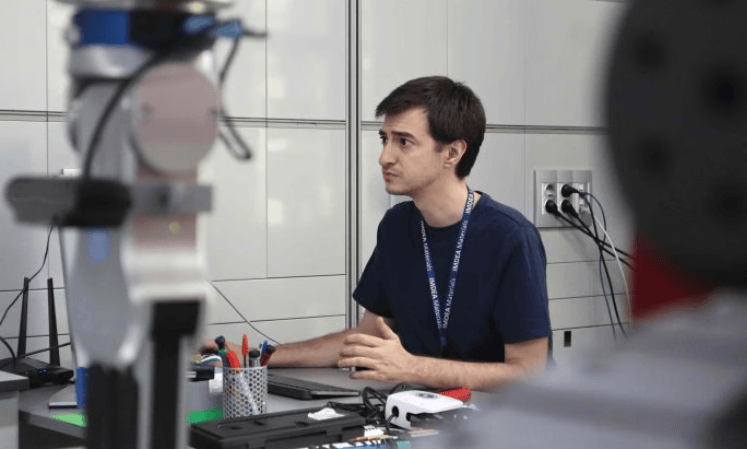
The system operates in two steps: first, it diagnoses each piece of equipment to establish a personalized performance profile; then, it quantifies the degree of deviation among devices through statistical analysis. Based on the analysis results, the system adopts a joint optimization strategy for devices with high similarity. If significant differences are detected, it instead formulates individual optimization plans for each device, prioritizing processing accuracy over the efficiency gained from a unified approach.
During validation, the research team selected three theoretically identical 3D printers as test subjects. The algorithm identified measurable differences among these devices and determined that each required an independent optimization path rather than a unified treatment. Specifically, distribution analysis and divergence metrics pointed to individual optimization: the density estimates of printed particles showed clear separation across devices, with large pairwise divergence values, indicating that the actual operating ranges of each printer did not overlap.
The research team noted that after implementing individual optimization, "the weight of printed parts converged significantly faster and with much smaller errors compared to treating all devices uniformly without correctly correcting individual deviations." They further stated, "Even equipment from the same batch may have its own operational 'personality.' This system learns these differences and leverages them to determine whether it is more efficient to treat them as a team or as independent individuals. This not only improves precision but also saves resources by avoiding failed experiments, marking an important step toward fully automated laboratories and factories in the future."
Although the validation focused on 3D printing, the research team indicated that the same method can be extended to other fields reliant on high-throughput experiments, including new material discovery, chemical synthesis, and sensor calibration.
Related Products


Pneumatic high-pressure wear-resistant ball valve
Zhejiang Deca Control Valve Meter Co., Ltd.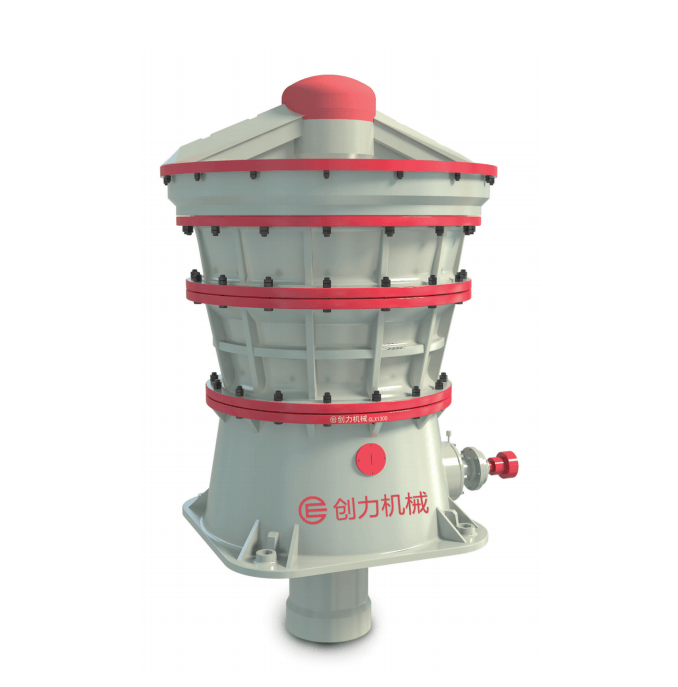
CLX Series Intelligent Hydraulic Gyratory Crusher
Guangdong CHUANGLI intelligent machinery Equipment Co., LTD

High-Speed Railway Lifting, Transporting, and Erecting Equipment: Integrated Transport and Erection Machine
Hanjiang Heavy Industry Co., Ltd. of China Railway 11th Bureau Group

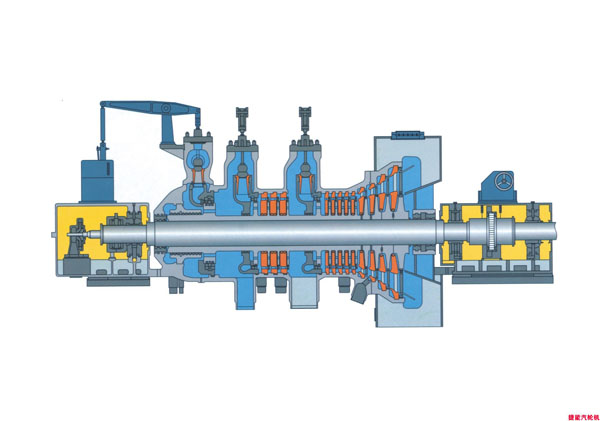
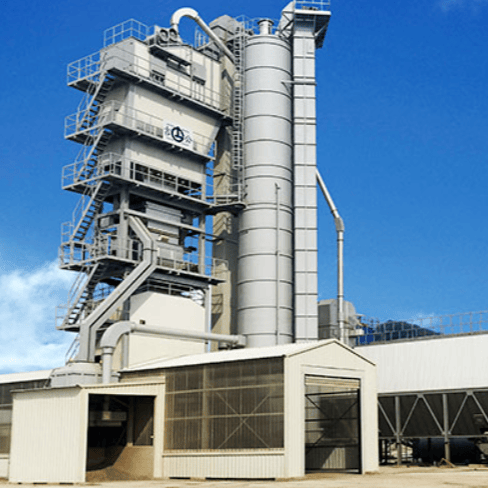
LBH4000 Batch Environmental Protection Asphalt Mixing Plant | Asphalt Batching Plant | Asphalt Mixing Plant
Jilin Province Road Construction Machinery Co., Ltd.