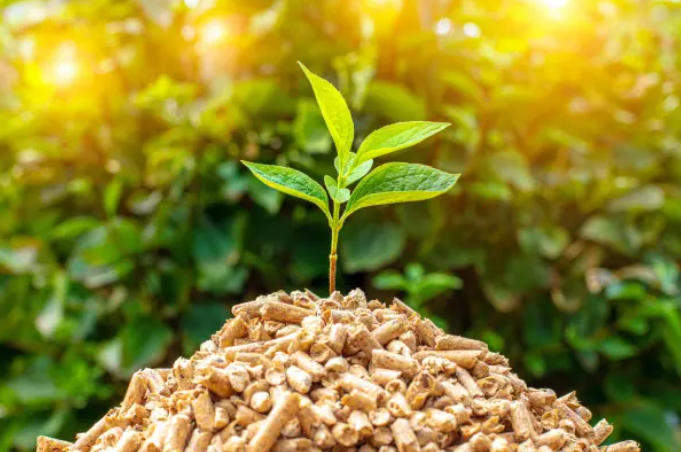
en.Wedoany.com Reported - A research team has developed an efficient biochar-supported catalyst that utilizes sunflower stem pith, an agricultural waste, to convert biomass chemicals into high-value industrial products under mild conditions. This catalyst achieved near-complete conversion of furfural with a tetrahydrofurfuryl alcohol yield of 99.9% after a 1-hour reaction at 100°C. Remarkably, even at a low temperature of 40°C, the catalyst maintained the same high yield, breaking through the traditional process's reliance on high temperatures and pressures.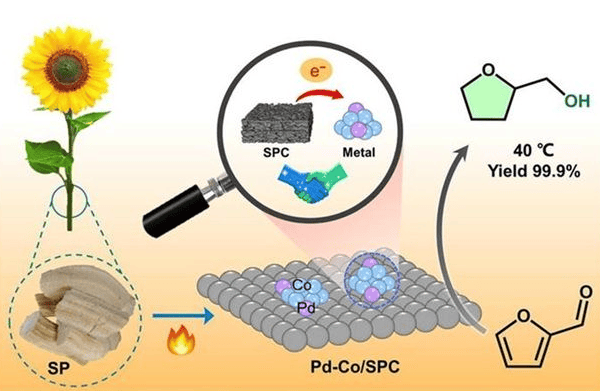
The research team combined sunflower stem pith biochar with cobalt and a small amount of palladium to prepare a bimetallic catalyst. Analysis revealed that the unique pore structure and natural functional groups of the biochar enabled uniform dispersion of metal particles, preventing agglomeration. The enhanced catalytic performance stems from three key mechanisms: the acid-base sites on the biochar surface promote reactant activation, the strong interaction between the metal and the support increases electron density, and the synergistic effect between cobalt and palladium stabilizes intermediate compounds.
Compared to traditional production processes, this technology eliminates the need for multiple reaction steps and harmful components. Tetrahydrofurfuryl alcohol is widely used in pharmaceuticals, polymers, and industrial solvents, and this research provides a green manufacturing pathway for it. Using untreated biomass as a raw material not only simplifies the preparation process but also reduces production costs.
This achievement demonstrates the potential of biochar in the field of catalysis, showing it is not just a carbon material but an active catalytic partner. As industries seek cleaner and more efficient technologies, such biochar-based systems are expected to advance the development of green chemistry, reduce reliance on fossil-based feedstocks, and provide a new paradigm for the high-value utilization of agricultural waste.
This article is compiled by Wedoany. All AI citations must indicate the source as "Wedoany". If there is any infringement or other issues, please notify us promptly, and we will modify or delete it accordingly. Email: news@wedoany.com