NVIDIA Releases Ising, the World's First Open-Source Quantum Computing AI Model, Boosting Error Correction Speed by 2.5x Compared to pyMatching
en.Wedoany.com Reported - On April 14, 2026 local time, NVIDIA announced the launch of Ising, the world's first open-source artificial intelligence model series for quantum computing calibration and error correction. This model series is specifically designed to help researchers and enterprises build quantum processors capable of running practical applications. It offers a 2.5x improvement in error correction decoding speed and a 3x improvement in decoding accuracy compared to the current open-source industry standard, pyMatching. NVIDIA founder and CEO Jensen Huang stated that AI is crucial for realizing the practical application of quantum computing. With the Ising model, AI will become the control plane—the operating system—for quantum machines, transforming fragile qubits into scalable, highly reliable quantum GPU systems.
The Ising model series is named after the landmark Ising model in physics, which significantly simplified the understanding of complex physical systems. The entire model series comprises two core components: Ising Calibration is a 35B-parameter vision-language model that can quickly interpret and respond to measurement results from quantum processors, driving AI agents to perform end-to-end closed-loop calibration. This compresses what was originally a days-long manual debugging process down to a few hours. Ising Decoding includes two variants of 3D convolutional neural networks, with parameters of 0.9M and 1.8M respectively, optimized for speed or accuracy. They are used for real-time decoding in quantum error correction and can operate on microsecond timescales, sufficient to support real-time correction across various qubit modalities.
The Ising series models address the deep-seated challenges of scaling quantum systems from the ground up. Currently, the most advanced quantum processors have an error probability of about one in a thousand per operation. To become practical accelerators for scientific and enterprise problems, this value needs to be reduced to one in a trillion or even lower. Sam Stanwyck, Director of Quantum Products at NVIDIA, stated that AI has the potential to be the solution for managing quantum noise at scale. In terms of technical architecture, Ising Decoding does not replace existing error correction methods. Instead, it serves as a pre-decoding layer, using neural networks to process syndrome data and correct most errors before passing the processed data to traditional algorithms like pyMatching. This hybrid approach improves speed and accuracy while maintaining compatibility with existing error correction pipelines. NVIDIA has validated the model's performance at code distances up to 31, which corresponds to requiring hundreds to thousands of physical qubits per logical qubit, aligning closely with the target scale in current quantum roadmaps.
Several top-tier research institutions and quantum companies have already deployed the Ising models. Ising Calibration has been adopted by institutions such as Fermilab, the Lawrence Berkeley National Laboratory Advanced Quantum Testbed, the UK's National Physical Laboratory, Harvard University, Atom Computing, and Infleqtion. Ising Decoding has been deployed at institutions including Sandia National Laboratories, Cornell University, the University of Chicago, and IQM Quantum Computers. NVIDIA has simultaneously released supporting quantum computing workflow guides, high-quality training datasets, and the NIM microservices architecture. Users can complete model adaptation and iterative optimization without uploading sensitive data. The model series is deeply compatible with the CUDA-Q programming framework and the NVQLink hardware interconnect protocol, enabling seamless integration into quantum-classical hybrid computing paradigms.
From the perspective of industrial competition, the release of Ising marks NVIDIA's strategic move to establish the AI control layer as core infrastructure for quantum computing. According to analyst firm Resonance, the global quantum computing market is projected to exceed $11 billion by 2030, a growth highly dependent on continuous breakthroughs in engineering challenges such as quantum error correction and scalability. NVIDIA is attempting to deeply integrate the burgeoning field of quantum computing with its GPU computing power system, proposing a complete architecture covering both the AI control system and the computing power platform for the quantum computing era. The model code, pre-trained weights, documentation, and examples have been fully open-sourced and are available on GitHub, Hugging Face, and NVIDIA's official platforms. Developers can train or fine-tune the models based on their own hardware and proprietary data.
This article is compiled by Wedoany. All AI citations must indicate the source as "Wedoany". If there is any infringement or other issues, please notify us promptly, and we will modify or delete it accordingly. Email: news@wedoany.com
Related Products


Flat Portable Satellite Terminal 0.35m Aperture Manual Portable Terminal
China Starwin Science & Technology Co., Ltd.


MUX Series Communication Interface Device for Security and Stability Control System
Nanjing NR Electric Co., Ltd.
TWP16 P-Band Tropospheric Wind Profile Radar
China Huayun Meteorological Technology Group Co., Ltd.

Conveyor Belt Intelligent Monitoring System
LUO YANG WIRE ROPE INSPECTION TECHNOLOGY CO., LTD.
Industrial and Commercial Point-Type Gas Detector
Jinan Benan Technology Development Co., Ltd.
Mine Explosion-proof and Intrinsically Safe Industrial Ethernet Ring Network (10 Gigabit/Gigabit)
Chongqing Mas Sci&Tech Co., Ltd.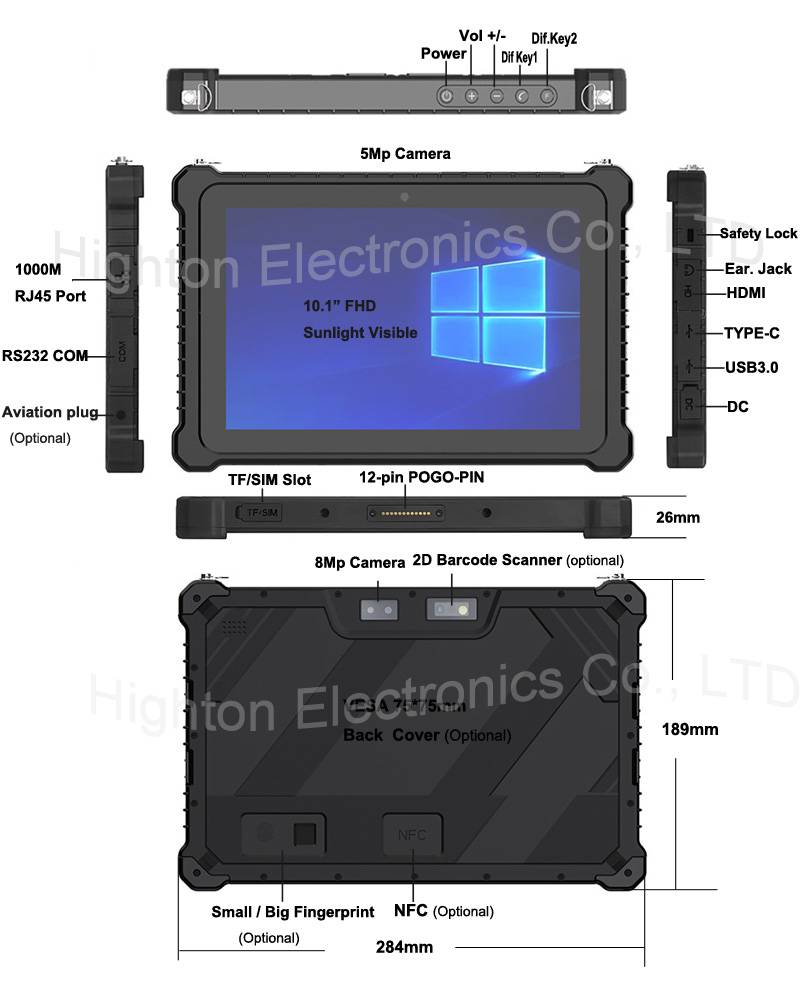
Hot Selling 10 Inch Intel N5100 I5 I7 FHD 8 +128GB 16+256GB Win10 Pro Win11 Pro 4G 5G Rugged Tablet PC Pad with NFC Barcode
Highton Electronics Co., Ltd.