Schneider Electric of France Delivers Over $290 Million in AI Infrastructure to TeraWulf in the US
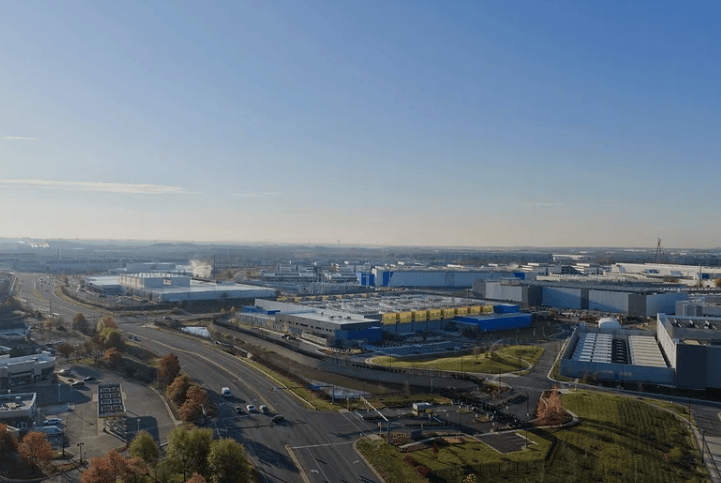
en.Wedoany.com Reported - Schneider Electric, a French energy management and automation company, recently announced that it has delivered over $290 million in AI infrastructure solutions in phases to TeraWulf's Lake Mariner data campus near the town of Barker, New York, in collaboration with its liquid cooling subsidiary, Motivair by Schneider Electric. Once fully built out, the campus is expected to support up to 750 megawatts of power demand, targeting artificial intelligence, high-performance computing, and cloud computing workloads.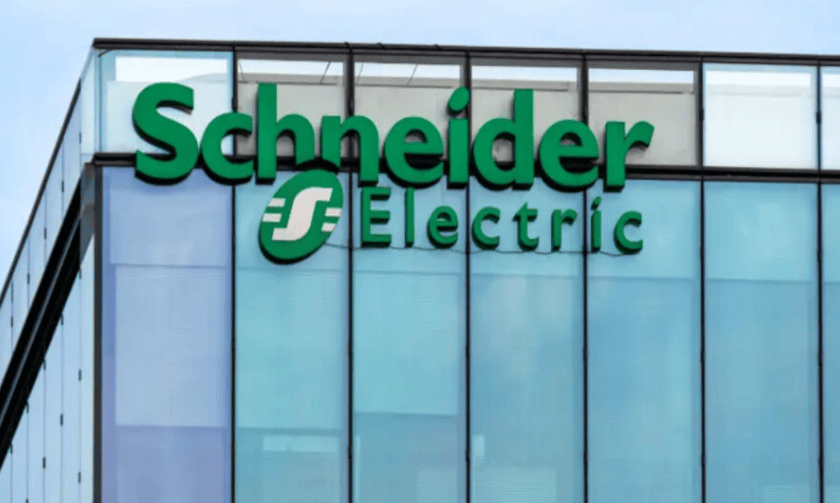
The core of this delivery is not a single equipment purchase but revolves around the most critical needs for AI data centers: power access, liquid cooling capabilities, digital monitoring, and engineering delivery speed. TeraWulf, originally operating high-energy-consumption digital infrastructure, has been accelerating its transition to an AI and high-performance computing hosting platform in recent years, with the Lake Mariner campus being a key project in this transformation. The scope provided by Schneider Electric and Motivair covers integrated power infrastructure, liquid cooling equipment, technical design, engineering services, and operations and maintenance support. This specifically includes Galaxy VX uninterruptible power supplies, Galaxy lithium-ion battery systems, Motivair coolant distribution units, in-rack manifolds, ChilledDoors, NetShelter cabinets and enclosures, and EcoStruxure IT Data Center Expert monitoring software. For high-density AI clusters, server deployment itself is no longer the sole challenge; power supply stability, liquid cooling systems, monitoring platforms, construction timelines, and on-site engineering coordination are collectively determining whether computing power can be operationalized according to contract milestones.
The Lake Mariner campus is built upon existing industrial sites and power infrastructure. Located in the town of Barker, outside Buffalo, New York, official information indicates that approximately 89% of the electricity from the New York regional grid connected to this site is zero-carbon, and it possesses significant remaining power capacity.
From an industry logic perspective, the collaboration between TeraWulf and Schneider Electric reflects that US AI infrastructure construction is shifting from "securing chips" to "securing available power and deliverable data center space." AI training and inference workloads impose higher demands on per-rack power density, cooling efficiency, and continuous operation capabilities. Traditional data center retrofits are often constrained by power approvals, transformer and distribution configurations, UPS configurations, cooling systems, and construction organization. Schneider Electric emphasizes that "time to power" has become a core constraint for AI growth in the US. Operators need to combine advanced power infrastructure, service capabilities, and energy technology expertise to support large-scale AI data center deployments. By partnering with Schneider Electric and Motivair, TeraWulf is integrating on-site power, AI automation, advanced liquid cooling, and digital monitoring into a single project, aiming to transform a traditional industrial site into a series of AI-dedicated data centers within 12 months.
Customer-side demand also supports this project. The Lake Mariner campus has secured long-term lease commitments from anchor tenants such as Core42 and Fluidstack, with Fluidstack receiving support from Google. For TeraWulf, synchronizing customer commitments with power infrastructure delivery helps convert energy assets previously more associated with Bitcoin mining into long-term contract-based infrastructure for AI cloud platforms and high-performance computing clients. For Schneider Electric, this project further strengthens its role as a supplier of power, liquid cooling, monitoring software, and engineering services for AI data centers, and demonstrates that AI infrastructure investment is driving new orders in upstream sectors such as electrical equipment, energy storage batteries, liquid cooling systems, cabinets, and data center software.
Future variables will focus on the phased construction progress of the Lake Mariner campus, the deployment pace of core tenants, grid access, and the long-term operational performance of the liquid cooling system. As US AI data center construction continues to be constrained by power capacity and cooling capabilities, platforms that can integrate old industrial sites, power resources, liquid cooling systems, and long-term customer contracts will gain higher scarcity in the AI infrastructure market. TeraWulf's receipt of over $290 million in deliveries also indicates that the AI computing power competition is extending simultaneously along three lines: "power availability + engineering delivery capability + high-density cooling."
This article is compiled by Wedoany. All AI citations must indicate the source as "Wedoany". If there is any infringement or other issues, please notify us promptly, and we will modify or delete it accordingly. Email: news@wedoany.com
Related Products




Mine Explosion-proof and Intrinsically Safe Industrial Ethernet Ring Network (10 Gigabit/Gigabit)
Chongqing Mas Sci&Tech Co., Ltd.
GYTA Type Non-Self-Supporting Aerial/Duct Optical Cable
TONGDING INTERCONNECTION INFORMATION CO., LTD.


G.652.D Wavelength-extended Non-dispersion Shifted Single-mode Optical Fiber
HONGAN GROUP CO., LTD.