en.Wedoany.com Reported - BlackBerry's QNX division has announced a deepening of its partnership with NVIDIA. The collaboration will integrate QNX OS for Safety 8.0 with the NVIDIA IGX Thor platform and Halos Safety Stack, enabling developers to build and deploy safety-critical edge AI systems for regulated environments such as robotics, medical technology, and industrial applications.
The NVIDIA IGX Thor platform is designed to meet the stringent demands of edge AI in terms of computing, functional safety, and reliability, covering various scenarios including autonomous mobile robots, surgical robots, medical imaging, and industrial automation. By combining QNX's deterministic real-time operating system with NVIDIA's accelerated computing capabilities, this integrated solution supports real-time control and safety certification, facilitating rapid prototyping and scalable deployment of AI-driven functionalities.
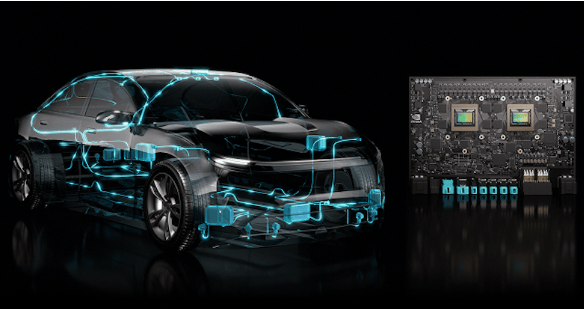
John Wall, President of QNX, stated: "As robotic, medical, and industrial systems become increasingly autonomous and software-defined, safety and determinism must be core considerations." "Integrating QNX OS for Safety 8.0 with NVIDIA IGX Thor and Halos Safety Stack provides a reliable real-time security foundation and functional safety platform for edge AI." "This collaboration builds upon our previous integration with the NVIDIA Drive AGX Thor developer kit, extending the proven architecture from the automotive domain to more regulated intelligent systems."
This advancement continues the long-term collaboration between QNX and NVIDIA, which previously involved cooperation on automotive and autonomous vehicle development. The latest integration emphasizes applying safety architectures and real-time capabilities to robotic, medical, and industrial edge systems, promoting the adoption of safety-critical AI technologies.
Currently, early access registration for the NVIDIA IGX Thor developer kit with QNX is open to selected customers. The high-performance foundational software provided by QNX supports various industries including robotics, automotive, medical devices, and industrial control. Its technology is adopted by nine of the world's top ten medical device manufacturers, helping organizations explore innovation in edge computing and virtualization.
This article is compiled by Wedoany. All AI citations must indicate the source as "Wedoany". If there is any infringement or other issues, please notify us promptly, and we will modify or delete it accordingly. Email: news@wedoany.com