en.Wedoany.com Reported - Shanghai Interstellar Glory Space-Based Computing Technology Co., Ltd. recently completed its registration and landing in Lingang Songjiang Technology City, Jiuting Town, Songjiang District, with a registered capital of 100 million yuan, wholly owned by Interstellar Glory Space Technology Group Co., Ltd. According to the Lingang Group, the project Interstellar Glory is launching this time is not a traditional rocket manufacturing initiative, but instead focuses on the frontier field of space-based computing. The new company's business primarily covers key areas such as satellite applications, artificial intelligence, cloud computing, and data processing.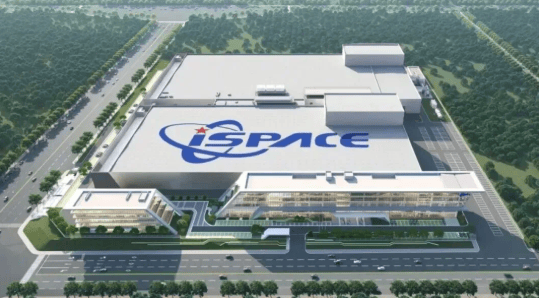
Space-based computing refers to deploying AI computation and data processing capabilities on satellites and space-based platforms, completing the entire process of "acquisition-computation-output" in orbit, thus transitioning from "ground-based computing of space data" to "in-space computing of space data." Compared with ground data centers, the space-based computing solution can significantly reduce data transmission bandwidth consumption, shorten response latency, and leverage the natural conditions of continuous solar power supply and low-temperature heat dissipation in space to effectively overcome the long-standing energy and thermal management bottlenecks faced by ground data centers. According to the Lingang Group, this project is not only a practice of Shanghai seizing opportunities in commercial aerospace development but also a result of coordinated efforts between districts and municipalities to promote implementation. During the 2025 "China Space Day," Interstellar Glory expressed investment intentions at a symposium of key commercial aerospace enterprises in Shanghai. The municipal and district investment promotion departments followed up continuously, and with the coordination of the Lingang Group, the project was completed within a year. After settling in, the project will fill the capability gap in in-orbit data processing and computing power services for the Songjiang satellite internet industry cluster.
Interstellar Glory is one of China's earliest private commercial aerospace enterprises, established in 2016. Over more than a decade, the company has achieved multiple technological breakthroughs: in 2019, the Shuang Qu Xian-1 (SQX-1 Y1) became the first Chinese private carrier rocket to reach orbit; in 2023, the Shuang Qu Xian-2 (SQX-2) completed China's first reusable rocket vertical takeoff and landing and reused flight tests; and in 2026, the Shuang Qu Xian-3 (SQX-3), a reusable liquid carrier rocket, has entered the final sprint phase before its maiden flight, aiming to achieve the dual goals of "orbital insertion on first flight + first-stage sea recovery." In February 2026, Interstellar Glory completed its D++ round of financing, raising 50.37 billion yuan, setting a new record for single financing rounds among Chinese private commercial aerospace enterprises. The company has officially initiated its IPO process. This space-based computing project marks a key layout in the company's transformation from a "rocket manufacturer" to a "provider of integrated space-to-ground solutions," leveraging its own rocket launch capability as a foundation to extend deeply into high-value-added space-based data and computing services.
Currently, China's space-based computing industry is accelerating from technological verification to engineering deployment. The Three-Body Computing Constellation, jointly created by Zhijiang Lab and global partners, successfully sent its first 12 computing satellites into predetermined orbits in May 2025, becoming the country's first in-orbit interconnected space computing constellation. Guoxing Aerospace is advancing the "Stars Computing" plan, which aims to build a space-based AI computing network composed of 2,800 computing satellites to form a training, inference, and computing network covering the globe. At the policy level, Songjiang, guided by the "Several Measures to Accelerate the High-Quality Development of Commercial Aerospace and Space Information Industry (Trial)," systematically opens up the entire process of "investment-research-production-launch-testing-verification-application-chain," continuously lowering the threshold for enterprise engineering and commercialization. Shanghai has built a complete commercial aerospace industry chain covering "rockets, satellites, terminals, and services," gathering over 240 related enterprises, with an annual batch manufacturing capacity of 50 commercial rockets and 600 commercial satellites.
Globally, space-based computing is becoming a new competitive focus in commercial aerospace. In January 2026, SpaceX submitted a satellite authorization application to the U.S. Federal Communications Commission for an "orbital data center system," planning to deploy a space computing cluster consisting of up to 1 million satellites, providing 100 gigawatts of AI computing power. Starcloud, a startup backed by NVIDIA, successfully launched the first space AI server equipped with H100 chips into orbit in November 2025. Google has simultaneously launched the "Solar Catcher" plan, exploring the deployment of AI data centers in space. As space-based computing evolves from concept validation to engineering deployment, enterprises with rocket launch capabilities are taking the initiative in industry integration. Interstellar Glory's landing of the space-based computing project in Shanghai this time represents a strategic move along the deeply coupled path of "launch capability + computing power."
This article is compiled by Wedoany. All AI citations must indicate the source as "Wedoany". If there is any infringement or other issues, please notify us promptly, and we will modify or delete it accordingly. Email: news@wedoany.com