en.Wedoany.com Reported - South Carolina has secured over $40 million in federal directed investments in 2026 to improve stormwater systems across the state. This funding includes approximately $30.27 million in supplemental grants announced by the U.S. Environmental Protection Agency, along with additional allocations provided to coastal municipalities earlier in the same year, including $9.3 million for Charleston's stormwater system and $4.6 million for Mount Pleasant. These investments target drainage networks in low-lying coastal areas that are under increasing strain due to rapid development.
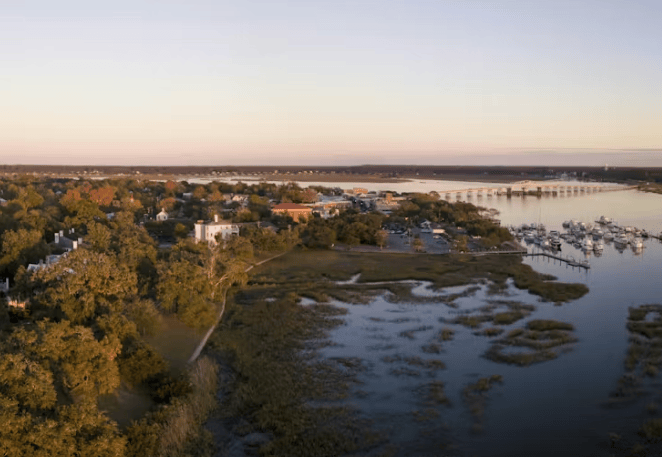
Lowland areas are facing a reshaping of watershed behavior driven by development pressure. From Charleston to Mount Pleasant and the surrounding coastal corridor, permeable surfaces are rapidly being converted into impervious surfaces, parking lots, rooftops, and road networks. When rainfall flows across hardened surfaces, it generates faster, higher peak flows, forcing stormwater systems to accommodate significantly increased hydraulic loads. Meanwhile, much of this region lies within low-elevation floodplains and tidally influenced drainage networks, where natural buffers are diminishing or losing functionality due to increased development density, making stormwater systems increasingly reliant on engineered facilities such as pipes, ditches, culverts, and pump stations.
The change in runoff velocity entering stormwater systems is one of the key challenges. The developed environment accelerates runoff almost immediately—rooflines concentrate flow into downspouts, parking lots channel sheet flow into inlets, and roads act as high-speed conveyance corridors. This results in sharper peak flow events, faster arrival times, and slower recession, which not only stresses stormwater system capacity but also impacts erosion control and downstream water quality.
South Carolina's stormwater permitting requirements have tightened accordingly, placing greater emphasis on total suspended solids reduction, nutrient control, post-construction stormwater compliance, and long-term maintenance responsibilities. Water quality issues are inseparable from stormwater management, as increased runoff velocity leads to higher erosion rates, and pollutants are more efficiently transported from impervious landscapes to tidal creeks, estuaries, and nearshore coastal areas.
Across the region, the intensified hydrological response driven by rapid growth is redefining what constitutes adequate drainage. Communities like North Myrtle Beach are grappling with large-scale coastal discharge challenges, where ocean outfall systems must simultaneously handle storm surge and upland runoff. These projects reflect that stormwater systems are no longer purely inland drainage but rather a coastal interface system.
This article is compiled by Wedoany. All AI citations must indicate the source as "Wedoany". If there is any infringement or other issues, please notify us promptly, and we will modify or delete it accordingly. Email: news@wedoany.com