South Korea's Hancom InSpace Hyperspectral Satellite Enters Orbit, Sejong Constellation Achieves First Synergy with Multispectral
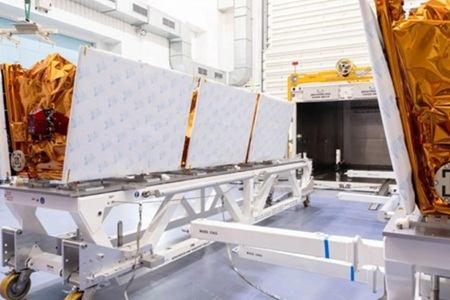
en.Wedoany.com Reported - The launch window for Sejong-3 was set for 4:02 AM local time on March 30, 2026, in the United States (8:02 PM on the same day, Korea time). It was launched aboard a SpaceX Falcon 9 rocket as part of a rideshare mission from Vandenberg Space Force Base in California, USA. Following separation from the rocket, the ground station completed its first communication link, confirming that the satellite body and systems were in normal condition. Calibration and commissioning of the imaging payload are currently underway. Sejong-3 is a 6U-class nanosatellite, measuring 200 mm in width, 100 mm in length, and 340 mm in height, with a mass of approximately 10.8 kg. It operates in a low Earth orbit at an altitude of 500 to 600 kilometers.

The launch window for Sejong-3 was set for 4:02 AM local time on March 30, 2026, in the United States (8:02 PM on the same day, Korea time). It was launched aboard a SpaceX Falcon 9 rocket as part of a rideshare mission from Vandenberg Space Force Base in California, USA. Following separation from the rocket, the ground station completed its first communication link, confirming that the satellite body and systems were in normal condition. Calibration and commissioning of the imaging payload are currently underway. Sejong-3 is a 6U-class nanosatellite, measuring 200 mm in width, 100 mm in length, and 340 mm in height, with a mass of approximately 10.8 kg. It operates in a low Earth orbit at an altitude of 500 to 600 kilometers.
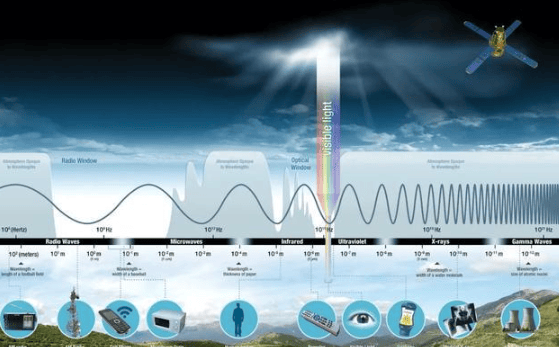
Unlike other satellites previously launched in the Sejong series, Sejong-3 introduces hyperspectral imaging capability to the constellation for the first time. Its core payload is a hyperspectral sensor that can collect ground object reflectance data across 442 spectral bands, enabling material-level identification by analyzing the unique spectral fingerprints of different substances. Seeung-chan "Wesley" Heo, Overseas Business Manager at Hancom InSpace, stated: "Sejong-3 is an important addition to our Sejong constellation, bringing hyperspectral capability that complements the existing multispectral imaging of Sejong-2 and Sejong-4. This supports a wider range of Earth observation applications, such as vegetation monitoring, mineral surveys, soil observation, and environmental analysis."
The Sejong constellation currently consists of four in-orbit satellites, each with complementary observation methods: Sejong-1, launched in May 2022 by the SpaceX Transporter-5 mission, was South Korea's first private commercial Earth observation satellite, equipped with an optical camera to capture multispectral imagery; Sejong-2 entered orbit in June 2025, carrying an optical imager to continue extending multispectral observation capabilities, focusing on maritime, agricultural monitoring, and urban change detection; Sejong-4 was launched in November 2025 by South Korea's indigenous Nuri (KSLV-II) rocket, also providing 5-meter resolution multispectral imagery and undertaking the in-orbit verification mission for Hancom InSpace's self-developed flight control software; Sejong-3, with its 442-band hyperspectral imaging, fills the constellation's most critical gap in material-level analysis capability.
The application prospects for Sejong-3's hyperspectral data in the agriculture and forestry sectors have been preliminarily planned by the company: it can identify crop growth status and stress factors, provide early warning of disease outbreak risks; in forestry, it can accomplish tree species classification, forest degradation monitoring, and wildfire risk zone analysis. Hancom InSpace CEO Myungjin Choi stated after the satellite successfully established communication: "A hyperspectral satellite signifies a paradigm shift from merely 'seeing data' to 'understanding what an object is'."
Hancom InSpace is a space technology company spun off from the Korea Aerospace Research Institute. Acquired in 2020 by the South Korean tech conglomerate Hancom Group, it is positioned as an AI data analysis company, with business covering satellite ground station systems, satellite image analysis services, and drone operation platforms. The company completed the satellite manufacturing and launch services for Sejong-1, Sejong-2, and Sejong-3 through Spire Global, while Sejong-4 was independently integrated and developed by its team. The company plans to expand the constellation size to 50 satellites and has recently initiated global commercial sales of Sejong series satellite imagery through the SkyFi platform, covering both archive data services and customized new imaging needs.
While the commissioning of Sejong-3 progresses, Hancom InSpace is simultaneously advancing early development of Sejong-5. This satellite is expected to be launched within 2026 and may carry a chip-scale atomic clock, adding a new technological dimension to the constellation. Based on its self-developed AI multi-information fusion analysis platform, InStation, the company plans to deeply integrate the Sejong constellation's cluster operation system with AI analysis tools, providing customized data services for fields such as agriculture, environment, resources, disaster management, and defense, aiming to shorten the revisit cycle for target areas and enhance data fusion analysis capabilities.
This article is compiled by Wedoany. All AI citations must indicate the source as "Wedoany". If there is any infringement or other issues, please notify us promptly, and we will modify or delete it accordingly. Email: news@wedoany.com
Related Products



MUX Series Communication Interface Device for Security and Stability Control System
Nanjing NR Electric Co., Ltd.

Mine Explosion-proof and Intrinsically Safe Industrial Ethernet Ring Network (10 Gigabit/Gigabit)
Chongqing Mas Sci&Tech Co., Ltd.


Industrial and Commercial Point-Type Gas Detector
Jinan Benan Technology Development Co., Ltd.
GYTA Type Non-Self-Supporting Aerial/Duct Optical Cable
TONGDING INTERCONNECTION INFORMATION CO., LTD.
One-Stop Steward Service for the Entire Logistics System Integration Chain
Zhongding Intelligent (Wuxi) Technology Co., Ltd.