en.Wedoany.com Reported - On May 6, 2026, Grimes County, Texas, released a public hearing notice submitted by the U.S. company SpaceX, revealing plans to build a multi-phase, next-generation, vertically integrated semiconductor manufacturing and advanced computing manufacturing facility called "Terafab" at the Gibbons Creek Reservoir and surrounding area. According to the documents, the initial capital investment for the project is $55 billion, and if all subsequent phases are completed, the total investment is expected to climb to $119 billion. The Grimes County Commissioners Court has scheduled a public hearing for June 3, 2026, at 9:00 a.m. in the City of Anderson regarding a property tax abatement agreement applied for by SpaceX.
A post published last month by SpaceX's official social media account clarified the project's technical positioning—integrating logic chips, memory chips, and advanced packaging within the same factory. Elon Musk himself once called it "the largest chip manufacturing project in history." The project is a joint venture between SpaceX and the U.S. company Tesla. Once operational, it will provide a self-sufficient chip supply for Tesla's autonomous driving systems, Optimus humanoid robots, SpaceX's Starlink satellites, orbital AI data centers, and the Grok large model under the U.S. AI company xAI.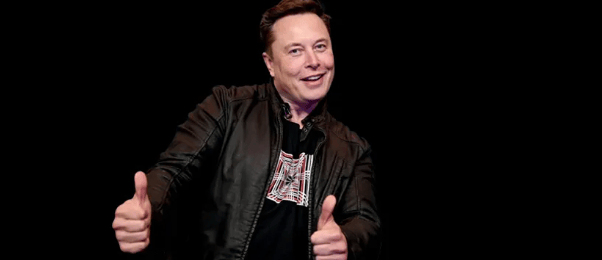
U.S. Intel Corporation officially announced its participation in the plan in April 2026, stating it would assist in the "large-scale design, manufacturing, and packaging of ultra-high-performance chips." During Tesla's first-quarter earnings call in April, it was revealed that Terafab will utilize Intel's most advanced 14A process technology to produce chips. This marks a major breakthrough for Intel in opening its advanced process foundry business to third parties; previously, Intel's 14A process was exclusively used for its own products.
The initial investment scale of $55 billion has already surpassed the $52.7 billion total subsidy authorized by the U.S. CHIPS Act, and the estimated total investment of $119 billion is roughly equivalent to the combined investment scale of TSMC's multiple wafer fabs in Arizona. When the project was officially announced, Musk stated bluntly: "We either build Terafab, or we have no chips." His rationale is that the future total chip demand from the AI and robotics businesses of the three companies will exceed the limits of global semiconductor production capacity, making self-manufacturing an upgrade from a business option to a fundamental supply security requirement.
As a preliminary step for the project, Tesla will first build a research wafer fab at its Austin facility, with an investment of approximately $3 billion, tasked with process verification and small-scale trial production. The Terafab project documents also disclosed that after the completion of the first phase, the planned goal is to support the deployment of 1 terawatt of AI computing power annually. Venturing into chip manufacturing, the most capital-intensive heavy asset track globally, SpaceX's financial foundation is its upcoming IPO scheduled for June, with the company's valuation potentially reaching as high as $1.75 trillion.
The timing of SpaceX's submission of the Terafab plan coincides with a period when global advanced semiconductor process capacity is being fully strained by AI demand. Chip design companies like Nvidia, AMD, and Intel have already locked in mass production schedules for 2nm and below nodes until around 2028, and the advanced packaging capacities of TSMC and Samsung are similarly running at full load. SpaceX's direct entry into the manufacturing side as an end-demand party signifies a structural shift in the AI computing power supply chain from the "design-foundry" division of labor model towards vertical self-construction by end-user enterprises. The Grimes County public hearing notice describes Terafab as "a transformative investment in U.S. domestic semiconductor manufacturing capability." Whether the project can proceed as scheduled will depend on the outcome of the June hearing and the progress of subsequent environmental approvals.
This article is compiled by Wedoany. All AI citations must indicate the source as "Wedoany". If there is any infringement or other issues, please notify us promptly, and we will modify or delete it accordingly. Email: news@wedoany.com