Preparing for the 2026 Hurricane Season, U.S. Verizon Deploys Digital Twin Network Recovery Technology and 2,600 Satellite Assets
en.Wedoany.com Reported - On May 6, 2026, ahead of the 2026 hurricane season, U.S. telecommunications company Verizon released a comprehensive disaster response technology package. Its core components include digital twin network recovery technology and an expanded portfolio of 2,600 satellite assets. Joe Russo, Executive Vice President of Verizon Global Network & Technology, stated: "In an emergency, every second counts. We are not just building a network; we are creating a resilient ecosystem capable of withstanding the harshest conditions."
Verizon's digital twin technology is not a conceptual demonstration but a workflow that has already been battle-tested and validated during the 2025 hurricane season. A week before the announcement, the company's operations teams had already reviewed the digital models of network assets one by one along the Gulf Coast and Atlantic islands, ensuring that high-resolution 3D digital archives for every cell site were on standby entering the 2026 hurricane season. Before a storm hits, drones first complete high-resolution 3D image capture of cell sites and equipment, generating a pre-disaster "baseline model." After the storm passes, specialized drones take to the air again to capture post-disaster imagery of the same sites. The system then automatically overlays and compares the two sets of models. AI algorithms embedded in the digital network modeling process play a role here—through computer vision analysis of the differences between the two 3D models, the system automatically identifies whether antennas are misaligned, cables are severed, or equipment has shifted, marking the damaged locations with pinpoint accuracy.
The most direct effect of this process is that engineers no longer need to wait for floodwaters to recede or roads to be cleared to assess network damage. After virtually locating the damage, teams can prepare precise equipment and consumables in advance, formulate prioritized repair sequencing, and minimize the need for tower climbing and field inspections. Russo summarized this capability in his statement as "allowing engineers to virtually visit and inspect cell sites," thereby "making decisions faster than ever before."
The value of digital twins is also evident in pre-disaster prevention. Verizon uses the same 3D modeling capabilities to continuously survey the structural condition of cell sites—including the degree of corrosion on antenna support arms, signs of loosening in fasteners, and the sealing integrity of equipment cabinets—incorporating identified risks into pre-storm reinforcement work orders and completing preventive maintenance before a hurricane makes landfall. Verizon currently maintains nearly 3,000 readily deployable mobile assets, including mobile cell sites, emergency command centers, and portable generators.
Advancing in parallel with the digital twin initiative is Verizon's accelerated shift toward a "satellite everywhere" resilience strategy. The company has expanded its total satellite assets to 2,600, including mobile cell sites deployable via satellite links, mobile satellite connectivity kits, and permanent satellite links for fixed facilities. Karen Schulz, Communications Lead for Verizon Global Network & Technology, explicitly told Via Satellite: "While terrestrial fiber is the gold standard, we believe it's critical to add another layer of redundant backhaul when storms could cause impact. By moving to a 'satellite everywhere' failover strategy, we are integrating these links into more fixed facilities and mobile units than ever before."
Verizon is testing permanent satellite backhaul as a failover solution at high-power macro cell sites in hurricane-prone areas of the Southeastern United States, including Georgia, Florida, and the Carolinas. These sites are already equipped with 100% backup battery power and backup generator power. By layering on permanent satellite connections, the cell sites can continue processing cellular communication traffic even if commercial power and fiber lines are simultaneously disrupted.
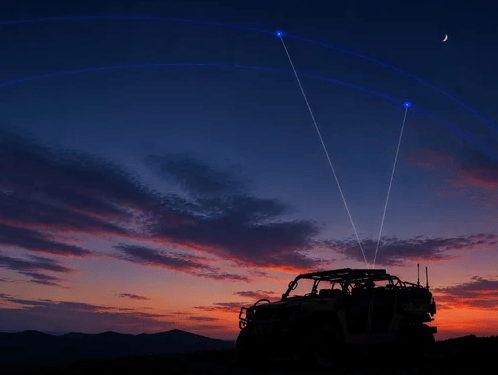
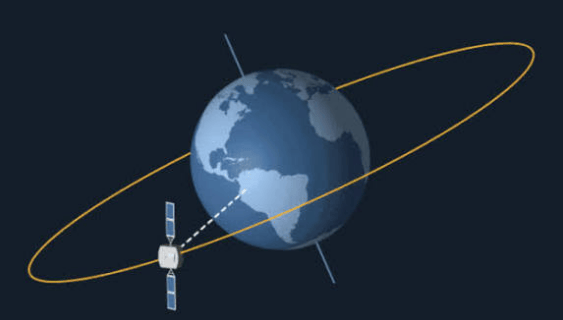
The most notable asset in this year's satellite strategy is a newly added multi-orbit off-road trailer. This high-clearance off-road vehicle can switch between Geostationary Orbit and Low Earth Orbit satellite systems, replacing older assets that relied on paved roads and built specifically for off-road environments. Equipped with an AvL Technologies mobile terminal, the trailer can drive deep into dense forests, muddy disaster zones, or washed-out coastal areas, serving as a mobile cell site for search and rescue teams, a communication hub for emergency command centers, or a temporary communication "bridge" where a community's main tower has collapsed, while deploying 5G LEO connectivity kits along the way for frontline responders to establish localized hotspots.
Deployed alongside these technologies is the "V Team Disaster Response Corps" program, launched in partnership with the American Red Cross—making Verizon the first telecommunications carrier to establish such a collaboration with the Red Cross. Employee volunteers, trained by the Red Cross, are deployed to disaster shelters to assist in relief efforts. Verizon's Major Incident Response Incident Management Team is also equipped with drone camera equipment capable of detecting hazardous gases, and its frontline crisis response team, composed of former first responders and military personnel, provides free support to public safety agencies during emergencies.
This article is compiled by Wedoany. All AI citations must indicate the source as "Wedoany". If there is any infringement or other issues, please notify us promptly, and we will modify or delete it accordingly. Email: news@wedoany.com
Related Products


Mine Explosion-proof and Intrinsically Safe Industrial Ethernet Ring Network (10 Gigabit/Gigabit)
Chongqing Mas Sci&Tech Co., Ltd.

GYTA Type Non-Self-Supporting Aerial/Duct Optical Cable
TONGDING INTERCONNECTION INFORMATION CO., LTD.
Conveyor Belt Intelligent Monitoring System
LUO YANG WIRE ROPE INSPECTION TECHNOLOGY CO., LTD.
Hot Selling 10 Inch Intel N5100 I5 I7 FHD 8 +128GB 16+256GB Win10 Pro Win11 Pro 4G 5G Rugged Tablet PC Pad with NFC Barcode
Highton Electronics Co., Ltd.



G.652.D Wavelength-extended Non-dispersion Shifted Single-mode Optical Fiber
HONGAN GROUP CO., LTD.

Industrial and Commercial Point-Type Gas Detector
Jinan Benan Technology Development Co., Ltd.