Samsung Electronics Becomes Asia's Second Trillion-Dollar Tech Enterprise, Driven by HBM4 Mass Production and Surging AI Storage Demand
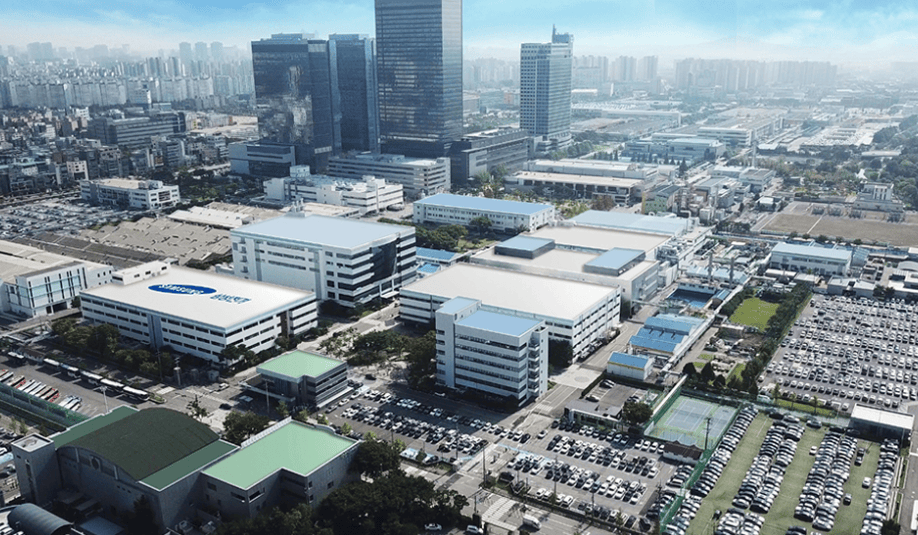
en.Wedoany.com Reported - On May 6, 2026, the market capitalization of South Korea's Samsung Electronics surpassed 1 trillion US dollars in morning trading, making it the second tech enterprise in Asia, after TSMC, to reach this milestone.
The first quarter 2026 financial report released by Samsung Electronics on April 30 provided a quantified performance reference. The company's revenue reached 133.9 trillion Korean won (approximately 89.946 billion US dollars), a year-on-year increase of 69.2%, while operating profit hit 57.2 trillion Korean won, a staggering year-on-year surge of 756.1%. This not only set a historical record but also surpassed Samsung's total operating profit of 43.6 trillion Korean won for the entire year of 2025. The semiconductor division contributed 93.9% of the operating profit, with the memory business achieving record quarterly revenue and operating profit.
Samsung's vertically integrated advantages are unleashing industrial control power in the era of AI acceleration. The company is currently the only semiconductor enterprise globally capable of completing the full chain of "AI chip design—in-house 2nm process manufacturing—high-speed memory matching—consumer terminal integration." Its memory product matrix covers a full-stack technology solution from enterprise-grade DDR5 to high-bandwidth memory HBM, while its foundry business simultaneously secures key positions at the two critical nodes of advanced process technology and advanced packaging. On the process technology front, Samsung confirmed on May 5 that its 2nm GAA process has entered the trial production stage, aiming for initial customer deliveries within the year, with yield rates having improved from an initial 20% to 60%, just one step away from the mass production target of 70%. For the 4nm production line, driven by demand for HBM4 logic base dies, capacity is fully booked until next year, with customers covering AI chip manufacturers including Nvidia and Google.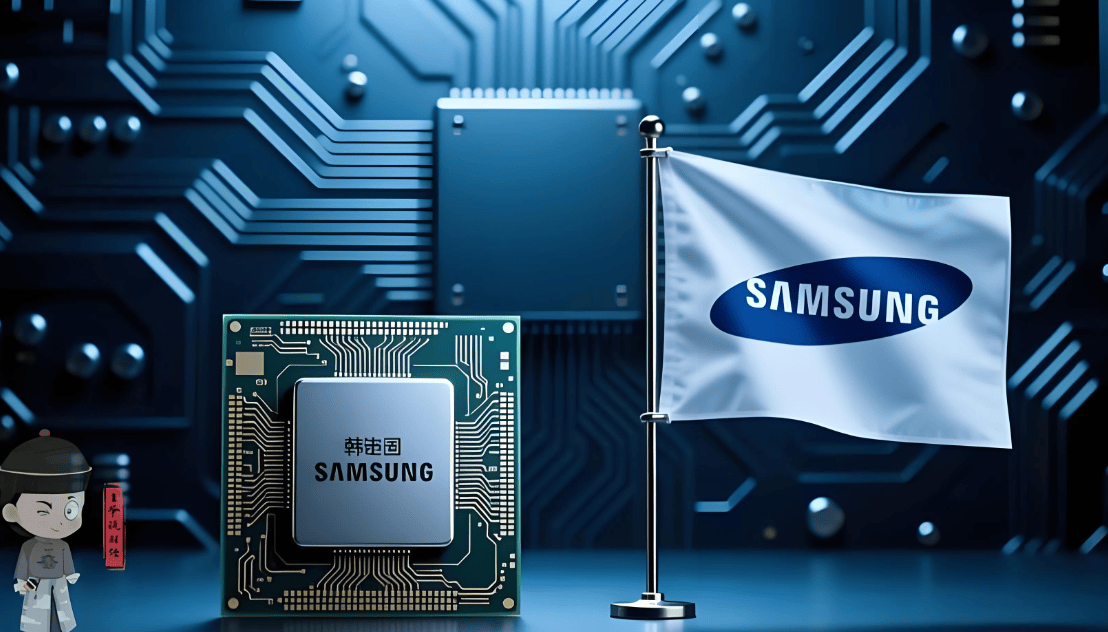
The large-scale deployment of AI inference is reshaping the supply-demand dynamics of the entire storage industry. The current DRAM market supply gap is approximately 10 percentage points of demand, and the industry widely expects the memory chip "super cycle" to extend into 2027. The proportion of high-end memory consumed by AI data centers has reached about 70%, a structural shift that redefines memory chips from cyclical commodities to strategic components of AI infrastructure. Driven by this, Samsung officially ceased production of LPDDR4/X memory on May 1 this year, fully shifting capacity to high-value-added AI demand products such as LPDDR5/X and HBM. On the packaging side, it adopted hybrid bonding technology to achieve 12-layer HBM4 stacking, further increasing bandwidth density per unit area. The extension of the technology roadmap is equally certain—Samsung has clearly stated it will deliver the first HBM4E samples to customers in the second quarter of this year, solidifying its technology rhythm of "mass producing one generation, developing the next."
The reversal in the HBM4 battle is the core technological narrative behind this market cap breakthrough. Samsung had long lagged behind its cross-town rival SK hynix, which once held approximately 55% of the HBM market share leveraging its first-mover advantage with HBM3E. Samsung completed its identity switch from a follower to a leader by being the first globally to mass-produce and ship HBM4 to customers in February 2026—the sixth-generation high-bandwidth memory technology and a key supporting component for Nvidia's Vera Rubin AI architecture. Samsung Executive Vice President Hwang Sang-joon confirmed during GTC 2026 that the entire 2026 HBM4 production volume has been sold out, and HBM4's proportion of the company's total HBM output will increase to over 50%. Customer demand has already been pre-ordered into 2027 capacity bookings, and Samsung has simultaneously completed long-term supply agreements with several major customers. Samsung has planned to launch the seventh-generation high-bandwidth memory, HBM4E, in 2027, continuing to expand its market advantage in the AI high-performance computing sector.
Connecting the technological timeline reveals a clear logical chain: Samsung secured its track position with HBM4 mass production, built advanced process barriers with 2nm GAA trial production and full 4nm capacity, established physical foundational advantages with MBCFET transistor architecture and hybrid bonding packaging, and locked in long-term revenue visibility with the imminent delivery of HBM4E samples and LTAs for 2027. The superposition of these three layers of technological depth has gradually transformed Samsung from an enterprise labeled by consumer electronics and memory chips into a core supplier for the AI infrastructure layer. Consequently, Samsung has joined the global trillion-dollar club—currently, only about 13 companies worldwide have entered this market cap range—becoming another key anchor in the integrated puzzle of Asian wafer foundry and memory.
This article is compiled by Wedoany. All AI citations must indicate the source as "Wedoany". If there is any infringement or other issues, please notify us promptly, and we will modify or delete it accordingly. Email: news@wedoany.com
Related Products



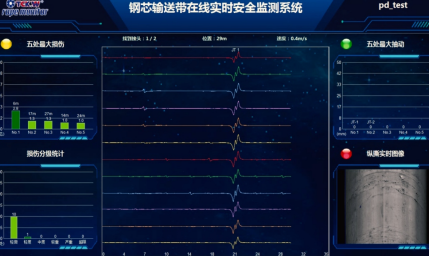
Conveyor Belt Intelligent Monitoring System
LUO YANG WIRE ROPE INSPECTION TECHNOLOGY CO., LTD.
MUX Series Communication Interface Device for Security and Stability Control System
Nanjing NR Electric Co., Ltd.
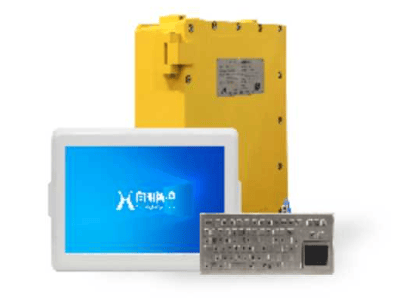
KJD127(A) Mining Explosion-Proof and Intrinsically Safe Computer
Taiyuan Xiangming Intelligent Control Technology Co., Ltd.