The 2026 World Digital Education Conference opens on May 11 in Hangzhou, China, focusing on "AI + Education"
en.Wedoany.com Reported - On May 7, 2026, the Ministry of Education of China held a press conference in Beijing to introduce the preparations for the 2026 World Digital Education Conference. Yang Dan, Director-General of the Department of International Cooperation and Exchanges of the Ministry of Education, introduced that this year's conference, approved by the State Council and co-hosted by the Ministry of Education and the People's Government of Zhejiang Province, will be held from May 11 to 13 in Hangzhou, Zhejiang Province, under the theme "Artificial Intelligence + Education: Transformation, Development, Governance".
Yang Dan pointed out that artificial intelligence is integrating into people's lives, learning, and work with unprecedented breadth and depth. New technologies represented by large models and generative AI are rapidly iterating, profoundly changing learning, teaching, research, and the forms of education. UNESCO has successively released frameworks on AI ethics and AI competency for teachers and students, and an increasing number of countries are incorporating AI into their educational development strategies. The Ministry of Education has successfully held the World Digital Education Conference for three consecutive years, successively releasing practical outcomes such as the World Digital Education Alliance, the international version of the National Smart Education Public Service Platform, and the White Paper on Smart Education in China. This year's conference is the fourth edition.
Shu Hua, Deputy Director-General of the Department of Science, Technology and Informatization of the Ministry of Education, introduced that the conference will release eight outcomes structured around three chapters: "Frontier Leadership, Practice Empowerment, Global Consensus." The Frontier Leadership chapter will release three outcomes: the "China Smart Education Development Report (2025-2026)," systematically reviewing the evolution of smart education in China; the "Global Digital Education Development Index (2026)," covering 82 participating countries and regions and for the first time incorporating "cultivating thinking abilities beyond artificial intelligence" into the indicator system; and the Top Ten Global Hotspots in Digital Education Research, accurately identifying annual frontier directions through massive data analysis. The Practice Empowerment chapter will release four outcomes: the upgraded China Smart Education Public Service Platform, launching three core functions—a global AI education service platform, a lifelong learning center, and a Chinese language learning community; the release of "AI Education Ethics: A Reference Framework," proposing the core concepts of "human-centered agency, collaborative symbiosis, context-appropriate optimization, and categorized governance," and building an ethical system centered on positive "teacher-student-machine" interaction; the World Digital Education Top Ten Innovation Cases, selected from over 500 practical achievements solicited globally; and the release of two World Digital Education Alliance standards: "AI Education Application Systems" and "Essential Elements of AI-Empowered Smart Campuses." The Global Consensus chapter will release the "Hangzhou Initiative on AI in Education," calling on countries worldwide to join hands in accelerating the implementation of the UN Summit of the Future's "Global Digital Compact."
The conference features four segments: the opening ceremony, plenary sessions, parallel sessions, and the closing ceremony, alongside the Global Digital Education Achievements Exhibition. Eight parallel sessions will cover themes including basic education, vocational education, higher education, teacher development, research transformation, education evaluation, lifelong education, and industry-education integration. Over 500 foreign guests will attend, and the plenary session will feature "Lightning Talks on School-Enterprise Cooperation" for the first time, inviting Chinese and international experts, industry leaders, and students to share, in an ultra-short, high-density format, the two-way empowerment pathways from laboratory frontiers to industrial frontlines.
Chen Chunlei, Secretary of the Party Leadership Group and Director-General of the Zhejiang Provincial Department of Education, introduced that Zhejiang has arranged seven "Digital Education Tour of Hangzhou" visit routes for conference delegates. Centered on the core concept of "one school plus one enterprise or one cultural landmark," these routes cover the full spectrum of education from basic to vocational to higher education, encompassing leading sci-tech innovation enterprises like Alibaba and Unitree Robotics, as well as cultural landmarks such as the Deshou Palace of the Southern Song Dynasty and the Liangzhu Museum. Visitors can observe the frontier achievements of Hangzhou's embodied intelligence industry on-site, experience human-machine collaboration at the Future Learning Center of Zhejiang University, learn about inclusive applications of AI empowering special education at Hangzhou Yanglingzi School, and experience "AI + Art" scenarios at the China Academy of Art.
The National Smart Education Public Service Platform, built under the leadership of the Ministry of Education, covers over 200 countries and regions, serving more than 170 million learners. The international version of the platform provides nearly 900 multilingual courses to the world free of charge. In April 2026, the Ministry of Education and four other entities jointly released the "AI + Education" Action Plan, systematically deploying measures from talent cultivation and application integration to infrastructure and ecosystem development.
The talent cultivation chain covers the entire educational spectrum from basic education to lifelong education. The basic education stage requires fully offering and effectively teaching AI courses, focusing on stimulating students' curiosity and innovative thinking; the higher education stage promotes incorporating AI into general basic courses and fostering AI cross-disciplinary integration; the vocational education stage promotes the intelligent upgrading of majors related to traditional industries; and the lifelong education stage develops high-quality learning resources for various groups. Teacher support is simultaneously implemented through the Teacher Digital Literacy Enhancement Project, conducting full-staff rotation training, competency assessments, and evaluation reforms.
The "AI + Education" Action Plan simultaneously promotes the reconstruction of teaching scenarios across four dimensions: students, teachers, schools, and research. This includes developing intelligent learning companions to promote personalized student learning, developing intelligent teaching systems to reduce teacher burden and enhance efficiency, building educational intelligent brains to improve school governance, and establishing scientific AI agents and intelligent experiment clusters to explore AI-driven paradigm shifts in scientific research. The Ministry of Education previously disclosed that 23 education-specific large models and 13 subject-specific vertical models have been built nationwide, with Tsinghua University taking the lead in completing AI construction for 402 courses; 509 AI education base schools have been established nationwide for pilot implementation.
Infrastructure construction is being advanced under national leadership, including building an educational intelligent computing service platform and a foundational corpus for educational research, developing education-specific large models, providing computing power, data, models, and intelligent tools for schools at all levels and types, while also setting up pilot-scale application bases to accelerate application cultivation. The "AI Education Ethics: A Reference Framework" integrates AI safety into the broader framework of educational security, comprehensively ensuring technical safety, data security, content security, algorithmic security, and ethical security, and scientifically assessing the impact of intelligent technologies on traditional teaching through long-term tracking surveys involving 100,000 participants.
China has established the "World Digital Education Alliance," covering 115 member units across 43 countries and regions; 17 high-level universities and 8 leading technology enterprises have jointly launched the "AI Open Alliance." From the first conference four years ago to the current release of the "Hangzhou Initiative on AI in Education," from the establishment of the "AI Open Alliance" and the release of the "White Paper on Smart Education in China" in 2025 to the introduction of the action plan in 2026, China is building a complete system encompassing strategic planning, policy deployment, and industrial implementation. It is exporting actionable solutions such as educational large models, intelligent learning companions, and essential elements of smart campuses to the world, propelling "AI + Education" from consensus towards deliverable global public goods for education.
This article is compiled by Wedoany. All AI citations must indicate the source as "Wedoany". If there is any infringement or other issues, please notify us promptly, and we will modify or delete it accordingly. Email: news@wedoany.com
Related Products








Industrial and Commercial Point-Type Gas Detector
Jinan Benan Technology Development Co., Ltd.

Mine Explosion-proof and Intrinsically Safe Industrial Ethernet Ring Network (10 Gigabit/Gigabit)
Chongqing Mas Sci&Tech Co., Ltd.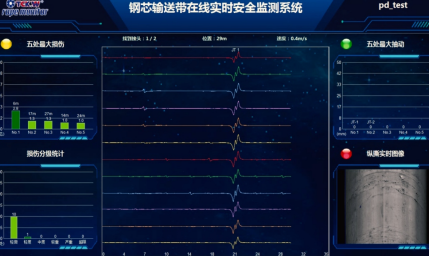
Conveyor Belt Intelligent Monitoring System
LUO YANG WIRE ROPE INSPECTION TECHNOLOGY CO., LTD.
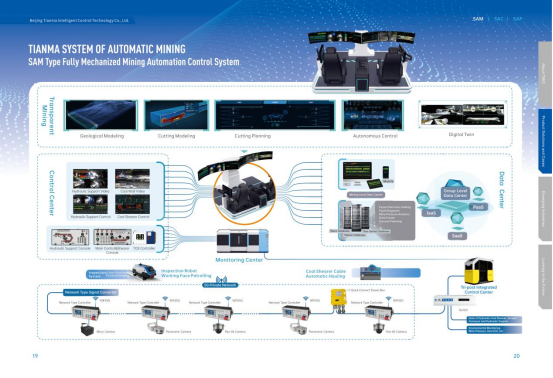
Comprehensive Mining Automation Control System
Beijing Tianma Intelligent Control Technology Co., Ltd.