en.Wedoany.com Reported - The Institute of High Energy Physics (IHEP) of the Chinese Academy of Sciences in Beijing, China, announced on May 7, 2026, that the national major science and technology infrastructure—the Beijing Electron-Positron Collider II (BEPCII)—has achieved a milestone breakthrough in core performance during operation. Through nearly a year of relentless efforts by the institute's research and engineering teams, BEPCII has successfully elevated its peak collision luminosity to 1.112×10^33 cm^-2s^-1 at a beam energy of 2.35 GeV, fully meeting the design specifications of a specific upgrade project. The direct result of this leapfrog upgrade is that the collider's collision efficiency (peak luminosity and integrated luminosity) has surged by more than threefold compared to its pre-upgrade state, a move that will provide unprecedented high-precision data support for particle physics research both domestically and internationally.
This core performance leap by BEPCII, one of the world's eight major high-energy accelerator centers, is highlighted by opening a broader and more precise new experimental window for the Beijing Spectrometer III (BESIII). With stable operation deployed in the 2.35 GeV high-energy region, the data acquisition efficiency and statistical precision of the BESIII detector have been fundamentally enhanced. Higher instantaneous data output means that scientists can accumulate higher-statistics data samples in a shorter time, or compress the limits of experimental error further within the same timeframe. This will directly accelerate the research-to-discovery cycle for a series of major fundamental physics topics, such as matter-antimatter asymmetry, the energy spectrum within the quark confinement region, and the internal structure of exotic hadronic states. Members of the BESIII collaboration, both domestic and international, will be the first to reap the practical benefits of this experimental boom.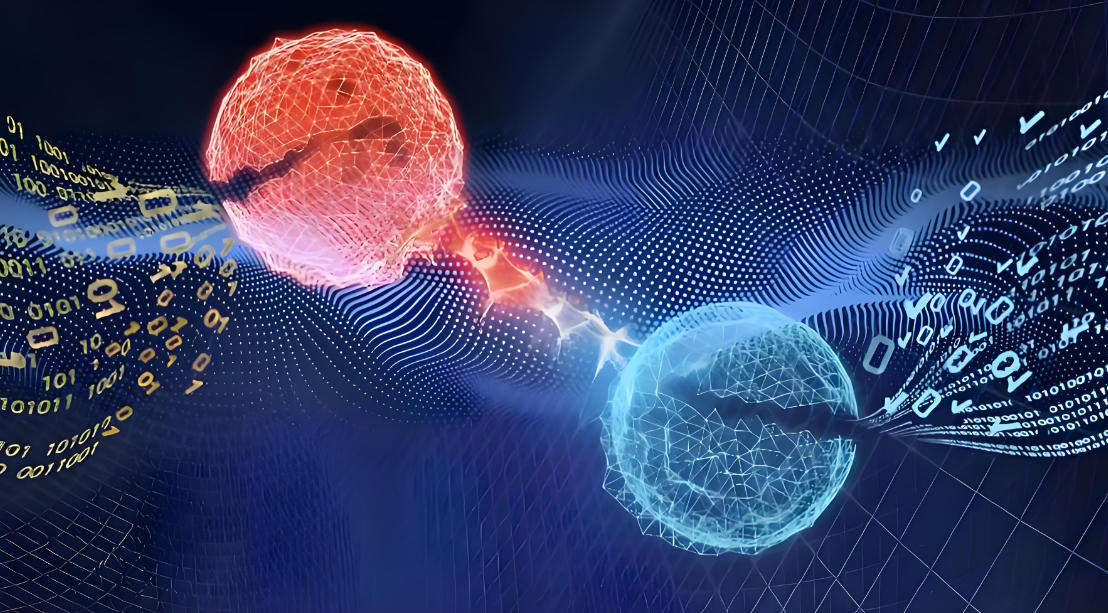
This leapfrog growth in BEPCII's core performance is far from a result of mere software tuning; rather, it is the physical validation of a systematic hardware reconstruction, initiated as a project in 2021, successfully achieving its initial goals. Faced with challenges such as the immense difficulty of developing core equipment and tight R&D timelines, the IHEP project team invested three years, adopting a strategy of forward design, precision manufacturing, and step-by-step verification. They successively tackled and completed the development and iterative application of a batch of key core equipment, including radio-frequency superconducting modules, combined-type superconducting magnets, strip-line injection kicker magnets, and new photon absorbers. These components form the rigid backbone of this upgrade, fundamentally reshaping the beam envelope constraints and energy gain levels of the double-ring storage ring, making it possible to stably "lock" and squeeze denser electron and positron bunches in the high-energy region. By December 2024, the team efficiently completed the tunnel installation of all hardware and officially restarted BESIII data taking and the parasitic light experiments for the Beijing Synchrotron Radiation Facility (BSRF) in May of the following year.
The steep upward trajectory of the performance curve directly confirms the sustained reliability of the aforementioned hardware upgrade path. From achieving a twofold performance increase at 2.35 GeV in March 2026 (collision luminosity reaching 7.35×10^32 cm^-2s^-1), to completely reaching the design inflection point of peak luminosity at 1.112×10^33 cm^-2s^-1 by the end of April, the double-ring electrons and positrons precisely met and collided at high frequency at several key collision points, facilitated by higher injection currents, better beta function matching, and ultra-stable superconducting cavities. The upgraded BEPCII now demonstrates strong operational resilience in the high-energy region above 2.3 GeV beam energy, with 8 BSRF beamlines maintaining their normal rounds of synchrotron radiation user experiments in parasitic mode, indicating that its "one device, multiple uses" operational architecture has not been disrupted by the performance surge.
Standing at this new height, the Institute of High Energy Physics is not pausing. Officials have publicly disclosed that the team's next steps will involve continuously tapping the device's performance potential, further optimizing beam quality, and finely adjusting operational parameters, committed to further enhancing the collider's operational stability and overall performance. As BEPCII officially enters a new era of high-luminosity collisions, this foundational science platform, representative of its kind, is bound to successively yield more world-impacting major discoveries and key technology breakthroughs in the coming decades, continuously solidifying China's strategic high ground in exploring the deep structure of matter.
This article is compiled by Wedoany. All AI citations must indicate the source as "Wedoany". If there is any infringement or other issues, please notify us promptly, and we will modify or delete it accordingly. Email: news@wedoany.com