en.Wedoany.com Reported - On May 7, 2026, Chinese large model company Moonshot AI (Kimi) officially announced the completion of a new round of financing totaling nearly $2 billion, with a post-investment valuation exceeding $20 billion. This round of financing was led by Meituan DragonBall, with participation from Shuimu Capital, China Mobile, CPE (CITIC Private Equity Funds Management), and others, with Huafeng Capital serving as a partial buy-side financial advisor. This is the largest single financing round since Moonshot AI's inception and one of the highest private financing amounts to date for a domestic large model startup.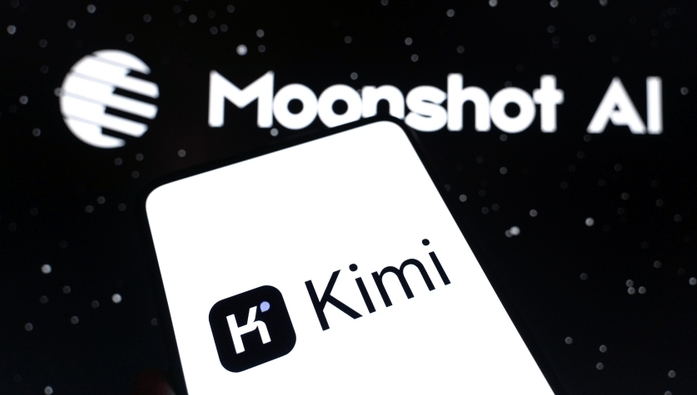
Wang Xinyu, a partner at Meituan DragonBall, revealed during the financing announcement that DragonBall alone contributed over $200 million, signifying Meituan's upgrade from an early-stage investor to a deep strategic shareholder. Wang Xinyu stated that the core logic behind Meituan's investment in Moonshot AI lies in the potential for large model technology to be implemented in high-frequency scenarios such as local life services, delivery fulfillment, and merchant services. Meituan's own business network can provide Kimi with a natural data feedback loop and application validation ground.
In less than half a year, Moonshot AI has intensively completed four rounds of financing, with a cumulative amount exceeding $3.9 billion, equivalent to over RMB 37.6 billion. Its total financing has surpassed peers like Zhipu AI and MiniMax, ranking first among domestic large model startups. From January to February 2026, the company completed three rounds of financing, amounting to $500 million, $700 million, and $700 million respectively, with its valuation climbing from $10 billion to $18 billion. Looking further back, the company's valuation was approximately $4.3 billion in November 2025, meaning the current valuation has more than quadrupled. Existing shareholders Alibaba, Tencent, and 5Y Capital all followed on and increased their stakes during the financing round at the $10 billion valuation.
While capital is pouring in intensively, Moonshot AI has also achieved key leaps on both the technology and commercialization fronts. On the technology side, the company released and open-sourced its flagship model Kimi K2.6 on April 20, which adopts a one-trillion-parameter MoE architecture, achieving systematic upgrades in code generation, long-range task processing, and Agent cluster capabilities. K2.6 can code continuously for 13 hours, completing the writing or optimization of over 4,000 lines of code; it supports 300 sub-Agents working in parallel, completing 4,000 collaborative steps, and achieving one-stop delivery from original documents to web pages, PPTs, and spreadsheets. In the HLE evaluation, K2.6 ranked first with a score of 54.0, matching or surpassing leading closed-source models like GPT-5.4, Claude Opus 4.6, and Gemini 3.1 Pro on multiple key metrics.
On the commercialization side, Wang Xinyu synchronously disclosed a set of key revenue data during this financing announcement: Since the K2.5 model update, Moonshot AI's annual recurring revenue first exceeded $100 million in early March and further grew to over $200 million in April, doubling within two months. This growth rate is leading among large model startups with high revenue bases, providing direct support for the company's high valuation.
One of the most closely watched signals in this financing round is China Mobile's entry as a strategic capital investor into a leading large model startup for the first time in its capacity as a telecom operator. The three major domestic operators previously laid out their AI computing power strategies mostly through cooperation with cloud vendors or internal self-research. China Mobile's direct investment in Moonshot AI this time is seen by many industry analysts as the beginning of a deep integration model between operators and AI model companies. For Moonshot AI, China Mobile's involvement means it will gain direct support in the stable supply of computing power infrastructure and commercialization channels targeting government and enterprise clients.
In terms of financing valuation, Moonshot AI's current valuation of approximately $20 billion, equivalent to about RMB 140 billion, is still lower than the market capitalization levels of the Hong Kong-listed MiniMax (approximately RMB 210 billion) and Zhipu (approximately RMB 347 billion). This gap is viewed by some investors as room for further involvement. Moonshot AI founder Yang Zhilin previously stated in an internal letter that the company is not in a hurry to go public in the short term, hoping to maintain a flexible decision-making rhythm, and will view an IPO in the future as a means to accelerate AGI rather than just a financing channel.
Founder Yang Zhilin graduated with a bachelor's degree from Tsinghua University and received his Ph.D. from Carnegie Mellon University in the United States. He previously worked at Google Brain and Meta AI and is a highly cited researcher in the field of natural language processing. In April 2023, he returned to China to found Moonshot AI. Just two months after its establishment, the company completed an angel round of financing of nearly RMB 2 billion, with top-tier institutions like Sequoia China and ZhenFund participating. In October of the same year, the company launched Kimi Chat, which supports 200,000 Chinese character inputs, establishing a differentiated competitive advantage through long-text processing. Over the following two-plus years, the company completed multiple rounds of financing, with an investor lineup including Alibaba, Tencent, Meituan DragonBall, Gaorong Capital, 5Y Capital, Xiaohongshu, IDG Capital, and others.
Earlier this month, Moonshot AI had already applied to register multiple "KimiClaw" trademarks, with international classifications covering core areas such as scientific instruments, website services, and communication services. This product is positioned as a cloud-based open-source AI agent framework, allowing users to directly utilize AI agent capabilities through the Kimi platform without needing to deploy a local environment themselves, marking a substantial leap for the company from an "AI dialogue tool" to an "AI execution platform."
The current Chinese large model field has formed a diversified competitive landscape. Internet companies like ByteDance and Alibaba are making comprehensive layouts relying on their ecosystems and computing power; Zhipu AI, MiniMax, and others have already listed in Hong Kong, gaining a first-mover advantage in the capital market, with Zhipu ranking first with a market cap of approximately RMB 347 billion; star startups like DeepSeek continue to catch up in model capabilities. The completion of this financing round for Moonshot AI will give it greater maneuvering room in computing power reserves, talent incentives, and model iteration, and will also push the competition in the domestic large model track from a single-point technology contest into a dual game stage involving capital depth and commercial implementation capabilities.
This article is compiled by Wedoany. All AI citations must indicate the source as "Wedoany". If there is any infringement or other issues, please notify us promptly, and we will modify or delete it accordingly. Email: news@wedoany.com