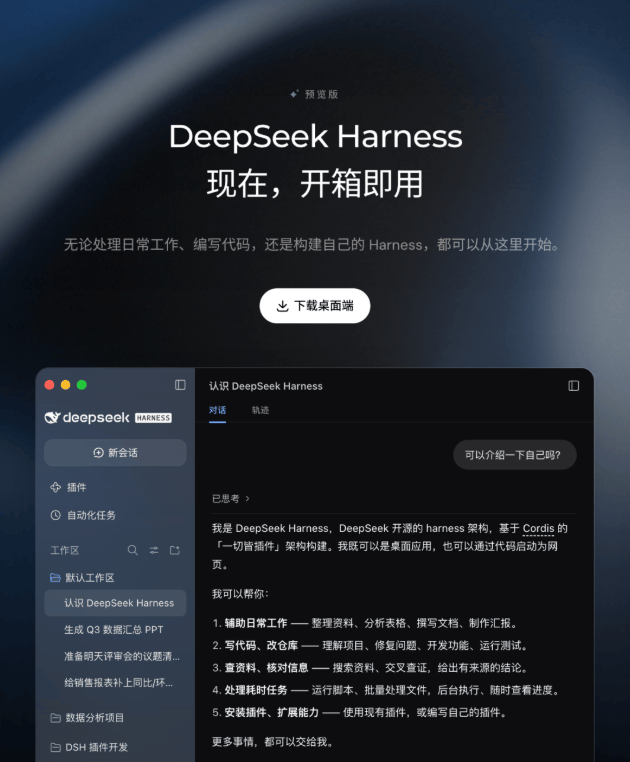
Meta Develops AI Agent Hatch, Internal Testing to Be Completed by End of June
en.Wedoany.com Reported - U.S.-based Meta Platforms is developing a consumer-grade AI agent product codenamed "Hatch," aiming to complete internal testing by the end of June 2026. According to a report by The Information on May 5, citing sources familiar with the matter, Hatch's design is directly inspired by the open-source AI agent tool OpenClaw. It is currently powered by Anthropic's Claude Opus 4.6 and Claude Sonnet 4.6 models, and will switch to Meta's latest self-developed AI model, Muse Spark, upon official launch.
Meta CEO Mark Zuckerberg gave a clear positioning for agentic AI during last week's quarterly earnings call. He stated that Meta's goal is to "build agents that can understand your goals and go work on them around the clock to help you accomplish them." Zuckerberg also pointed out that existing tools like OpenClaw are still too complex for most non-technical users, adding, "there aren't many I would introduce to my mom." The core problem Meta is trying to solve is: how to create a more polished, easier-to-use version where all the infrastructure is already in place and directly usable.
In terms of capability iteration, Hatch is accelerating on three dimensions. The first is proactive decision-making ability, enabling the agent to take autonomous action at appropriate times, rather than passively waiting for user commands. The second is memory and context processing, by expanding the context processing window and strengthening cross-conversation memory capabilities, allowing the agent to continuously remember relevant user information across different sessions. The third is tool invocation logic, optimizing the decision-making chain for the agent to select and call external tools. According to sources, Meta has specifically built a "sandbox" network environment simulating real websites like DoorDash, Etsy, Reddit, Yelp, and Outlook for the agent to train and test under controlled conditions.
Another front advancing in parallel with Hatch is the deep embedding of an AI shopping agent into Instagram. According to The Information, Meta plans to integrate a standalone AI shopping agent tool into Instagram by the fourth quarter of this year. Users will be able to directly click on products in Instagram Reels or feeds, view detailed information, jump to external web pages, and complete purchases within the platform, all without leaving the app. This layout is internally seen as an important bargaining chip to compete head-on with TikTok Shop—which has established a clear advantage in social commerce through the deep integration of short videos and e-commerce—while Meta intends to leverage Instagram's massive user base, coupled with an AI-automated shopping experience, to compete against it.
Hatch's technical path choice reflects Meta's current competitive strategy in the AI field. Initially, Zuckerberg had attempted to acquire OpenClaw, but the tool was snapped up by OpenAI in February this year, and Meta's acquisition attempt was unsuccessful. Subsequently, Meta turned to independently developing a consumer-grade agent product with similar functions, while simultaneously advancing product implementation and model autonomy through a strategy of first using Anthropic models for initial training and later switching to its self-developed model. In a business context, Meta raised its AI infrastructure capital expenditure to up to $145 billion in the first quarter of 2026, covering basic resources required for deployment such as servers, data centers, and custom chips. The advancement of Hatch and the planning of the Instagram shopping agent can be seen as specific anchors for Meta to transform its massive AI investment into products targeting its 3 billion user base.
Looking at the industry landscape, Hatch's launch comes at a turning point as AI agents move from proof-of-concept to large-scale deployment. The explosive popularity of OpenClaw has become a market catalyst, and its paradigm of upgrading AI from "answering questions" to "doing things for people" has triggered intensive follow-up from Silicon Valley giants—it is understood that Google is currently internally testing a personal AI agent codenamed "Remy," positioned as an all-weather personal assistant. Jensen Huang also previously pointed out publicly that "every company needs an OpenClaw strategy." Meta also has an AI agent called MyClaw for internal employee use, designed to access work files, summarize internal forum posts, and obtain technical advice. However, according to a previous report by The Information, MyClaw recently triggered a major security alert when an employee followed the agent's erroneous advice, leading to unauthorized access to sensitive data, highlighting the real-world challenges AI agents still face in terms of reliability.
Tanay Jaipuria, a former Meta product manager and partner at Wing Venture Capital, commented that OpenClaw is "capturing people's imagination," but as an open-source project, it is unlikely to become a mass-market product. "Meta is trying to build that version that can reach a billion users, they have that distribution capability and can lean heavily on it." However, sources also revealed that one of Meta's long-term goals is to make users willing to share sensitive data such as health and financial information with the agent, but there is currently still a "massive trust deficit" between the two parties.
This article is compiled by Wedoany. All AI citations must indicate the source as "Wedoany". If there is any infringement or other issues, please notify us promptly, and we will modify or delete it accordingly. Email: news@wedoany.com
Related Products





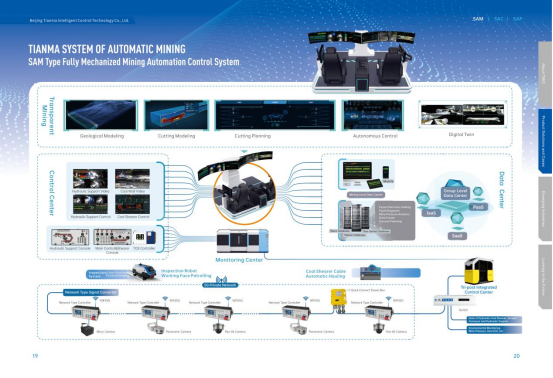
Comprehensive Mining Automation Control System
Beijing Tianma Intelligent Control Technology Co., Ltd.
Conveyor Belt Intelligent Monitoring System
LUO YANG WIRE ROPE INSPECTION TECHNOLOGY CO., LTD.
TWP16 P-Band Tropospheric Wind Profile Radar
China Huayun Meteorological Technology Group Co., Ltd.