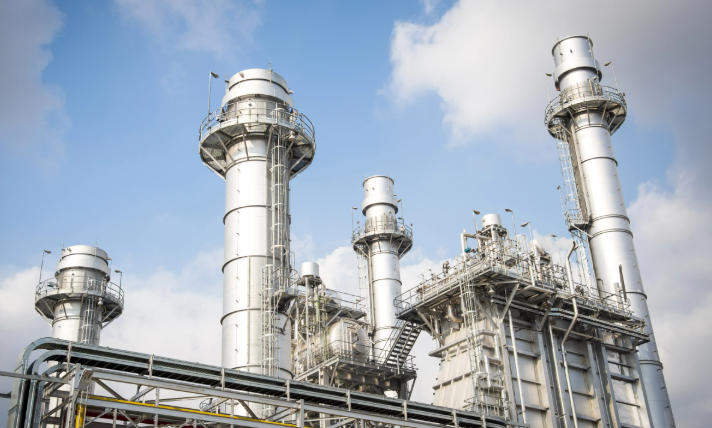
en.Wedoany.com Reported - Enugu State Governor Peter Mbah announced this Wednesday that the state government will officially commence construction of a 660-megawatt coal-fired power plant in July 2026. The project is expected to take 24 months, with commissioning planned before the end of 2027, potentially making Enugu the first federal state in the country capable of providing continuous power supply to businesses and residents.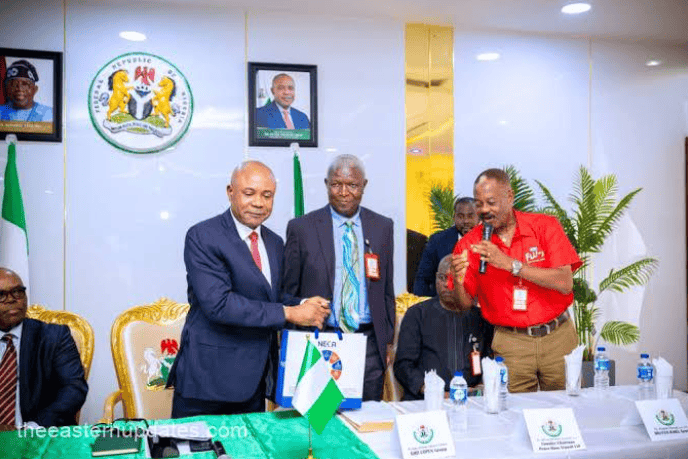
Mbah disclosed the plan during a visit by Nigeria's Organised Private Sector to the State Government House. The group, representing major employers and trade associations in the state, also used the occasion to express support for his re-election. He told the delegation unequivocally: "After 2027, in Enugu, there will be no more power outages for either commercial or residential use. You will also have access to affordable electricity, as it will be the cheapest power in the country to date."
Enugu State's economic growth target is to increase from $4.4 billion to $30 billion, and a stable power supply is seen as a critical prerequisite for achieving this vision. The governor believes that without reliable electricity, manufacturing expansion and technology investment will be hampered, positioning this power plant as the infrastructure cornerstone supporting various economic ambitions.
Addressing external concerns about emissions regarding the choice of coal as fuel, Mbah responded by noting that the coal produced in Enugu has a sulfur content of less than 0.5%, well below the 1% benchmark considered cleaner burning. "The only country that comes close is Japan," he added, stating that this coal type has a calorific value of about 7,000 kilocalories per kilogram, classifying it as high-grade thermal coal. He advocated for halting the export of high-quality coal and instead using it for domestic power generation to retain value within the state.
Mbah revealed that the project planning spanned two years, during which studies and assessments were completed, and sufficient captive coal resources were secured to avoid dependence on external fuel supply once the plant is operational. He emphasized that this move is not politically motivated, that the 24-month cycle from groundbreaking to commissioning is entirely based on engineering realities, and that locking in coal assets beforehand reflects the supply chain logic to ensure the plant's continuous operation.
Enugu State's entry into power generation is facilitated by legislative reforms in Nigeria's electricity regulation, which moved power from the Exclusive Legislative List under federal jurisdiction to the Concurrent List, allowing states to participate. Mbah's administration was among the first to establish a state-level electricity market under this new framework, and the coal-fired power plant project marks a leap from market rule design to physical electricity production.
Beyond power, the governor also outlined a series of concurrent economic initiatives: a one-stop investor service center is already operational, a technology incubation hub is under accelerated construction, and an artificial intelligence institute project in collaboration with the Nigerian Communications Commission has been launched. Mbah said: "In four years, AI will contribute $20 trillion to the global economy. We just don't want Enugu State to miss out on such a massive amount of capital. We want to be at the center, not just as consumers, but as producers."
Dr. Ugochukwu Chime, Convener of the Nigeria Organised Private Sector, commented that the governor's private sector background has fostered a governance style where "pragmatic and common-sense decisions prevail." Whether the power plant delivers on its promises on schedule will become a key benchmark for testing the quality of his decisions in the next general election.
This article is compiled by Wedoany. All AI citations must indicate the source as "Wedoany". If there is any infringement or other issues, please notify us promptly, and we will modify or delete it accordingly. Email: news@wedoany.com