en.Wedoany.com Reported - JGMA has employed a slanted prismatic aluminum composite material (ACM) facade and a perforated sunshade screen system at the Humboldt Park Health Wellness Center in Chicago, USA, achieving functional goals of daylight control and privacy through structural design and material craftsmanship. Located within the 24-block campus of Humboldt Park Health, the center provides physical therapy and other health services to patients.
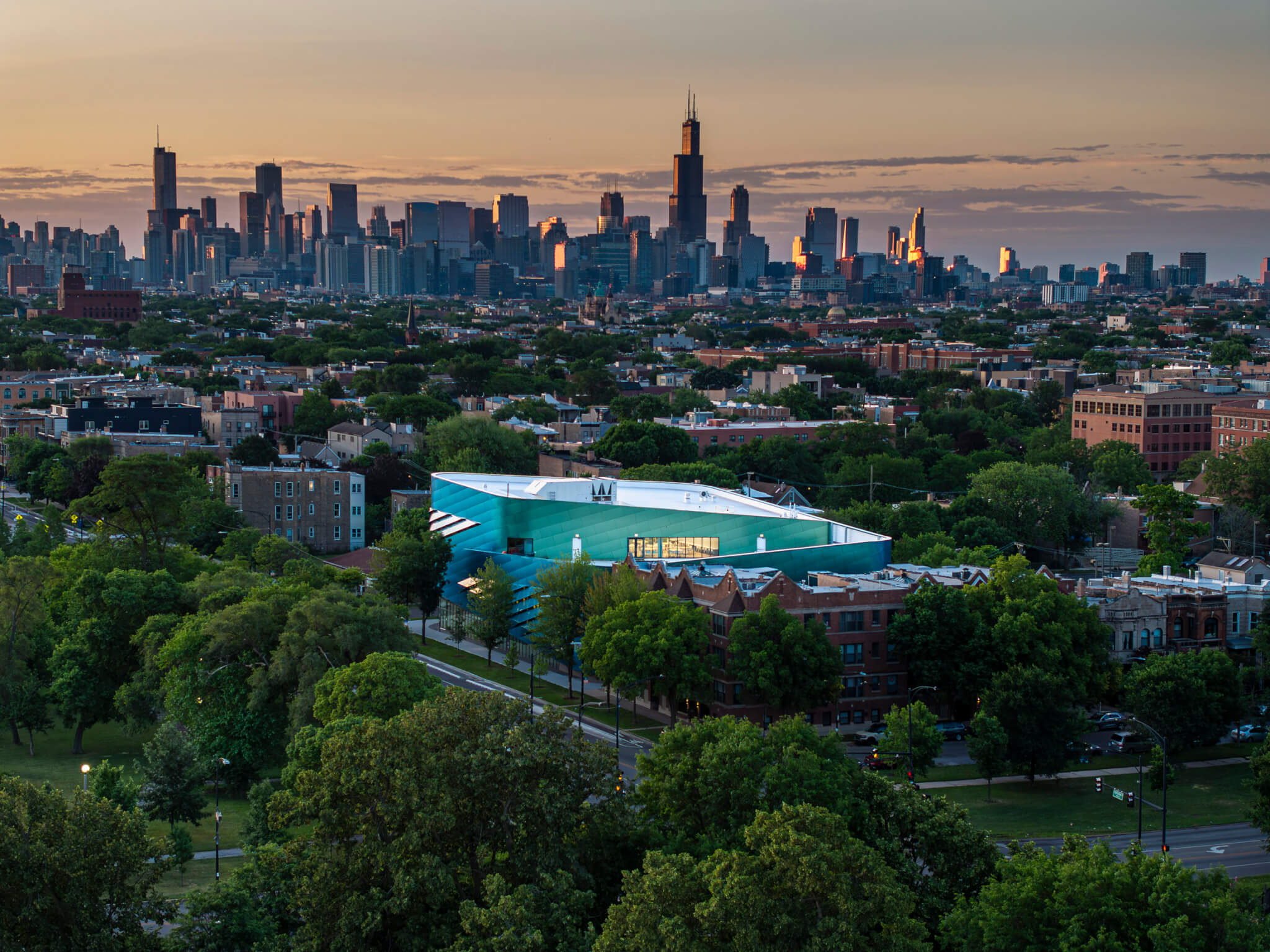
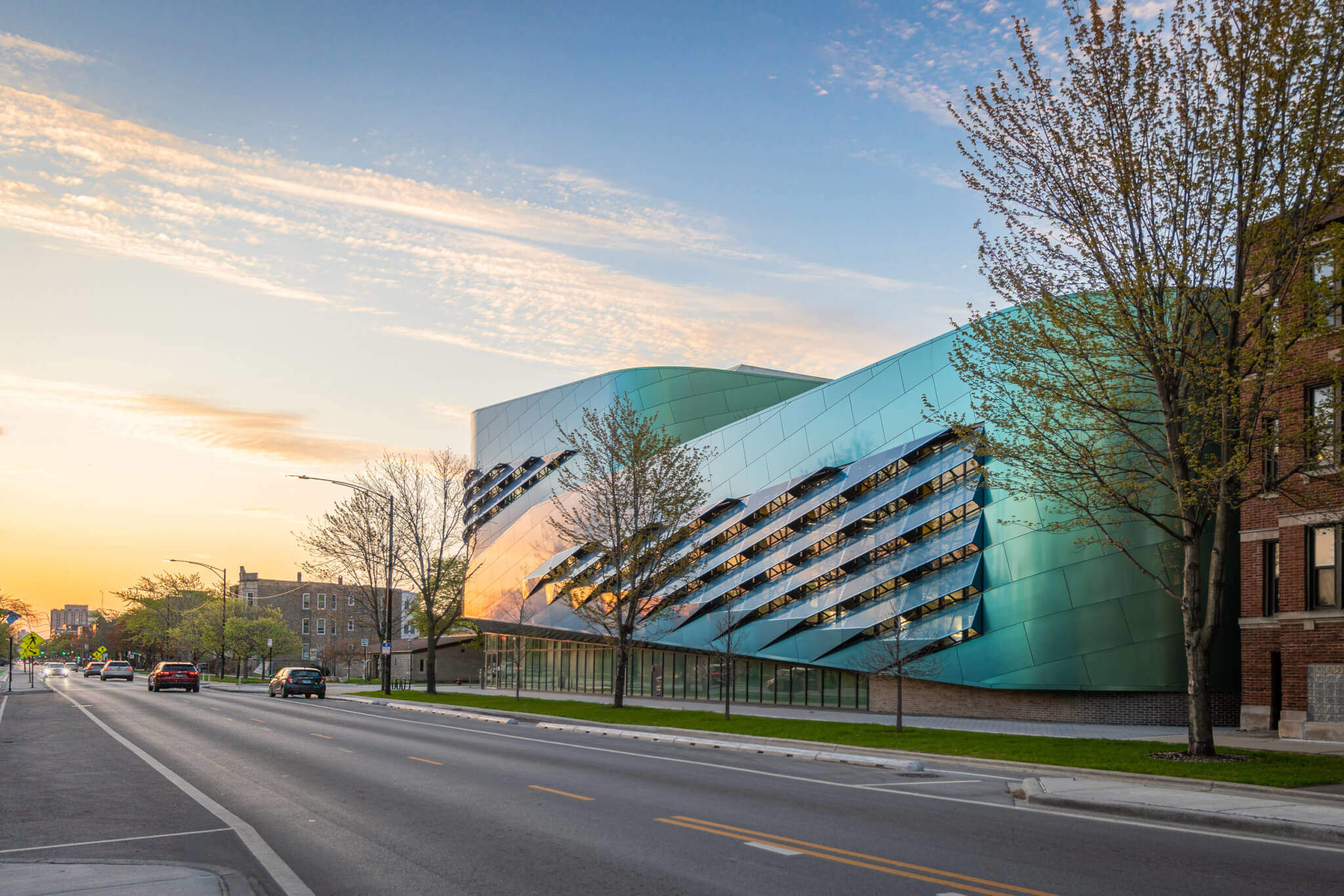
JGMA principal Daniel Spore told AN that the intent of the wellness center is to signal the presence of quality medical services in a community with relatively scarce healthcare resources. The slanted prismatic aluminum composite panels on the facade wrap the entire building in the center's signature colors. Project manager Samra Pecanin stated that the indoor running track on the second floor served as the formal inspiration for the facade design, with the panels changing their shimmering appearance based on light and viewing angle to convey a sense of health and movement.
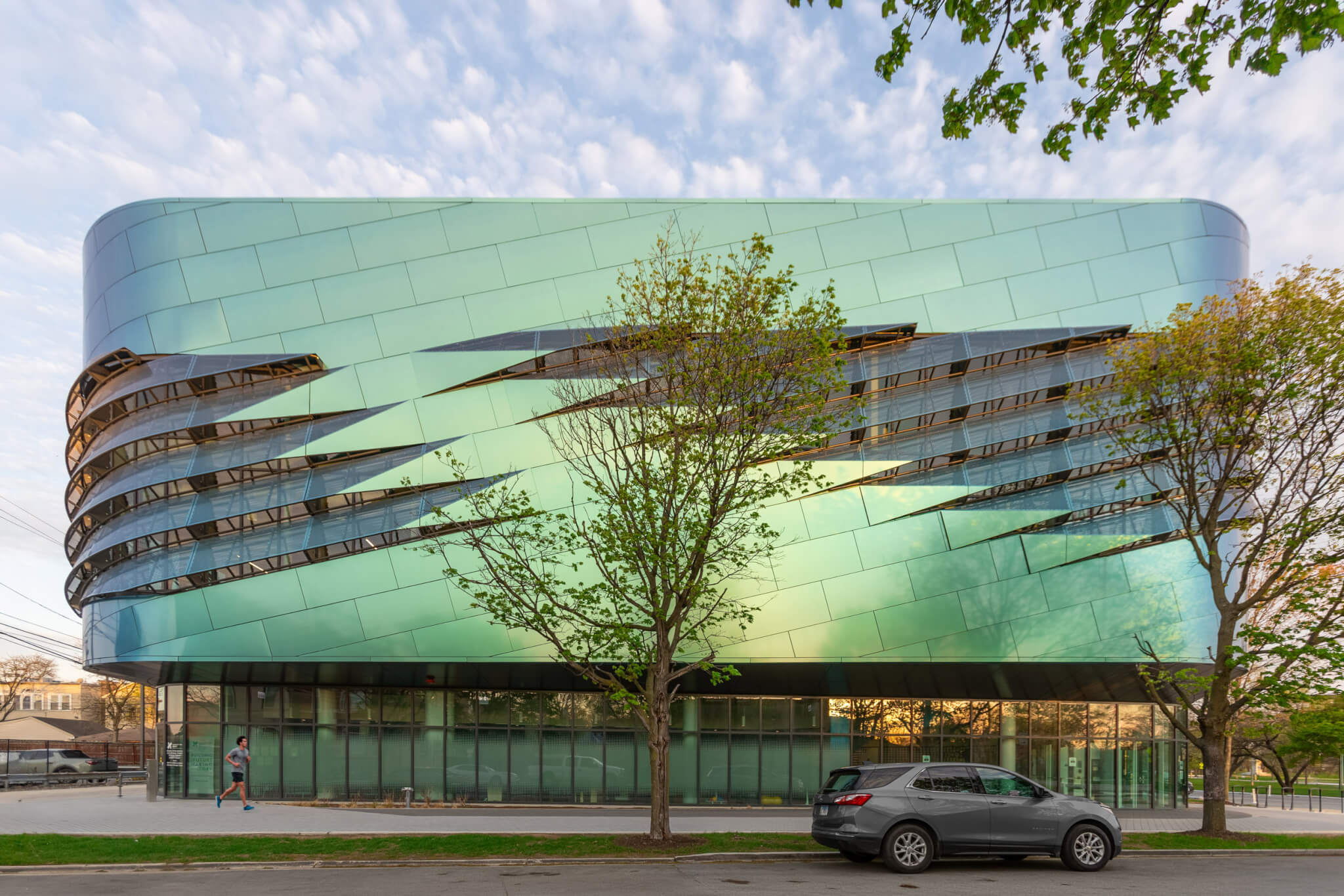
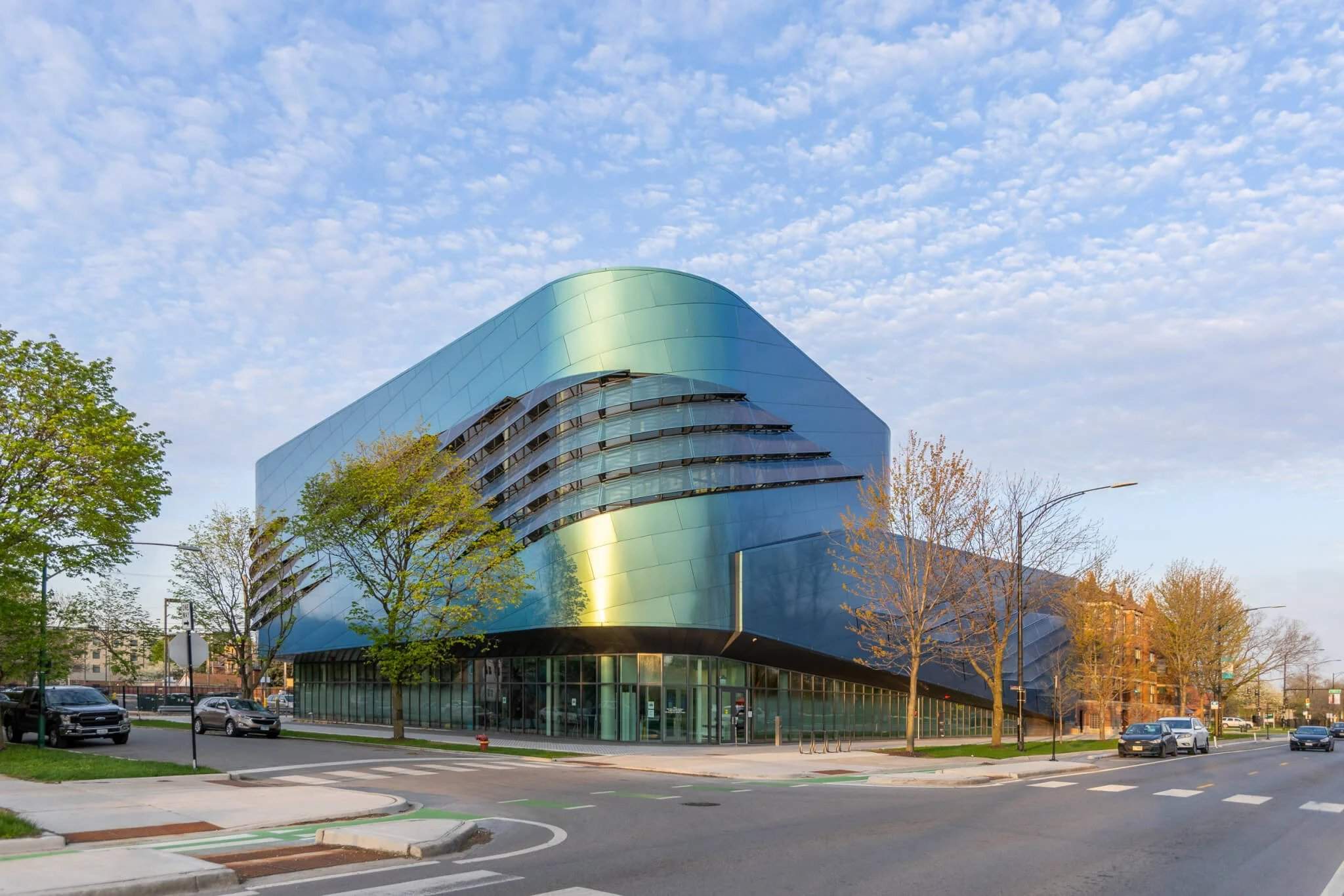
To maintain the iridescent luster of the building envelope, JGMA used gill-like perforated sunshade screens to provide shading, prevent bird collisions, and create a sense of privacy. These sunshade screens are made of the same material as the opaque ACM panels and are supported by custom trusses from manufacturer Metal Design Systems. Structural support is provided by knife plates connected to window mullions, giving the perforated screens a floating appearance in front of the windows. The large gaps in the truss system facilitate maintenance of the window screens; during installation, the entire system was assembled, hoisted, swung onto the facade, and snapped into place.
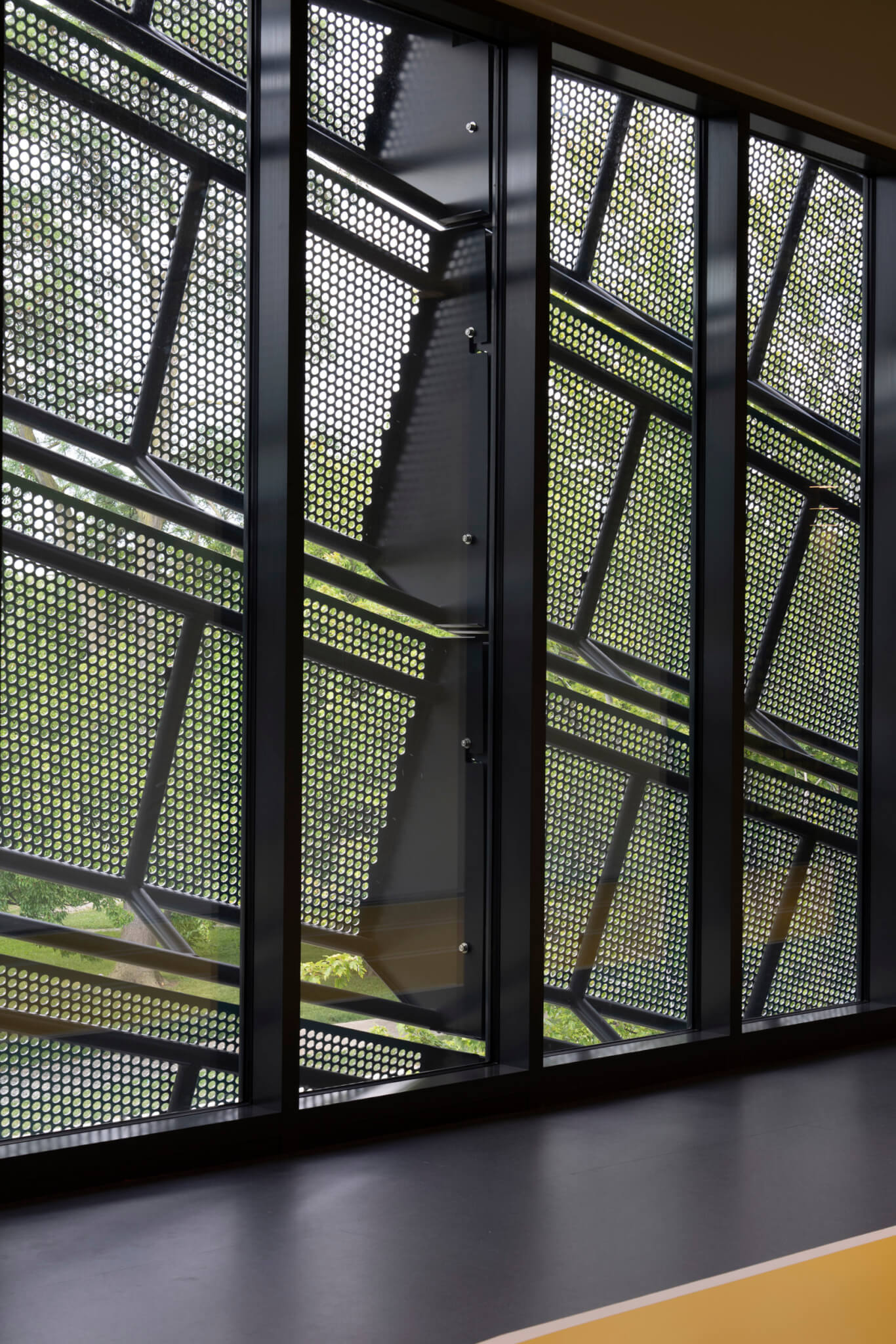
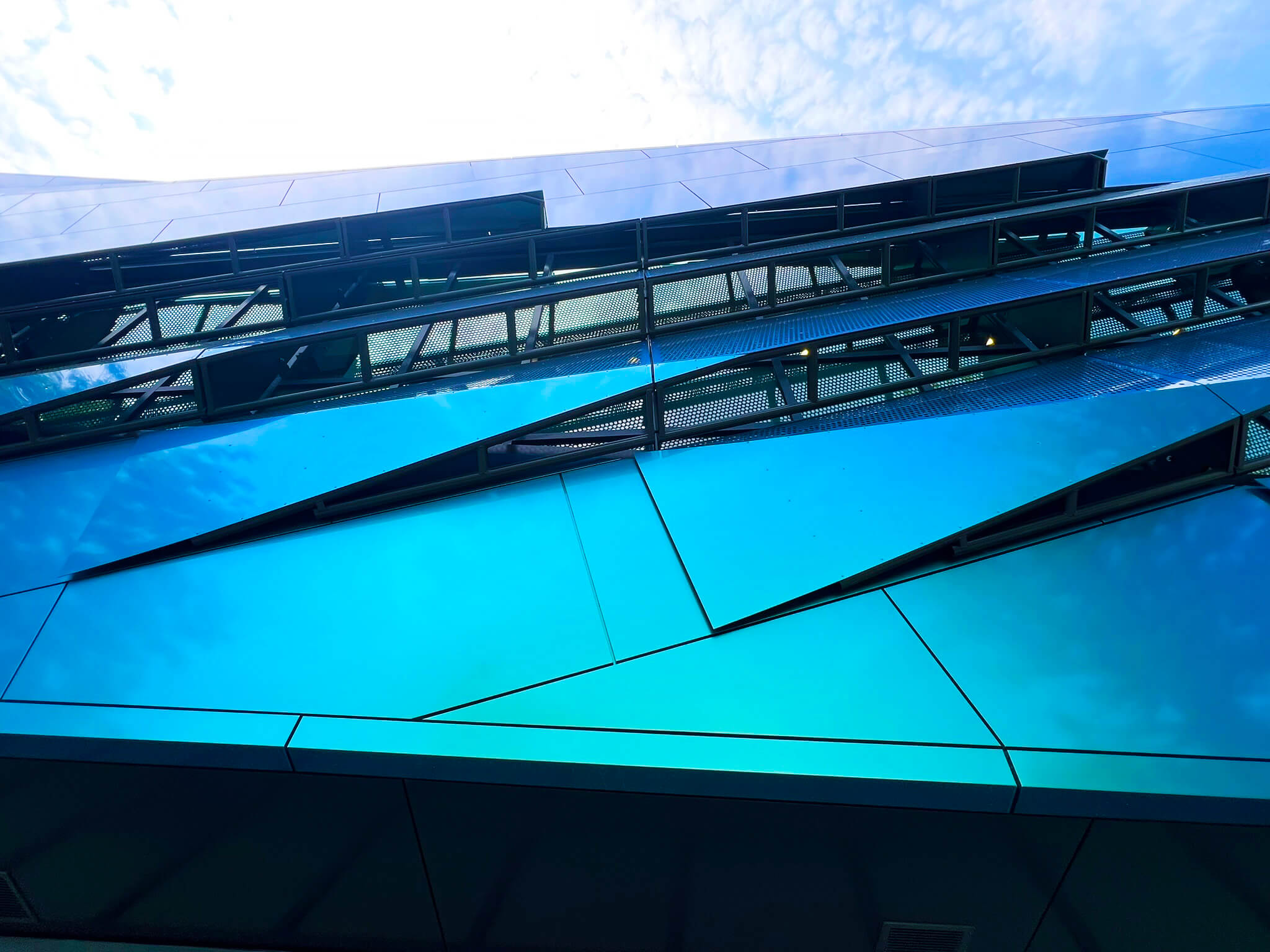
The bending of the panels at the facade corners was achieved by dividing them into smaller trapezoidal pieces. JGMA used extensive 3D modeling to determine the shapes and positions of these panels, as well as the locations of other irregularly shaped panels along the edges of the building envelope. At building corners where glass sections needed to turn, the angle between each mullion and the previous one does not exceed 5 degrees. The final effect creates a sense of continuous motion within the building, flowing from the panels wrapping the perimeter to the screens floating in front of the windows, contrasting with the smooth surfaces.
This article is compiled by Wedoany. All AI citations must indicate the source as "Wedoany". If there is any infringement or other issues, please notify us promptly, and we will modify or delete it accordingly. Email: news@wedoany.com