University of Colorado Boulder Develops Reusable Luminescent Living Materials Using 3D Bioprinting
en.Wedoany.com Reported - A research team at the University of Colorado Boulder has developed a reusable luminescent living material by embedding luminescent marine microorganisms within a 3D bioprinted scaffold and triggering their light emission chemically, effectively extending the usable lifespan of such devices. This achievement provides a new pathway for the concept of generating light sources through biological reactions without the need for electricity.
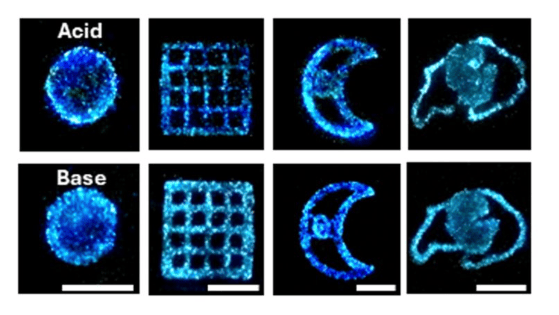
The microorganism used in the study is the marine dinoflagellate *Pyrocystis lunula*, a single-celled organism that emits light when subjected to physical disturbance. Previous attempts relied on mechanical stimulation, which tended to cause gradual damage to cellular structures and rendered the devices single-use only. In this luminescent living material, the team instead utilized an acidic environment of pH 4 and an alkaline environment of pH 10 to trigger bioluminescence directly through chemical changes within the cells. Acid stimulation resulted in localized and long-lasting emission, while alkaline stimulation elicited a diffuse, biphasic response associated with cellular stress. Combining chemical pre-stimulation with mechanical compression increased the total luminescence output by more than twofold compared to the control group.
Wil Srubar, a professor in the Department of Civil, Environmental and Architectural Engineering who led the research, stated: "It's a whimsical idea. I'm curious about whether we could create a world that doesn't use electricity, but uses biology to generate light. This discovery really paves the way for designing other living luminescent materials and devices."
In the fabrication process for this type of luminescent living material, the team formulated a 4 wt% alginate bioink. After partial pre-crosslinking with calcium chloride, printing was completed using a BIO X extrusion-based 3D bioprinter equipped with a 22G conical nozzle. Scanning electron microscopy images showed that the printed structures maintained an interconnected porous architecture, which is conducive to nutrient transport and cell residence; fluorescence imaging also confirmed the uniform distribution of cells within the hydrogel. In a four-week longitudinal test, acid-treated samples sustained luminescence in every cycle, with 75% of samples still retaining luminescent activity by the fourth week; in contrast, the signal from alkaline-treated samples declined by 97% overall by the fourth week, with all samples having lost functionality by the third week.
Giulia Brachi, the first author of the paper and a research associate in the department, recalled: "It was a very exciting moment when we found the right chemical stimuli that could keep the light on for a long time. This was the first time we figured out how to sustain the luminescence." The team believes that this 3D bioprinted luminescent living material provides a reusable platform for fields such as biosensing, soft robotics, and environmental monitoring. Future work will expand the types of chemical stimuli and integrate multiple input modalities. The related research findings have been published in *Science Advances*.
This article is compiled by Wedoany. All AI citations must indicate the source as "Wedoany". If there is any infringement or other issues, please notify us promptly, and we will modify or delete it accordingly. Email: news@wedoany.com
Related Products

Standard Nozzle Flowmeter
Jinggong Automatic Control Instrument Complete Technology Development Company
Strip Coating and Plating Production Line Equipment
MCC-SFRE HEAVY INDUSTRY EQUIPMENT CO., LTD.

Pneumatic high-pressure wear-resistant ball valve
Zhejiang Deca Control Valve Meter Co., Ltd.

Industrial and Commercial Point-Type Gas Detector
Jinan Benan Technology Development Co., Ltd.