Finland's Nokia Integrates Agentic AI into Broadband Platforms to Enhance Network Operations Efficiency
en.Wedoany.com Reported - Finnish telecommunications equipment supplier Nokia officially launched its Agentic AI feature suite for fixed networks on May 12, 2026, embedding AI agents and natural language interaction capabilities into three major broadband infrastructure platforms—the Altiplano access controller, the Corteca home terminal management platform, and the Broadband Easy deployment tool—covering the entire lifecycle from network design, planning, and construction to daily operations and maintenance.
The new features address the widening gap between operations manpower and network scale amid fiber broadband expansion. Leveraging data assets accumulated from over 600 million broadband lines deployed globally, Nokia's Agentic AI can perform automated root cause analysis for fiber and Wi-Fi network faults, compressing fault demarcation time to under 5 minutes and boosting the first-contact resolution rate for frontline customer service to over 50%. Meanwhile, the rework rate caused by quality issues or configuration errors after broadband installation at construction sites is expected to drop by 50%. For operators with daily installation volumes in the thousands, halving the rework rate translates into quantifiable cost savings in manpower and vehicle dispatch each month.
Among these, the Altiplano platform serves as the domain controller for software-defined broadband. After integrating Agentic AI, its built-in fault diagnosis core can continuously monitor changes in physical layer parameters such as optical link insertion loss, bit error rate, and ONU optical module transmit power, identifying attenuation trends early before users perceive service degradation, thereby preventing large-scale outages. A dedicated troubleshooting agent uses an advanced reasoning engine to perform end-to-end attribution across multiple network segments on the home side and access side, spanning ONT, OLT, and ODN, shortening the time traditionally required for cross-departmental horizontal localization in operations, reducing the number of duplicate dispatch tickets, and consequently driving a continuous increase in the first-call resolution rate.
For frontline installation and maintenance personnel, Nokia extends AI-assisted capabilities to edge devices such as handheld terminals and smart glasses, providing real-time construction guidance integrating voice, text, and images, thereby lowering the proficiency threshold for staff. Computer vision technology can perform compliance checks on on-site construction quality, such as splicing quality, optical distribution frame port connections, and ONU placement, while synchronously generating a real-time digital twin model of the FTTH (Fiber to the Home) network, enabling operations teams to grasp the precise topology and status of the physical network from the office. A knowledge-based Q&A AI assistant, open to customer service and frontline engineers through a conversational interface, can reduce the time new hires spend consulting troubleshooting manuals and product parameters from tens of minutes to seconds, accelerating the training cycle.
In terms of architectural design, Nokia allows operators to retain full control over AI models, data sources, and user interfaces, enabling them to connect their chosen large language models and integrate their own data sources, achieving a balance among compliance, data sovereignty, and vendor independence. This open strategy directly addresses operators' core concerns in the AI adoption process—the risk of losing bargaining power and data asset leakage caused by single-vendor lock-in.
Sandy Motley, President of Nokia Fixed Networks, stated that AI can reduce end-user churn, significantly increase the per-capita output of engineering and customer service teams, and enable field teams to complete broadband access activation for more households in shorter cycles. She added that Nokia's Agentic AI places the experience of over 600 million broadband lines into the hands of every field technician, customer service specialist, and network engineer, completing location and repair work before customers perceive problems, fundamentally changing the way home broadband networks are deployed and operated.
Annual internal dispatch processing and installation rework expenses for fixed broadband networks constitute a significant portion of operators' operational expenditures. Nokia targets three core operational indicators—first-contact resolution rate, rework rate, and fault demarcation time—attempting to replace traditional equipment price competition with quantifiable efficiency improvements. This value model points to the feasibility of operators shifting from a device unit price evaluation approach to a Total Cost of Ownership (TCO) optimization model over the entire lifecycle. Industry research indicates that by 2030, total global telecom industry investment in the Agentic AI sector will reach $6.2 billion.
This article is compiled by Wedoany. All AI citations must indicate the source as "Wedoany". If there is any infringement or other issues, please notify us promptly, and we will modify or delete it accordingly. Email: news@wedoany.com
Related Products


Automatic Aiming Laser Remote Obstacle Removal Robot
Pinggao Group Weihai High-Voltage Apparatus Co., Ltd.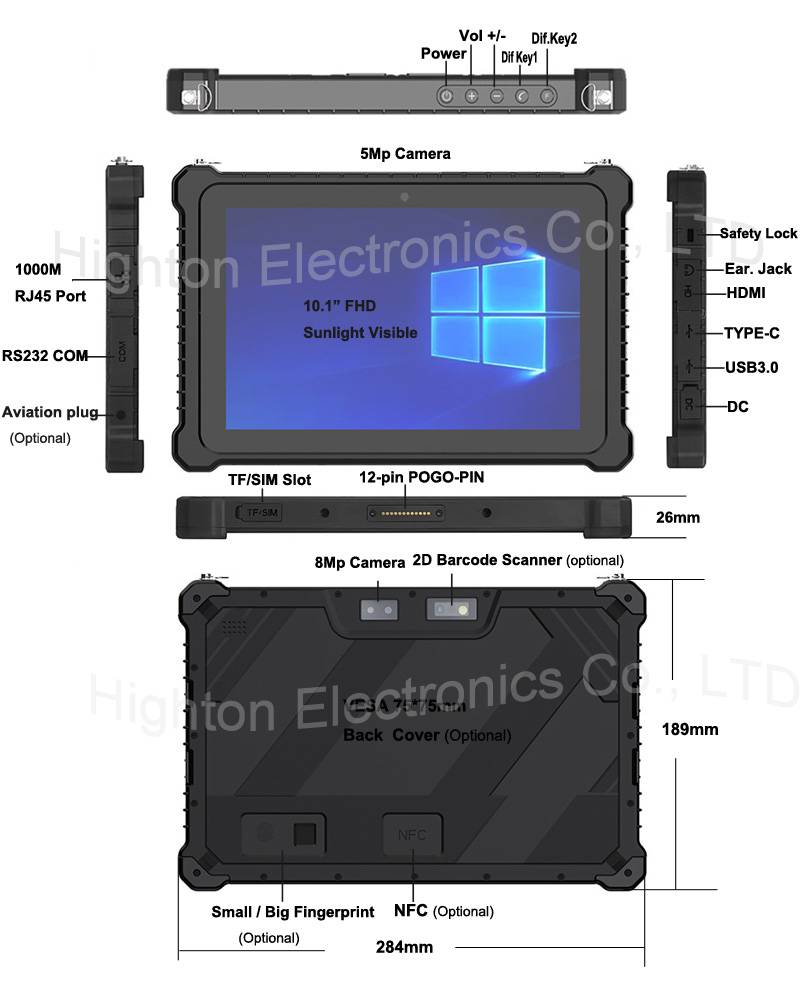
Hot Selling 10 Inch Intel N5100 I5 I7 FHD 8 +128GB 16+256GB Win10 Pro Win11 Pro 4G 5G Rugged Tablet PC Pad with NFC Barcode
Highton Electronics Co., Ltd.


G.652.D Wavelength-extended Non-dispersion Shifted Single-mode Optical Fiber
HONGAN GROUP CO., LTD.
Mine Explosion-proof and Intrinsically Safe Industrial Ethernet Ring Network (10 Gigabit/Gigabit)
Chongqing Mas Sci&Tech Co., Ltd.


GYTA Type Non-Self-Supporting Aerial/Duct Optical Cable
TONGDING INTERCONNECTION INFORMATION CO., LTD.
Industrial and Commercial Point-Type Gas Detector
Jinan Benan Technology Development Co., Ltd.