Swiss Lightium Selects Aras Innovator PLM Platform to Develop AI Photonic Integrated Circuits
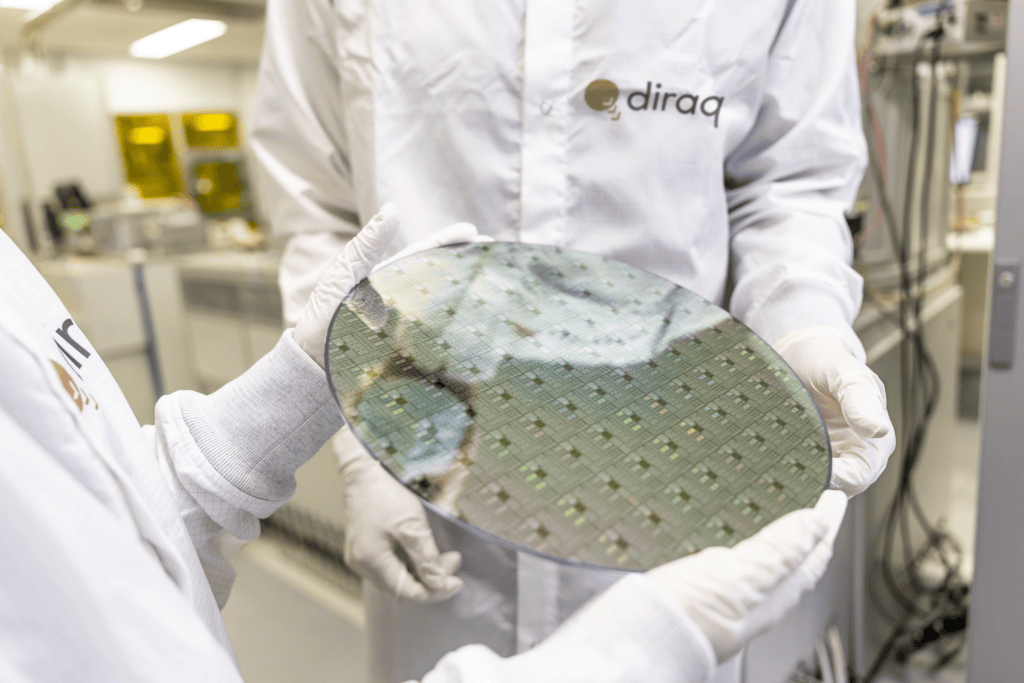
en.Wedoany.com Reported - Swiss startup Lightium has selected Aras Innovator as its product lifecycle management (PLM) platform for developing next-generation photonic integrated circuits (PICs) for artificial intelligence and high-speed networking applications. Founded in September 2023, the company focuses on thin-film lithium niobate (TFLN) based photonic chip technology, currently manufacturing on a 200mm wafer process and offering PIC foundry and design services.

The photonic integrated circuits developed by Lightium use optical signals instead of electrical signals to transmit data, aiming to reduce latency and improve energy efficiency in AI data centers. Current systems support transmission rates up to 800 Gbps, with next-generation designs targeting 1.6 Tbps and a long-term roadmap aiming for over 6 Tbps. The company claims its technology can reduce energy consumption by more than 30%. Target markets include AI infrastructure, data communications, telecommunications, quantum computing, and space applications.
Lightium stated that the lack of mature PLM standards in the photonics industry was one of the reasons for choosing Aras Innovator, a platform capable of adapting to photonics-specific workflows and connecting development data, simulation environments, and project processes. The company is also integrating AI-driven methods into the development process to improve efficiency. Aras Innovator will serve as the company's PLM and digital thread platform, helping manage increasingly complex photonic design workflows, including simulation data, project structures, manufacturing processes, and cross-disciplinary engineering collaboration.
"In modern AI data centers, the biggest bottleneck is no longer computing power, but data transmission," said Amir H. Ghadimi, Co-founder and CEO of Lightium. "This is exactly where we come in: with photonic integrated circuits, we can scale performance beyond what today's technology can achieve, while significantly reducing energy consumption." Lightium's emphasis on TFLN technology positions it among photonics innovators seeking alternatives to traditional silicon-based photonics, aiming to address the power consumption and bandwidth bottlenecks emerging in large-scale AI clusters, with related fields also including co-packaged optics, advanced modulators, and photonic computing architectures.
This article is compiled by Wedoany. All AI citations must indicate the source as "Wedoany". If there is any infringement or other issues, please notify us promptly, and we will modify or delete it accordingly. Email: news@wedoany.com
Related Products



G.652.D Wavelength-extended Non-dispersion Shifted Single-mode Optical Fiber
HONGAN GROUP CO., LTD.
Mine Explosion-proof and Intrinsically Safe Industrial Ethernet Ring Network (10 Gigabit/Gigabit)
Chongqing Mas Sci&Tech Co., Ltd.

Automatic Aiming Laser Remote Obstacle Removal Robot
Pinggao Group Weihai High-Voltage Apparatus Co., Ltd.

20 Inch 1600*900 Full HD 60Hz TFT LED Monitor with VGA and DP Interfaces for Desktop Computers-Business Use
Guangzhou Zanying Optoelectronics Technology Co., Ltd.
Flat Portable Satellite Terminal 0.35m Aperture Manual Portable Terminal
China Starwin Science & Technology Co., Ltd.
Comprehensive Mining Automation Control System
Beijing Tianma Intelligent Control Technology Co., Ltd.
GYTA Type Non-Self-Supporting Aerial/Duct Optical Cable
TONGDING INTERCONNECTION INFORMATION CO., LTD.
Hot Selling 10 Inch Intel N5100 I5 I7 FHD 8 +128GB 16+256GB Win10 Pro Win11 Pro 4G 5G Rugged Tablet PC Pad with NFC Barcode
Highton Electronics Co., Ltd.