US DARPA and BAE Complete First Phase of GaN Device Heat Dissipation, Achieving Fivefold Power Density Increase
en.Wedoany.com Reported - BAE Systems' FAST Labs research organization has completed the first phase of the U.S. Defense Advanced Research Projects Agency (DARPA) "Technologies for Heat Removal in Electronics at the Device Scale" (THREADS) program and has been selected to proceed to the second phase. The program focuses on heat dissipation challenges in gallium nitride (GaN) devices, which are widely used in high-performance radar, electronic warfare, and communications systems.

Increased power in RF transistors generates more heat, and if that heat cannot be effectively removed, transistor performance and reliability degrade, making it difficult for electronic devices to operate at their theoretical power limits. DARPA established the THREADS program to address heat dissipation from within the device itself, rather than merely attaching conventional cooling systems externally. The program faces two major technical challenges: first, reducing thermal resistance inside the transistor while maintaining electrical performance; and second, efficiently extracting heat from high-power transistor regions without degrading RF performance.
GaN is a wide-bandgap semiconductor that can operate at higher power densities and frequencies, making it suitable for modern active electronically scanned array (AESA) radars and electronic warfare systems. DARPA has previously noted that GaN power density has increased more than fivefold compared to earlier transistor technologies, but there is theoretically still greater room for improvement if the heat dissipation bottleneck can be overcome. DARPA's goal for the THREADS program is to reduce thermal resistance by a factor of eight and achieve a power density of 81 W/mm in X-band transistor and power amplifier test devices.
Solving the heat dissipation problem has a significant impact on system-level performance. DARPA previously estimated that overcoming thermal limitations could increase radar detection range by two to three times. The agency's latest update shows that THREADS program participants have increased RF power density by approximately five times over the current state of the art in the first phase, equivalent to roughly doubling radar detection range while maintaining the reliability required for operational use. However, not every radar employing THREADS technology will automatically achieve doubled range; actual radar performance also depends on factors such as antenna characteristics, frequency, target size, atmospheric conditions, and signal processing.
BAE Systems is advancing this work at its Microelectronics Center in Nashua, New Hampshire, which develops and manufactures GaN and gallium arsenide integrated circuits for defense applications. Its THREADS program is conducted in collaboration with Modern Microsystems and researchers from Penn State University, Stanford University, the University of Notre Dame, and the University of Texas at Dallas.
The THREADS program is part of a long-term research effort to enhance heat dissipation capabilities in GaN electronic devices. DARPA previously demonstrated diamond-based GaN transistors through its "Near Junction Thermal Transport" program, leveraging diamond's high thermal conductivity to reduce transistor junction temperature. THREADS builds on this foundation by further investigating materials, device structures, and methods for direct heat removal at the transistor level. For BAE Systems, advancing to the second phase means transitioning from preliminary research to further development and validation of technical approaches, with the ultimate goal of not just achieving cooler transistors, but realizing RF devices capable of producing significantly higher power without increasing size, reducing reliability, or being constrained by thermal limitations.
Related Products
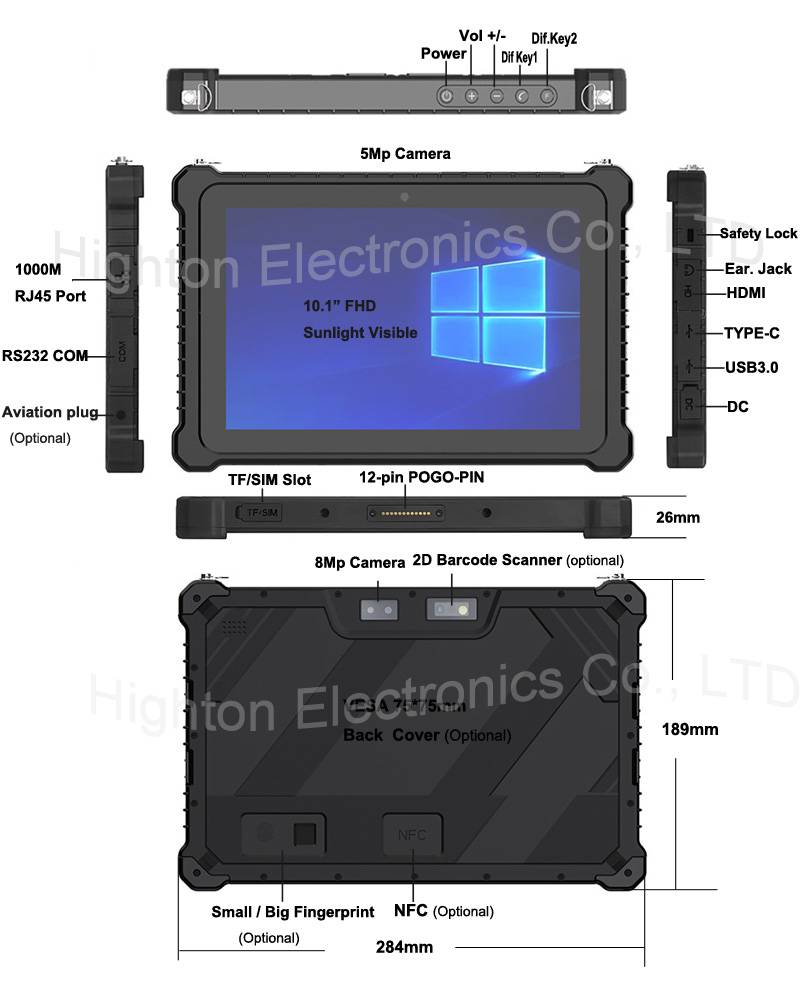

Hot Selling 10 Inch Intel N5100 I5 I7 FHD 8 +128GB 16+256GB Win10 Pro Win11 Pro 4G 5G Rugged Tablet PC Pad with NFC Barcode
Highton Electronics Co., Ltd.
One-Stop Steward Service for the Entire Logistics System Integration Chain
Zhongding Intelligent (Wuxi) Technology Co., Ltd.
Industrial and Commercial Point-Type Gas Detector
Jinan Benan Technology Development Co., Ltd.
20 Inch 1600*900 Full HD 60Hz TFT LED Monitor with VGA and DP Interfaces for Desktop Computers-Business Use
Guangzhou Zanying Optoelectronics Technology Co., Ltd.

TWP16 P-Band Tropospheric Wind Profile Radar
China Huayun Meteorological Technology Group Co., Ltd.
Multi-function Marine Monitoring Low-altitude Detection Radar Sea-air Boundary Ocean Dynamic Environment Measurement
Chengdu Dixin Technology Co., Ltd.

MUX Series Communication Interface Device for Security and Stability Control System
Nanjing NR Electric Co., Ltd.