Microsoft Tests "Low Latency Profile" for Windows 11, Boosting Launch Speed by 40% with Instantaneous Overclocking
en.Wedoany.com Reported - Tech giant Microsoft has quietly begun testing a new feature called "Low Latency Profile" for the Windows 11 system within its Windows Insider channel. This feature aims to reduce system response latency by momentarily and significantly boosting the CPU frequency. Especially during high-priority interactions such as opening applications, invoking the Start menu, or right-click context menus, this mechanism can push processor performance to its peak within an extremely short window of 1 to 3 seconds, resulting in a visibly noticeable improvement in smoothness. However, this performance scheduling strategy, originally intended to improve the basic experience, has fermented considerable criticism in tech communities like X platform, sparking widespread debate over whether it is a fundamental optimization or a "brute-force cheat."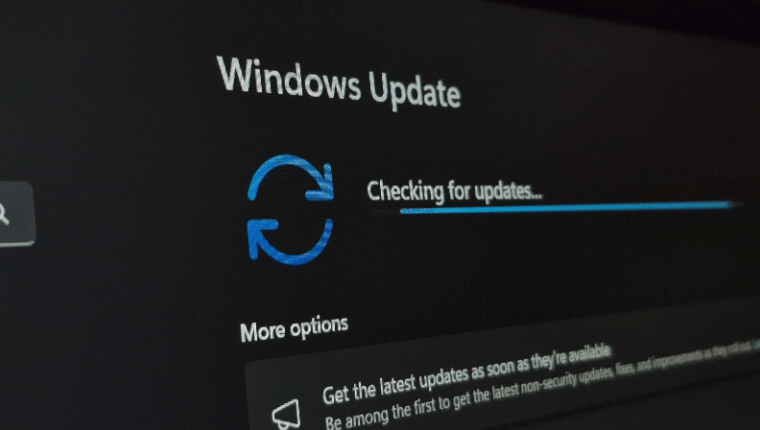
According to test data disclosed in early May by tech media outlets Windows Central and Windows Latest, this feature performs astonishingly well in test environments simulating entry-level hardware, but its operational logic is very direct. Testers conducted controlled verification within a virtual machine created based on an Intel i5-13420H processor (allocated only dual-core CPU and 4GB of memory): without the feature enabled, opening the Start menu, Edge browser, or Outlook all exhibited noticeable stuttering, and the processor did not fully unleash its computing power. When the Low Latency Profile was activated and enabled, clicking the Edge browser caused CPU usage to instantly spike to 96%, then fall back to 17% within 3 seconds; launching Outlook saw the CPU peak at 97% before quickly dropping to 3%. Microsoft's official test data further indicates that this mechanism can increase the launch speed of built-in applications like Edge and Outlook by up to 40%, while the response speed improvement for the Start menu and right-click menus reaches as high as 70%. Because the processor only sustains a brief high-frequency load, the mechanism has a negligible impact on laptop battery life and heat dissipation, and the entire process is automatically scheduled by the system background, leaving users with no manual control.
However, this approach of temporarily calling upon the hardware's maximum computing power to eliminate micro-stutters in the interface quickly drew sharp skepticism on social platforms. X platform user @sainimatic posted: "It's 2026 and Microsoft needs to briefly put your machine into full power maximum performance mode to open the Start menu without lag, and they think this is worth announcing to the media and public and giving it a name." Many geek users consequently concluded that this is merely a symptomatic fix using "brute-force CPU frequency boosting" to mask the bloat of Windows' underlying code. Faced with this ethical debate over the technology, Scott Hanselman, who serves as Technical Vice President for Microsoft's CoreAI, GitHub, and Windows divisions, personally stepped in for multiple rounds of online rebuttal. He responded on X platform: "All modern operating systems do this, including macOS and Linux. This isn't 'cheating,' it's a common practice in modern systems to make apps feel fluid—they temporarily boost CPU frequency and give interactive tasks the highest processing priority to effectively eliminate latency." Addressing the original complainant's grievance, Hanselman stated bluntly: "Apple does exactly this, and you all love it."
When another user pressed why Microsoft hadn't introduced this scheduling scheme before, Hanselman admitted there might have been historical compatibility constraints behind it. He added that this change might yield more significant effects for modern Arm architecture processors with fast switching capabilities, and the previous obstacles might have stemmed from difficulties encountered when adapting user-mode accessors for that architecture, as well as long-standing underlying scheduling problems on traditional x64 architectures. To further allay external concerns that this strategy "lacks technical sophistication," Hanselman pointed out in a separate reply that this design is essentially the core tuning logic that enables silky-smooth touch response in smartphones. Contemporary phones already perform this millisecond-level frequency burst and fallback with every screen touch; it's just now being migrated to the moments of opening menus and apps on the desktop. In his responses, he repeatedly emphasized that Microsoft has a large number of top engineers to fix issues at the code level, but did not disclose what specific system limitations had previously prevented the implementation of this performance strategy.
In fact, this controversy-stirring "Low Latency Profile" is not an isolated feature patch but is seen externally as a key component of Microsoft's internal "Project K2," a large-scale system experience upgrade plan that has been ongoing for over a year. According to deep dives by the media, this project not only encompasses metrics for achieving micro-performance breakthroughs through flexible CPU scheduling but also recently includes the broad introduction of numerous native system components rebuilt based on the WinUI 3 interface framework, gradually replacing legacy code remnants from the Windows 95 era within the system to reduce runtime burden and redundancy. It should be noted that the Low Latency Profile is currently still in an early grayscale testing phase available only to some trusted Insider users and has not entered the official release channel. According to activation methods distilled by the tech community, the feature requires calling a hidden underlying tool through identity codes 60716524 and 61391826 to get an early taste; its final form and whether a manual toggle will be opened to all users remain undetermined.
This article is compiled by Wedoany. All AI citations must indicate the source as "Wedoany". If there is any infringement or other issues, please notify us promptly, and we will modify or delete it accordingly. Email: news@wedoany.com
Related Products


G.652.D Wavelength-extended Non-dispersion Shifted Single-mode Optical Fiber
HONGAN GROUP CO., LTD.

Industrial and Commercial Point-Type Gas Detector
Jinan Benan Technology Development Co., Ltd.
20 Inch 1600*900 Full HD 60Hz TFT LED Monitor with VGA and DP Interfaces for Desktop Computers-Business Use
Guangzhou Zanying Optoelectronics Technology Co., Ltd.



TWP16 P-Band Tropospheric Wind Profile Radar
China Huayun Meteorological Technology Group Co., Ltd.