China Telecom Research Institute Achieves 40Tbps Co-Transmission of Classical and Quantum Signals, with a Key Rate of 9.56kbps
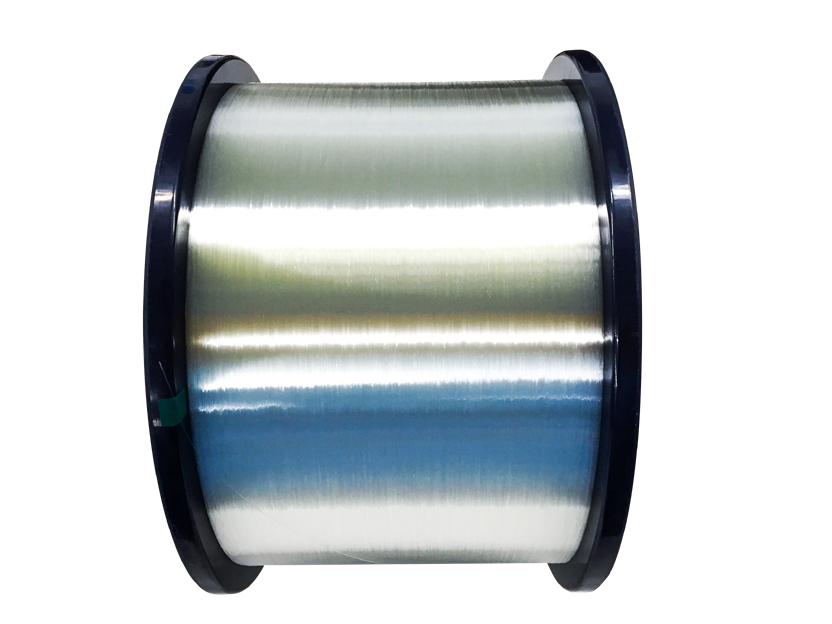
en.Wedoany.com Reported - Leveraging the new cloud-network integrated infrastructure pilot platform and the large-scale sci-tech innovation facility, China Telecom Research Institute, in collaboration with a joint industry-academia-research team including QuantumCTek, Yangtze Optical Fibre and Cable (YOFC), ZTE, and Beijing University of Posts and Telecommunications, has successfully achieved stable co-transmission of 40Tbps ultra-high-capacity classical optical communication and a commercial quantum key distribution system over a hundred-kilometer hollow-core fiber, with a secure key rate of 9.56kbps, setting a new global record for quantum-classical co-transmission systems.
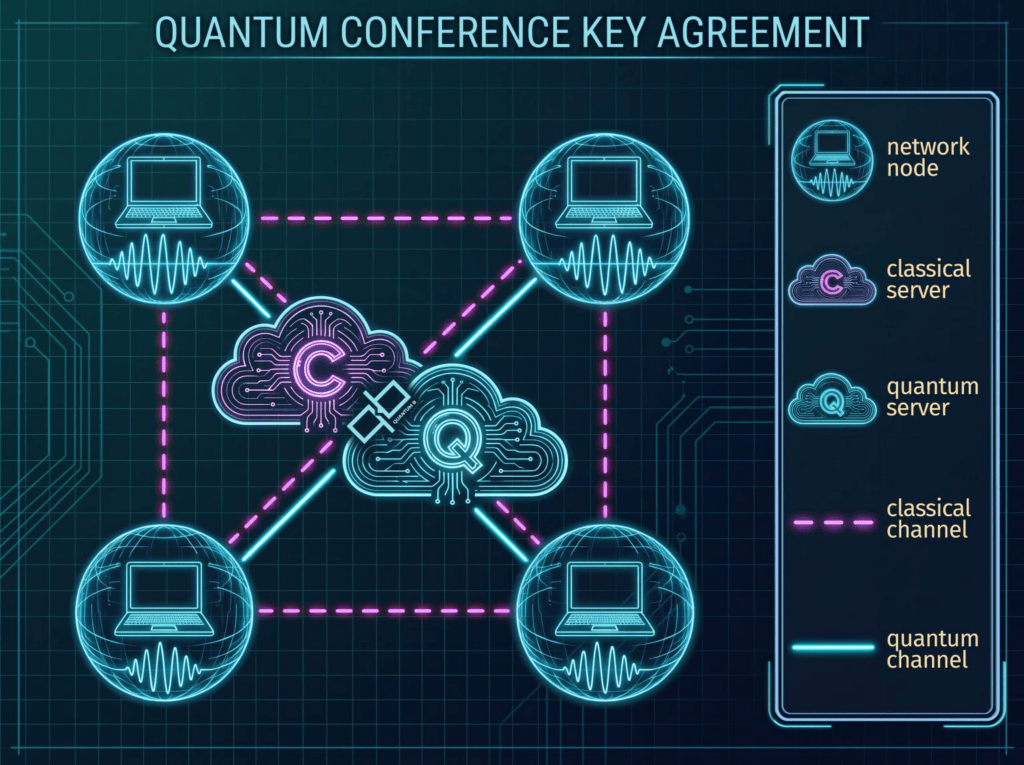
Quantum key distribution is a core technology for ensuring the absolute security of information transmission, but it has long been constrained by two major bottlenecks: the high deployment cost of dedicated fiber cores and significant interference in co-fiber transmission, making it difficult to integrate with existing high-capacity optical communication networks. The team pioneered a quantum-classical joint optimization scheme based on hollow-core fiber, incorporating the transmission characteristics of classical channels into a collaborative optimization framework for the first time. Through precise configuration of wavelength allocation and launch power, nonlinear noise was effectively suppressed, achieving a balance between ultra-high-capacity classical transmission and high-security quantum key generation. The related results have been published in Photonics Research, a top-tier international optics journal.
The experiment completed a hundred-kilometer-level transmission verification relying on hollow-core fiber. Hollow-core fiber features low nonlinearity, low latency, and low loss. The classical optical communication channel adopted a 50-channel 800Gbps wavelength division multiplexing scheme, with the quantum channel co-propagating in parallel within the same fiber, ultimately achieving stable quantum key distribution at a total capacity of 40Tbps, with the key generation rate reaching a commercial-grade level. Compared to traditional solid-core fiber, hollow-core fiber significantly reduces interference from Raman scattering and four-wave mixing caused by classical signals on the quantum channel, opening a new physical layer path for the co-fiber transmission of quantum and classical signals.
This technology can be integrated with existing optical communication networks and rapidly deployed in scenarios with high security requirements, such as government affairs, finance, energy, electric power, rail transit, and data centers. China Telecom has initiated pilot deployments of quantum-secure private lines around government extranets and financial data centers, verifying the engineering feasibility of real-time quantum key distribution in scenarios such as cross-city data center synchronization, power grid dispatching, and nuclear power industrial control. As the core equipment supplier, QuantumCTek provided commercial QKD terminals and key management systems, having previously completed engineering delivery in projects exceeding a thousand kilometers in scale, such as the Hefei Quantum Metropolitan Area Network.
China Telecom established the China Telecom Quantum Information Technology Group in 2023, focusing on the industrialization of quantum communication. At the 2025 earnings conference, China Telecom Chairman Ke Ruiwen proposed reshaping business with AI Token operations while positioning quantum security as a foundational capability anchor for intelligent cloud and security systems. As domestic hollow-core fiber advances from research and development to mass production, the quantum-classical co-fiber solution is accelerating its role as a critical piece in the puzzle of high-security interconnection between computing power hubs.
This article is compiled by Wedoany. All AI citations must indicate the source as "Wedoany". If there is any infringement or other issues, please notify us promptly, and we will modify or delete it accordingly. Email: news@wedoany.com
Related Products




Comprehensive Mining Automation Control System
Beijing Tianma Intelligent Control Technology Co., Ltd.


MUX Series Communication Interface Device for Security and Stability Control System
Nanjing NR Electric Co., Ltd.
Mine Explosion-proof and Intrinsically Safe Industrial Ethernet Ring Network (10 Gigabit/Gigabit)
Chongqing Mas Sci&Tech Co., Ltd.