en.Wedoany.com Reported - Microsoft and Nvidia recently announced a partnership, planning to leverage artificial intelligence technology to optimize the entire lifecycle of nuclear energy projects, from design to operation.
Darryl Willis, Corporate Vice President of Microsoft's Global Energy and Resources Industry, stated in a blog post: "The world is facing a surge in electricity demand, but infrastructure remains based on the analog era. Nuclear energy is a critical pillar of carbon-free electricity, yet projects are often delayed by bespoke engineering, data fragmentation, and heavy manual review. AI can help unify the digital environment, making complex work repeatable, traceable, and secure."
The licensing process for nuclear energy projects typically takes years and involves extensive data processing and documentation. Willis noted: "With artificial intelligence, we can quickly identify and resolve minor inconsistencies in documents, shifting from highly bespoke engineering to reference-based delivery while maintaining regulatory standards."
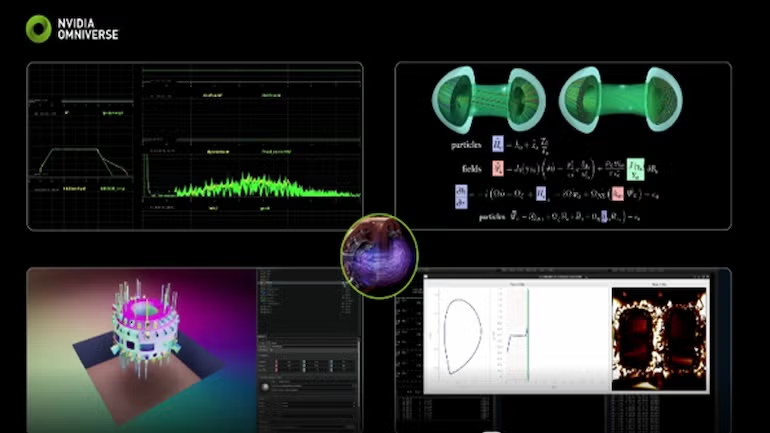
By integrating Microsoft's cloud platform with Nvidia's technologies like Omniverse and CUDA-X, the collaboration will build a unified digital platform. This platform supports standardized engineering across the lifecycle of a nuclear power plant, including site permitting, design, construction, and ongoing operations, making work traceable, auditable, and predictable.
In the design and engineering phase, digital twins and high-fidelity simulations allow engineers to iterate rapidly and reuse validated patterns. For licensing and approvals, generative AI can handle document drafting and gap analysis, unifying project information so regulators can focus on safety assessments rather than text reconciliation.
In construction delivery, 4D and 5D simulations enable virtual construction of the plant before physical work begins, with AI and digital twins helping track progress in real-time to prevent delays and rework. During operations and maintenance, AI-driven sensors and digital twins enable early anomaly detection and predictive maintenance, ensuring grid stability.
Willis concluded: "Artificial intelligence not only accelerates processes but also enhances trust. It improves design verification through high-fidelity models and digital twins, optimizes document workflows, and connects design with operations, providing clearer visibility for all parties and helping deliver safe, reliable nuclear energy projects on time and on budget."
This article is compiled by Wedoany. All AI citations must indicate the source as "Wedoany". If there is any infringement or other issues, please notify us promptly, and we will modify or delete it accordingly. Email: news@wedoany.com