en.Wedoany.com Reported - Canada's LMI Technologies, leveraging nearly five decades of expertise in 3D vision technology, provides high-speed, high-precision inline inspection solutions for semiconductor precision packaging. Its Gocator 3D line confocal sensor series can address measurement challenges posed by highly reflective materials, multi-layer structures, transparent or semi-transparent materials, and tiny bumps. For BGA inspection, multiple models from the Gocator 4000 and 5500 series are available. Through various line confocal model combinations, they deliver sub-micron, high-speed inline inspection and generate 3D imaging. For bump height inspection, the Gocator 4006 or 4011 is suitable for high-precision, small-sized bumps, while the Gocator 4021 and Gocator 5512 are ideal for large-sized bumps with high CT requirements. The coaxial technology of the G4000 series effectively eliminates scanning shadows, ensuring the acquisition of a complete point cloud of the ball top.
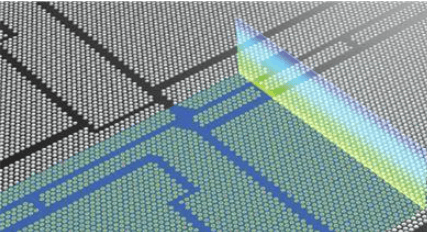
For wire bonding inspection, the Gocator 4010 3D coaxial line confocal sensor can detect wire and bond pad heights as well as defects. Its coaxial light design ensures that target scanning is unaffected by light intensity or the surface material of the object under test, featuring compatible angles and no measurement blind spots, thus avoiding stray signals and damage issues associated with traditional wire height measurement methods. For wafer flatness and warpage inspection, the Gocator 5512 smart 3D line confocal sensor features an 11.6 mm FOV, enabling precise measurement of wafer flatness and detection of warpage. For underfill inspection, the Gocator 4020 coaxial sensor achieves high-precision measurement of transparent glue paths. For blind via inspection, where PCB blind via diameters typically range from 50 to 300 microns, the Gocator 4021 3D coaxial line confocal sensor offers a maximum field of view of 5 mm and an X-direction resolution of 2.6 microns, used for scanning and inspecting blind via size and depth.
This article is compiled by Wedoany. All AI citations must indicate the source as "Wedoany". If there is any infringement or other issues, please notify us promptly, and we will modify or delete it accordingly. Email: news@wedoany.com