en.Wedoany.com Reported - Singapore-based wearable device developer Brilliant Labs has officially launched its next-generation AI+AR glasses, Halo, featuring the integrated multimodal AI assistant Noa with long-term memory capabilities. Utilizing Alif Semiconductor's Balletto B1 wireless AI microcontroller, the glasses are now in mass production by Foxconn, with a retail price of $349.
Brilliant Labs was co-founded in 2019 by former Apple project lead Bobak Tavangar. The company positions itself as an integrated AI hardware and software enterprise, dedicated to building a privacy-first intelligent computing platform through open-source wearable devices. Halo is its second-generation AI glasses, following the debut product Frame. Frame was first unveiled in early 2024 at a price of $349, focusing on AI translation and object recognition features. In comparison, Halo's pricing strategy follows the approach of the previous generation, initially priced at $299 during pre-sale and uniformly adjusted to $349 upon official release. Bobak Tavangar stated that artificial intelligence glasses are about to become ubiquitous, with always-on cameras and microphones capturing users' lives. Whether this prospect is exciting or frightening depends entirely on where the data is stored and who is monetizing it.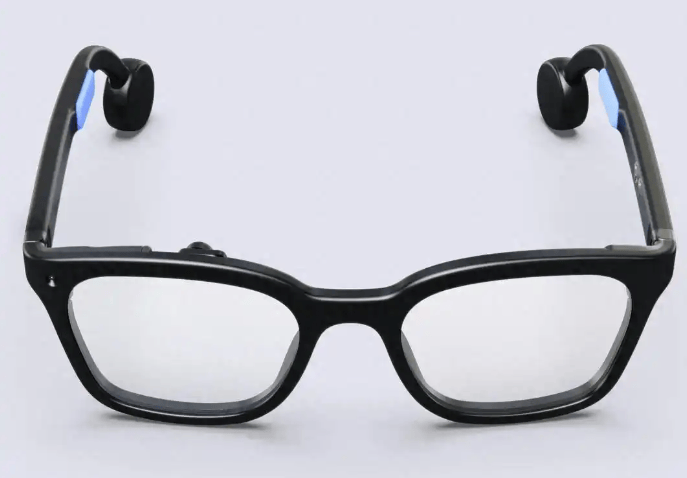
Halo's most significant technological differentiation comes from the long-term memory system of its AI assistant, Noa. Noa is a multimodal AI agent capable of understanding environmental information seen and heard by the glasses in real-time and interacting with users through natural conversation. The system is equipped with a patent-protected agent memory architecture that constructs a private and personalized knowledge base from data collected by the camera, microphone, and user interactions. When a user meets someone they have seen before, the glasses can proactively retrieve the person's name and details of past conversations. Noa's core functions are available without a subscription, subject only to a daily usage limit similar to a free AI tier. The product also supports a Vibe Mode feature for creating and prototyping ideas through natural language, complementing its open hardware and software platform.
Halo is powered by Alif Semiconductor's Balletto B1 wireless microcontroller. This chip integrates a 160MHz Arm Cortex-M55 CPU core with Helium vector processing extensions, and features an Arm Ethos-U55 neural network processor, delivering AI inference performance of 128 MAC/cycle at ultra-low power, up to 46 GOPS. The Balletto B1 includes built-in Bluetooth 5.3 and 802.15.4 wireless subsystems, supporting on-device AI processing to complete complex tasks like real-time translation and AI memory systems without relying on the cloud. On-device processing ensures all visual and audio data is inferred locally and converted into encrypted embedding vectors, meaning raw data never leaves the device, and battery life can reach 14 hours. Tavangar stated bluntly that AI glasses are about to be everywhere, and the location of data storage and who monetizes it determines the nature of this landscape, with privacy-first being the core principle the company adheres to.
Halo features a 0.2-inch color Micro OLED display that projects a retro arcade-style UI into the user's peripheral vision. It supports diopter adjustment from +2 to -6, covering a range of corrective vision needs. Audio output is delivered through dual bone conduction speakers, equipped with dual microphones and audio activity detection. The glasses weigh slightly over 40 grams overall, with a matte black frame design resembling the Ray-Ban Wayfarer style, and prescription lens options are available.
Foxconn's involvement in mass production provides manufacturing assurance for Halo's scaled supply. As one of the world's largest electronics manufacturing service providers, Foxconn has been increasingly investing in the AR glasses manufacturing sector in recent years. Its involvement marks a crucial leap for Brilliant Labs from a niche developer brand to scaled shipments. Previously, Brilliant Labs had entered a tripartite strategic partnership with Neuphonic and TheStage AI to integrate an ultra-low latency text-to-speech model and an automated reasoning engine into the Halo platform, building a full-chain on-device AI capability spanning visual reasoning, voice interaction, and memory indexing.
Halo is now officially available for sale, with the first batch of products for consumers and developers already manufactured and shipped by Foxconn.
This article is compiled by Wedoany. All AI citations must indicate the source as "Wedoany". If there is any infringement or other issues, please notify us promptly, and we will modify or delete it accordingly. Email: news@wedoany.com