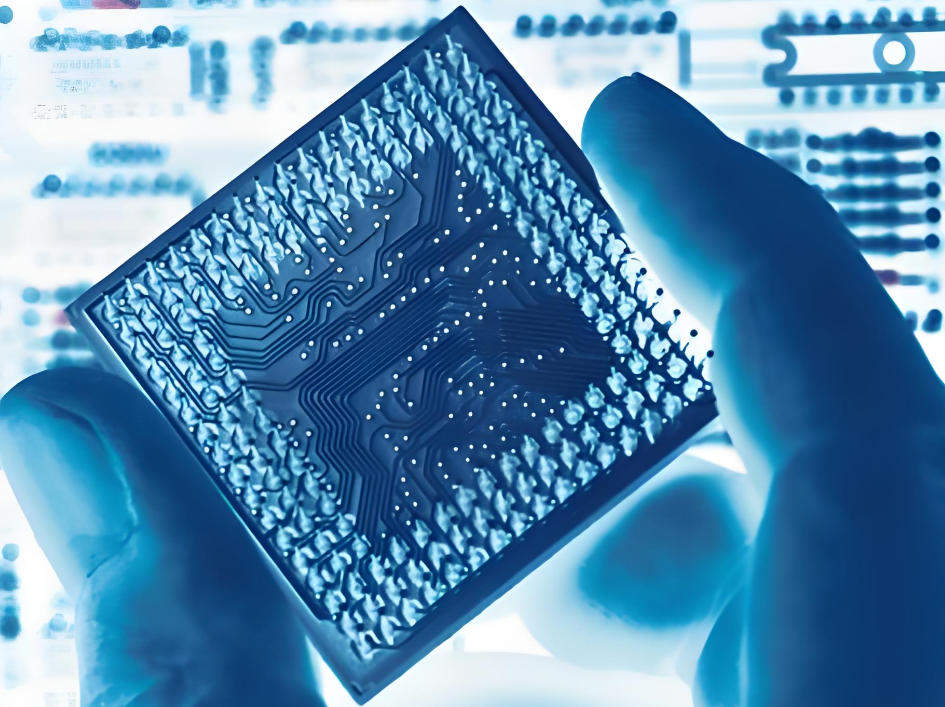
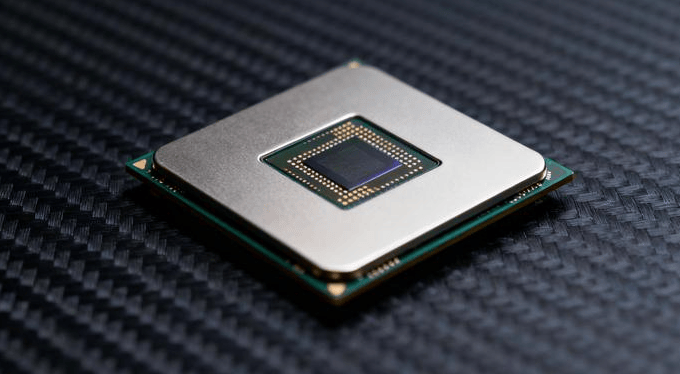
en.Wedoany.com Reported - Nippon Telegraph and Telephone Corporation's All-Photonics Network IOWN will enter a critical commercialization phase in the fourth quarter of 2026, with the second-generation photonics-electronics convergence device PEC-2 scheduled for official market launch before year-end. At a technical briefing in October 2025, NTT specified that the commercialization target for PEC-2 in network switches is Q4 2026, with partners including U.S.-based Broadcom, Japan's Shinko, and Taiwan's Accton Technology. IOWN, which stands for "Innovative Optical and Wireless Network," is built on the core concept of replacing electronic signals with photonic pulses for data transmission, eliminating energy loss and delay jitter caused by repeated photoelectric conversions at network nodes.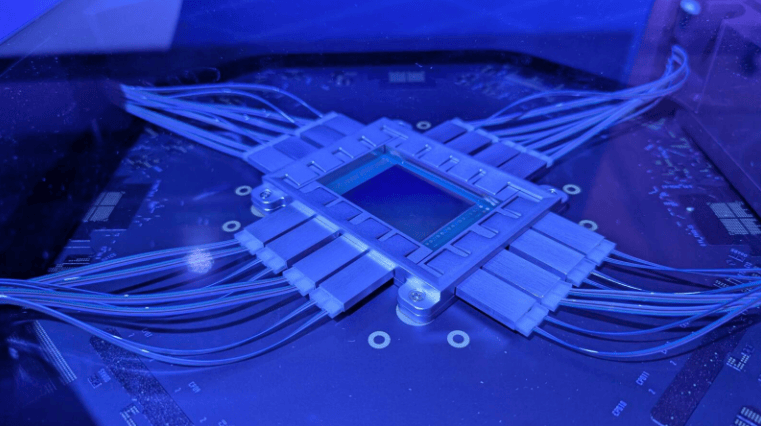
Three lighthouse indicators define the energy efficiency leap boundaries of IOWN. Compared to current networks, IOWN aims to increase transmission capacity by 125 times, compress latency to 1/200th of existing levels, and reduce power consumption to one percent. At the Upgrade conference in May 2026, the NTT team reiterated these three indicators and disclosed a set of comparative data on distributed AI training: between two data centers approximately 35 kilometers apart within Japan, executing distributed training over an all-photonics link resulted in task completion time extending by only 0.005% compared to local deployment, whereas using traditional internet links caused a 4.66-fold increase. This result directly validates the engineering feasibility of photonic interconnection in cross-data center computing power collaboration.
Global AI data center energy consumption is climbing along a steep curve. Fatih Birol, Executive Director of the International Energy Agency, has pointed out that by 2030, global data center electricity consumption will equal the total electricity consumption of Japan. Sean Lawrence, Co-Head of the NTT IOWN Development Office, proposed at the Upgrade conference that the solution is to replace electrical interconnections within data centers, between server circuit boards, between chip packages, and even within packages with optical interconnections layer by layer, "completely reshaping high-performance data transmission and computing through this transformation." In alignment with this, the IOWN Global Forum has set a photonics development goal of a 100-fold energy efficiency improvement by 2030 and has already assembled an ecosystem of over 160 member organizations.
The expansion of application scenarios is accelerating simultaneously. In 2025, NTT and Toshiba completed the industry's first verification of real-time control of a high-speed production line via a photonic link from a data center 300 kilometers away. That same year, NTT and Chunghwa Telecom realized a cross-sea real-time "Super Kabuki" performance connecting Osaka and Taipei, a distance of approximately 1,700 kilometers, with an end-to-end latency of only 17 milliseconds. In April 2026, NTT, in collaboration with multiple Taiwanese ICT enterprises, completed the verification of Taiwan-Japan IOWN All-Photonics Network technology demonstrations, achieving proof of concept in scenarios such as smart transportation AI image analysis and cross-border computing power collaboration. In the same month, Japan's Tokyu Fudosan Holdings announced it would introduce the IOWN APN environment at a 100% renewable energy data center in Ishikari City, Hokkaido, establishing a direct photonic connection between Ishikari and Tokyo's Otemachi district, marking the first large-scale deployment of the IOWN network within Japan.
IOWN has moved beyond the experimental stage. In March 2023, NTT East and NTT West were the first to launch IOWN 1.0 commercial services. By 2026, IOWN 2.0 nodes will introduce digital coherent interconnection, integrating the all-photonics network and data center computing services into a unified infrastructure platform. NTT Chief Technology Officer and Senior Executive Vice President Yoshiaki Hoshino proposed at the NTT R&D Forum in November 2025 that IOWN's photonics-electronics separated computing has already achieved dynamic computing power allocation across cabinets, floors, and data centers, providing foundational technical support for sustainable AI. NTT President and CEO Akira Shimada pointed out in a keynote speech at MWC Barcelona 2026 that the AI market size will grow 20-fold by 2030, with generative AI increasing by as much as 40-fold, making power consumption the industry's primary bottleneck.
The technology roadmap extends to chip-level photonic interconnection. The commercialization of PEC-2 marks the realization of board-to-board optical communication, with NTT's subsequent planned milestones including the initiation of inter-chip optical interconnection in 2028 and the achievement of intra-chip optical connectivity by 2032. The IOWN Global Forum has established cooperative relationships with the International Telecommunication Union, the Open Compute Project, and the European Telecommunications Standards Institute, driving the evolution of photonics technology from proprietary solutions to industry standards. Broadcom, NVIDIA, Intel, Samsung, and Huawei have all laid out plans for photonics-electronics convergence technologies, with some products expected to enter the market in 2026. The industrial race to replace electronic interconnection with photonics is unfolding across multiple tracks.
This article is compiled by Wedoany. All AI citations must indicate the source as "Wedoany". If there is any infringement or other issues, please notify us promptly, and we will modify or delete it accordingly. Email: news@wedoany.com