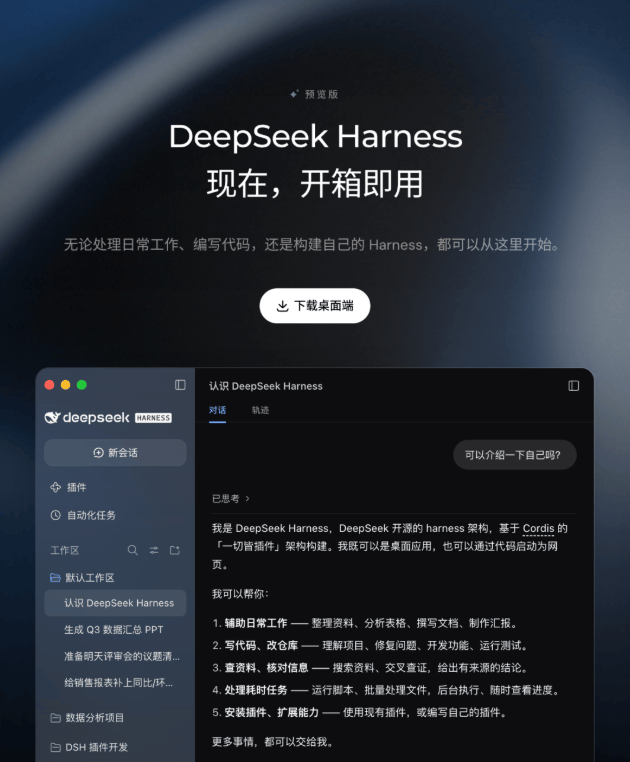
Tencent's Self-Developed AI Design Agent Platform Ardot Launches Public Beta, Supporting One-Click Conversion of Design Drafts to Code
en.Wedoany.com Reported - Tencent's self-developed AI design agent platform, Ardot, officially launched its public beta on May 18. Users receive 1,000 free credits upon registration, and a WeChat Mini Program version will be released soon. Ardot is positioned as an AI-driven collaboration platform for product, design, and development. Its core capabilities include generating editable design drafts through natural language, converting design drafts into code, and importing Figma files while fully preserving layouts. It directly connects the entire workflow from design to development, addressing pain points such as the difficulty of adjusting outputs from traditional AI design tools and gaps in team collaboration.
After users input a natural language description of interface requirements, the platform generates an editable initial design draft in real time—not a static image, but a design file where layers and components can all be adjusted. The platform supports calling a company's own business component library to generate files that comply with team design specifications with one click, ensuring brand consistency. Once the design is finalized, Ardot directly converts it into code, shortening the delivery cycle from design to development.
Ardot has built a unified collaboration space for designers, product managers, and developers. Teams can conduct real-time comment annotations and version comparisons on the platform, and leverage smart permissions for behavior tracing and seamless handovers. For enterprises with a large number of existing design assets, Ardot supports directly importing Figma files and fully preserving the original layout, allowing them to integrate into the AI workflow without abandoning existing design assets.
Cases disclosed by Tencent Cloud show that, from requirement description to design finalization and code delivery, Ardot can compress a process that traditionally takes days or even weeks into just a few hours. It is particularly suitable for high-frequency design scenarios requiring rapid iteration, such as e-commerce campaign pages, SaaS product interfaces, and mobile applications.
Ardot's launch coincides with Tencent's systematic push in AI deployment. On April 8, Yuanbao began supporting intelligent summaries and in-depth interpretations of WeChat files and Official Account articles; the Qianwen APP recently integrated authoritative data from the National Medical Products Administration, covering millions of pieces of information on drugs, cosmetics, and medical device products; Tencent Cloud officially open-sourced TencentDB Agent Memory, providing short-term memory compression and long-term personalized memory capabilities for Agent long-task scenarios. From the model layer to the application layer, Tencent is embedding AI capabilities into core productivity scenarios such as design, development, and office work. The WeChat Mini Program ecosystem gathers millions of developers, and after Ardot connects with this ecosystem, the barrier to accessing AI design capabilities will be further lowered.
The AI design software market is expanding at a compound annual growth rate of over 25%, with particularly strong growth in demand for "design-to-code" automation platforms. Figma launched AI design features in 2025, and Canva continues to increase its investment in AI tools, as mainstream design platforms are all transitioning towards AI-driven models. Ardot's entry point of "editable design drafts" and "code conversion" not only aligns with industry trends but also leverages the existing advantages of Tencent's developer ecosystem.
This article is compiled by Wedoany. All AI citations must indicate the source as "Wedoany". If there is any infringement or other issues, please notify us promptly, and we will modify or delete it accordingly. Email: news@wedoany.com
Related Products





Hot Selling 10 Inch Intel N5100 I5 I7 FHD 8 +128GB 16+256GB Win10 Pro Win11 Pro 4G 5G Rugged Tablet PC Pad with NFC Barcode
Highton Electronics Co., Ltd.


MUX Series Communication Interface Device for Security and Stability Control System
Nanjing NR Electric Co., Ltd.

Comprehensive Mining Automation Control System
Beijing Tianma Intelligent Control Technology Co., Ltd.