South Korea Launches Autonomous Ship AI Data Platform Project with Total Investment of 34.6 Billion Won
en.Wedoany.com Reported - South Korea has officially launched a data infrastructure project to secure core competitiveness in autonomous ships. On May 7, the Ministry of Oceans and Fisheries and the Ministry of Trade, Industry and Energy held the launch ceremony for the "Autonomous Ship AI Data Platform Project" and announced plans for securing real-vessel navigation data and building an industry cooperation system.
The project spans from 2026 to 2029, with a total investment of approximately 34.6 billion won (about 160 million RMB), including 30 billion won in state funding and 4.606 billion won in private investment.
Implemented with support from the Korea Evaluation Institute of Industrial Technology (KEIT), the project's core tasks include artificial intelligence (AI) learning data collection and platform construction, AI model development, and application system establishment.
Autonomous ships are next-generation vessel systems that learn from data generated by sensors, navigation equipment, and engine room devices, enabling the ship to make autonomous navigation decisions. The performance of core functions such as collision avoidance, route optimization, and engine room fault prediction varies significantly based on the quality of real-world navigation data. This project aims to standardize data generated by actual ships at sea, transforming it into a shared asset usable by the entire industry.
Previously, the Ministry of Oceans and Fisheries and the Ministry of Trade, Industry and Energy jointly promoted the first phase of South Korea's autonomous ship technology development, successfully completing international route verification and achieving considerable results. However, the South Korean industry believes that securing and sharing empirical data from autonomous ships is a necessary key focus for the second phase of development.
To this end, the South Korean government established the "Autonomous Ship M.AX (Manufacturing AI Transformation) Alliance." The Ministry of Oceans and Fisheries, the Ministry of Trade, Industry and Energy, representative South Korean shipbuilders, shipping companies, marine equipment manufacturers, universities, research institutes, and AI companies such as South Korea's leading internet platform and search engine NAVER and Korea Telecom (KT) have all joined the alliance.
On December 29 last year, the Ministry of Oceans and Fisheries and the Ministry of Trade, Industry and Energy held the "Autonomous Ship M.AX Alliance Strategy Meeting," proposing three key concepts: Speed, Engagement, and Alliance. A relevant official from the Ministry of Oceans and Fisheries stated, "This reflects South Korea's determination to develop and empirically test autonomous ship technology at the fastest speed, seizing international standards."
Subsequently, the two ministries began jointly operating the M.AX Alliance's autonomous ship branch, continuously gathering opinions from the shipbuilding, shipping, and IT industries.
Approximately 60 people from industry, academia, and research sectors, including shipping companies, shipbuilders, marine equipment firms, AI companies, and research institutions, attended the launch ceremony for the "Autonomous Ship AI Data Platform Project." Among them, 25 companies and institutions signed letters of intent regarding data sharing, designated ship cooperation, and data acquisition equipment supply. The South Korean industry evaluates this as marking the first time data secured from industrial sites has formed a formal cooperation mechanism and been connected to an actual project.
As the project's executing agency, the Korea Research Institute of Ships & Ocean Engineering (KRISO) stated it will collect over 100 types of data across eight core areas: autonomous navigation systems, navigation and maneuvering, engines and engine rooms, remote control and digital twins, communication and data, maritime traffic, meteorology, and safety and security.
At the project launch ceremony, detailed implementation plans were also disclosed, including data standard formats, data collection methods for each vessel, and the direction for data securing. The South Korean government plans for the collected data to be applied not only to large shipbuilders but also expanded to small and medium-sized shipbuilders.
It is reported that the Ministry of Oceans and Fisheries and the Ministry of Trade, Industry and Energy have been jointly promoting the "Autonomous Ship Technology Development Project" since 2020, aiming to commercialize autonomous ships through phased research and development. The South Korean government plans to link the "AI Full Autonomous Navigation Technology Development Project," launched this year with a scale of up to 600 billion won (about 2.8 billion RMB), with the construction of the "Autonomous Ship AI Data Platform Project," promoting expanded empirical testing, commercialization, and responses to international standards. In the first half of this year, a national basic plan encompassing autonomous ship technology development, industrial infrastructure construction, and professional talent cultivation strategies will also be released.
Park Dong-il, Director General for Industrial Policy at the Ministry of Trade, Industry and Energy, said, "The future competitiveness of autonomous ships built by the South Korean shipbuilding industry will ultimately be determined by high-quality data. We hope companies will actively share and combine the data they hold to jointly create the world's highest-level data bank. The government will minimize the burden on companies through data standardization, security, and application system construction."
Kim Hye-jung, Director General for Shipping and Logistics at the Ministry of Oceans and Fisheries, stated, "The core of the decarbonization and digitalization currently facing the shipping and shipbuilding industries is autonomous ships. The navigation data accumulated through this project will become the core foundation for responding to international standards."
The South Korean industry indicates that with the official launch of the government's mid- to long-term support system, the competitiveness of South Korea's autonomous ship industry is expected to further improve.
This article is compiled by Wedoany. All AI citations must indicate the source as "Wedoany". If there is any infringement or other issues, please notify us promptly, and we will modify or delete it accordingly. Email: news@wedoany.com
Related Products

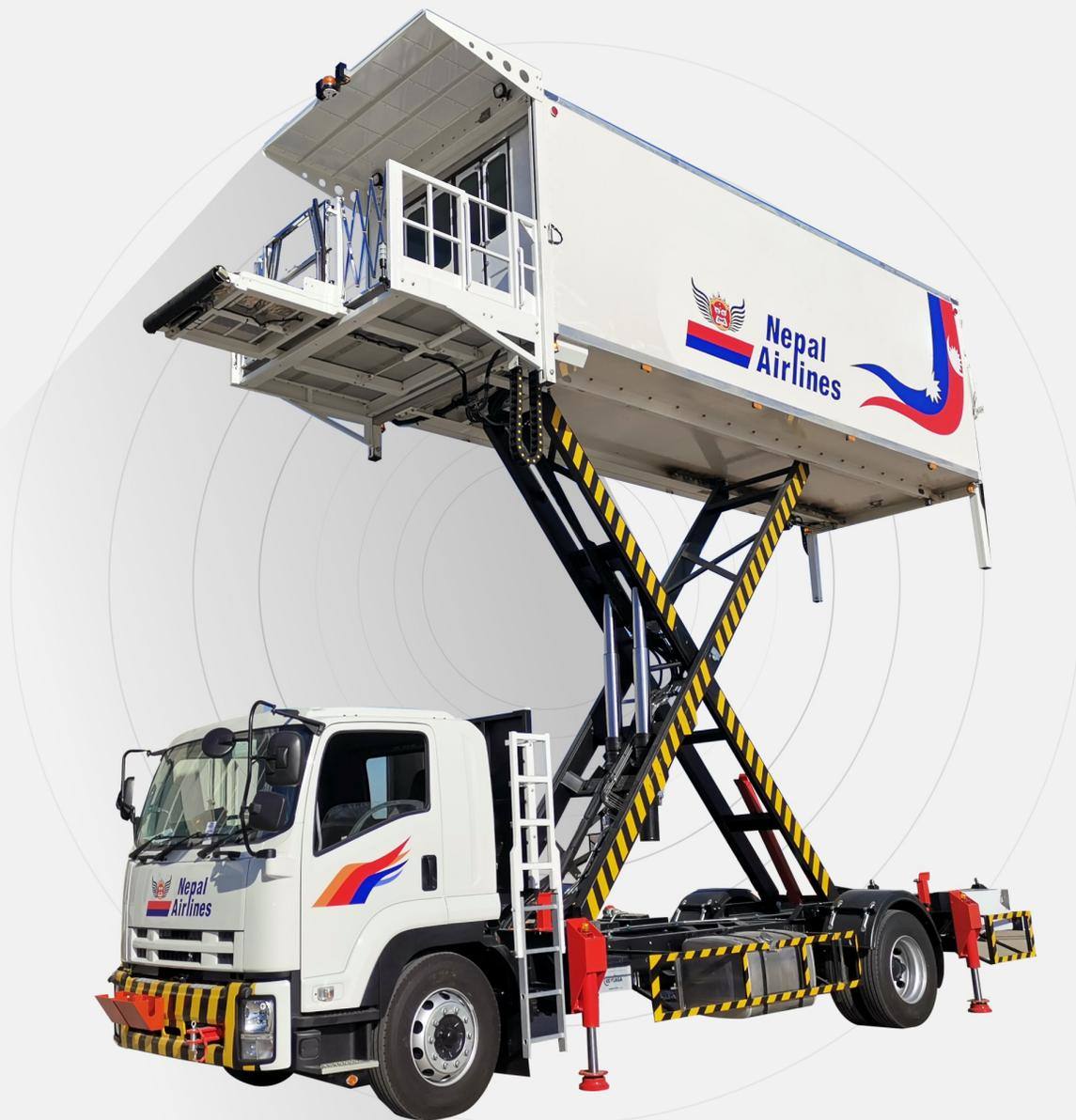
XC-6000e Type Aviation Catering Truck (Fuel Type)
Shenzhen CIMC-TianDa Airport Support Ltd.


ZY(J)7(M) Sealed Type Electro-Hydraulic Turnout Machine
TAIYUAN CR JINGFENG EQUIPMENT TECHNOLOGY CO., LTD.
ERW Welded Pipe (Black Pipe and Hot-dip Galvanized Steel Pipe)
Handan Zhengda Steel Pipe Co., Ltd.