Sea-Intelligence: 5% of Global Container Capacity Tied Up in Delays
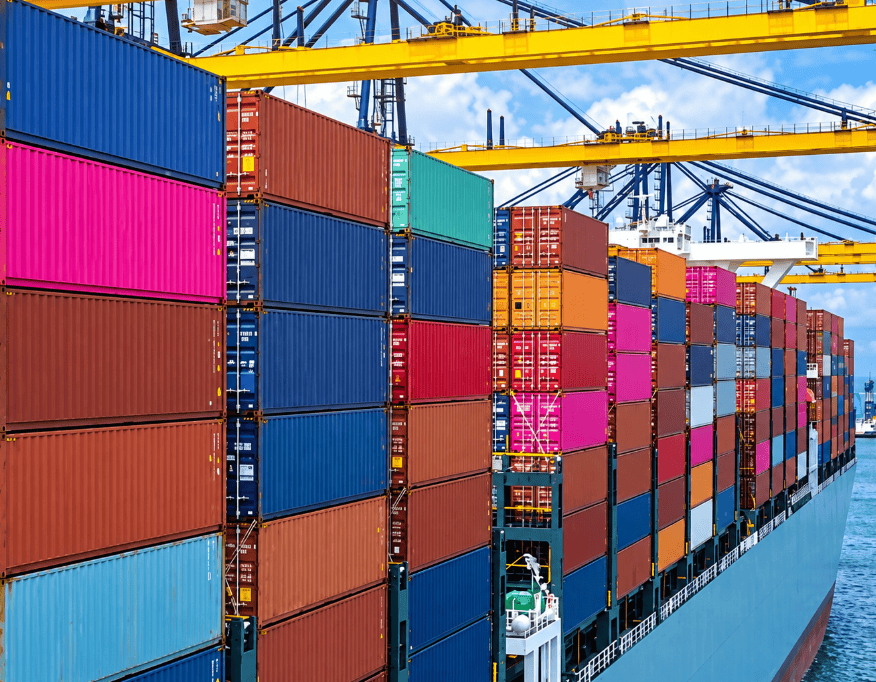
en.Wedoany.com Reported - Operational pressures on container carriers continue, and Sea-Intelligence analysts have quantified the share of capacity currently absorbed by delays, reflecting structural market shifts and their potential impact on future performance.
Sea-Intelligence notes that between 2011 and 2019, supply-demand dynamics in the container shipping industry were relatively stable, with an average of only 2.2% of global capacity absorbed by delays—a level the industry regarded as a standard component of supply-demand balance. This landscape has shifted markedly since the pandemic, with global container vessel schedule reliability holding at around 60% to 65%, showing no signs of improvement and falling below the 70% to 80% norm seen from 2011 to 2019; the average delay for late vessels has stabilized at 5 to 5.5 days, up from the pre-pandemic level of 3 to 4 days.
Alan Murphy, CEO of Sea-Intelligence, stated that the current global fleet size can be used to calculate the total cargo space rendered unavailable due to vessel delays. The firm estimates that 5.0% of current global deep-sea capacity is absorbed by delays, congestion, and related factors, equivalent to a "missing" 1.7 million TEU of capacity. If only the additional 2.8% above the pre-pandemic baseline of 2.2% is considered, this corresponds to approximately 1 million TEU of absorbed capacity.
Sea-Intelligence emphasizes that 1.7 million TEU is close to the capacity of the world's eighth-largest container shipping company, trailing only Evergreen (with a capacity of 2.2 million TEU) and nearly matching HMM, currently ranked eighth (with a capacity of 1 million TEU).
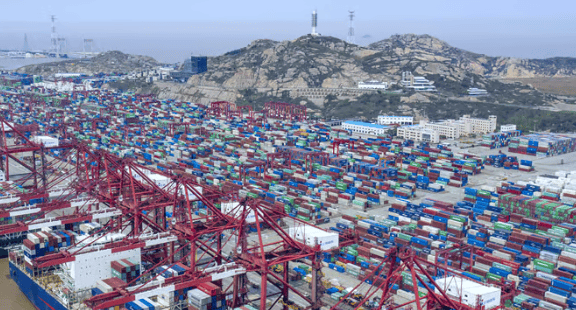
Analytics firm Linerlytica adds that only 89 vessels are currently idle globally, with a combined capacity of 142,402 TEU; the global active container fleet exceeds 5,400 vessels, with total capacity surpassing 23 million TEU. Linerlytica believes that Asia remains the most severe "hotspot" for port congestion: Shanghai is experiencing significant congestion partly due to recent typhoon impacts, while anchorage TEU levels in Singapore and Hong Kong remain elevated; major Northern European ports—Rotterdam, Antwerp, and Hamburg—face ongoing congestion; and in the Middle East, capacity remains trapped due to challenges in the Persian Gulf, the Strait of Hormuz, and nearby ports.
The industry is also monitoring the capacity represented by the newbuilding orderbook and the potential risk of overcapacity. As services via the Suez Canal and Red Sea routes gradually resume, capacity previously absorbed by the longer voyages around Africa is expected to be released.
Related Products

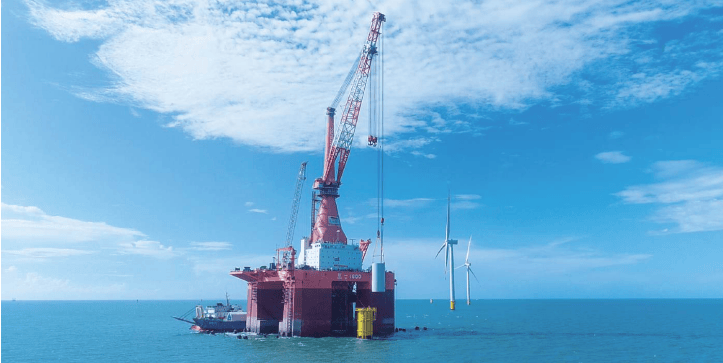
"Shunyi 1600" Deep-submerging Bottom-sitting Multi-functional Wind Power Engineering Vessel
Zhengli Offshore Engineering Co., Ltd.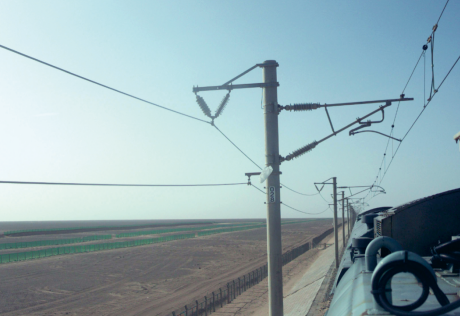
Pantograph-Catenary Comprehensive Detection Device (1C)
CHENGDU TANGYUAN ELECTRIC CO., LTD.
Industrial and Commercial Point-Type Gas Detector
Jinan Benan Technology Development Co., Ltd.