NIST Advances Nine Post-Quantum Digital Signature Candidate Algorithms to Third Round of Evaluation
en.Wedoany.com Reported - The U.S. National Institute of Standards and Technology (NIST) has announced the advancement of nine cryptographic algorithms to the third round of evaluation for the "Additional Digital Signature Selection Project," with related progress published in NIST Internal Report (IR) 8610. Launched in September 2022, this project aims to expand the portfolio of post-quantum digital signature standards, reduce reliance on already standardized structured lattice schemes such as ML-DSA and FN-DSA, and focus on optimizing general-purpose signatures, short signatures, and fast verification performance under alternative security assumptions. The second round of evaluation concluded on May 14, 2026, following 18 months of public cryptanalysis, performance testing, and architectural updates presented at the 6th NIST PQC Standardization Conference in September 2025. Five algorithms—CROSS, LESS, Mirath, PERK, and RYDE—were withdrawn from standardization consideration due to unfavorable performance trade-offs or security vulnerabilities exposed during the second round.

These nine post-quantum digital signature schemes span four mathematical modalities: lattice-based, isogeny-based, Multiparty Computation in the Head (MPCitH), and multivariate cryptography. HAWK is the only lattice-based scheme entering the third round, employing pure integer arithmetic over cyclotomic rings to solve the Search Module Lattice Isomorphism Problem and the One-Shortest Vector Problem, thereby avoiding the floating-point dependency of the Falcon scheme. SQIsign is based on the hardness of computing isogenies between supersingular elliptic curves, redesigned with high-dimensional isogenies to compress public key and signature sizes to 148 bytes under Security Category 1. The MPCitH category includes FAEST, MQOM, and SDitH: FAEST implements the VOLE-in-the-Head framework via the QuickSilver protocol to prove AES constraints; MQOM optimizes the Multivariate Quadratic problem using threshold computation in the head; and SDitH is based on the Syndrome Decoding problem for unstructured binary linear codes. The remaining four schemes—UOV, MAYO, QR-UOV, and SNOVA—are all multivariate schemes based on the Unbalanced Oil and Vinegar framework. Among them, SNOVA and MAYO adopt aggressive structural transformations to compress public key sizes, while QR-UOV uses quotient rings over odd-characteristic fields to resist algebraic wedge attacks that compromised several characteristic-2 parameter sets in second-generation analysis.
In the third round of evaluation, these post-quantum digital signature schemes will be rigorously assessed for implementation security, formal verification of proofs, and resistance to physical attacks. Submitting teams must submit final specification updates and implementation modifications by August 14, 2026, to address known cryptanalytic vulnerabilities, such as adjusting multivariate parameters to resist outer-product attacks and small-field attacks. NIST will evaluate candidates based on their integration suitability in internet protocols such as TLS, SSH, IPsec, and DNSSEC, with benchmarking covering NIST reference platforms and constrained hardware environments to verify constant-time and side-channel resistant implementations. The evaluation process will culminate at the 7th NIST PQC Standardization Conference, to be held in Gaithersburg in late spring or early summer 2027, where performance data in the Quantum Random Oracle Model and formal security reductions will guide subsequent standardization selections.
This article is compiled by Wedoany. All AI citations must indicate the source as "Wedoany". If there is any infringement or other issues, please notify us promptly, and we will modify or delete it accordingly. Email: news@wedoany.com
Related Products


Comprehensive Mining Automation Control System
Beijing Tianma Intelligent Control Technology Co., Ltd.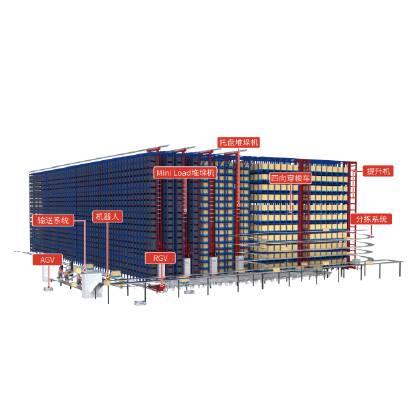

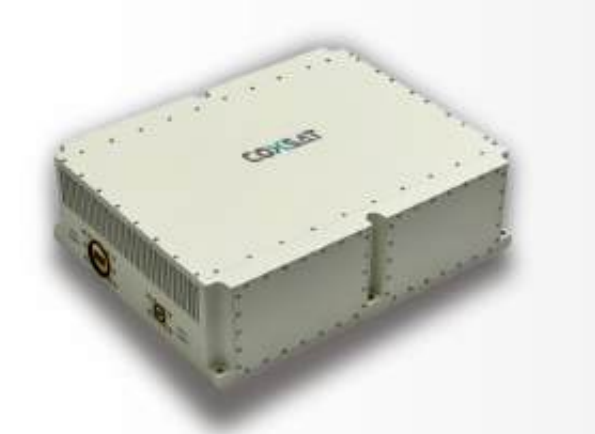
MUX Series Communication Interface Device for Security and Stability Control System
Nanjing NR Electric Co., Ltd.
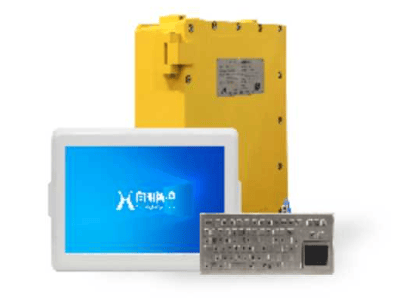
KJD127(A) Mining Explosion-Proof and Intrinsically Safe Computer
Taiyuan Xiangming Intelligent Control Technology Co., Ltd.
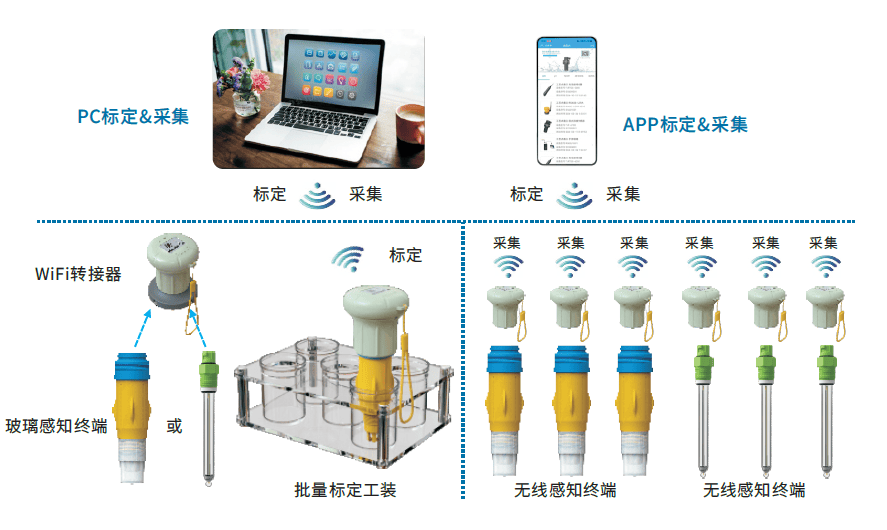




Conveyor Belt Intelligent Monitoring System
LUO YANG WIRE ROPE INSPECTION TECHNOLOGY CO., LTD.