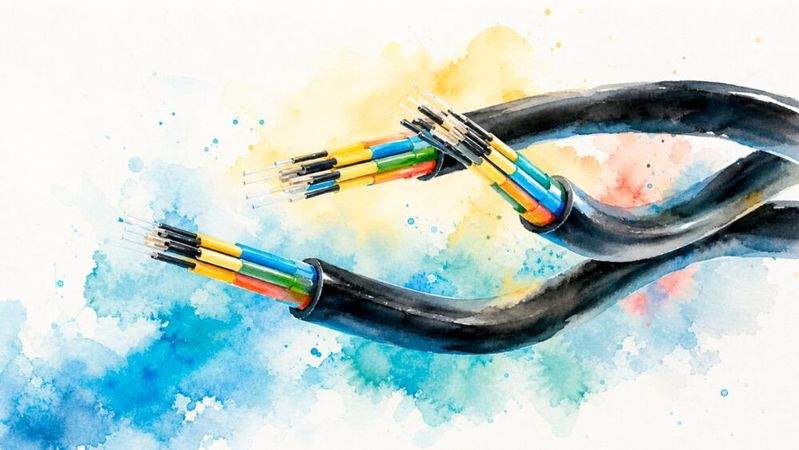
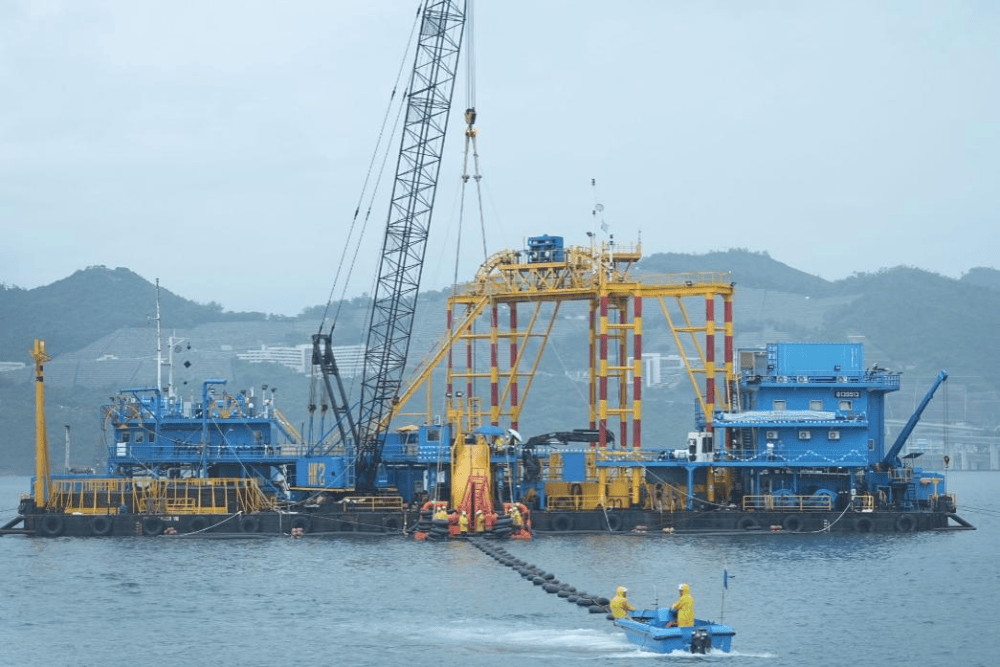
Singapore's Keppel and Australia's Telstra Sign 25-Year Agreement for Fibre Pair Usage Rights on Bifrost Submarine Cable
en.Wedoany.com Reported - On May 18, the Connectivity division of Singapore-based asset manager and operator Keppel Ltd. officially announced it has signed a definitive 25-year agreement with Australian telecommunications company Telstra International, granting an Indefeasible Right of Use (IRU) for one fibre pair on the Bifrost submarine cable system. The agreement finalizes the binding term sheet signed by both parties in January this year, marking another long-term lock-in transaction in the trans-Pacific submarine cable capacity market. Spanning over 20,000 kilometers, Bifrost is the world's first submarine optical fibre cable system directly connecting Singapore to the West Coast of the United States via the Java Sea and Celebes Sea in Indonesia. Construction was completed in October 2025, and it officially entered commercial service in December.
Keppel Connectivity CEO Manjot Singh Mann confirmed in the announcement that three of the five fibre pairs jointly owned by Keppel and private equity funds on Bifrost have been locked in by customers, with the remaining two pairs currently in "advanced negotiations" with potential clients, targeting contract signings within the first half of 2026. The IRU pricing terms for the Telstra transaction were not disclosed, but Mann stated that since Bifrost entered commercial operation, strong interest from global telecom operators and cloud service providers has translated into "better pricing conditions," with actual traffic carried per fibre pair exceeding design capacity by approximately 20%, reflecting demand for this route far exceeding expectations.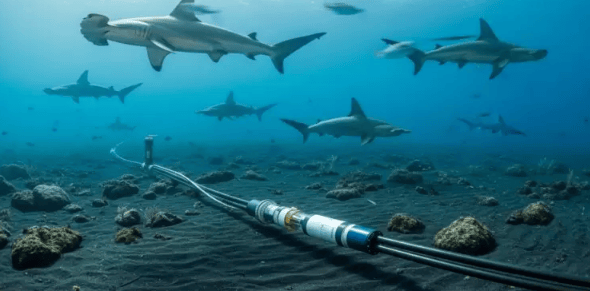
Bifrost is a trans-Pacific submarine cable system jointly constructed and co-owned by Keppel, Meta (Edge Cable Holdings), and Telin (Telekomunikasi Indonesia International), with a total design capacity exceeding 240Tbps. The system features core landing stations in Singapore, Guam, and Grover Beach, California, and extends via branching units to Jakarta and Manado in Indonesia, Davao in the Philippines, and Winema, Oregon in the United States, forming a multi-node access architecture covering Southeast Asia and the West Coast of North America. Its Singapore landing station is located at the Jurong SGP 5 data center under Keppel DC REIT, enabling data center customers to directly benefit from lower latency and faster connectivity. The system's round-trip latency is under 165 milliseconds, approximately 10 milliseconds faster than most existing trans-Pacific systems.
Telstra International CEO Roary Stasko positioned the Singapore-US route as "one of the world's most important digital corridors," connecting fast-growing Asian markets with global cloud and content hubs. He stated that by securing a dedicated fibre pair on Bifrost, Telstra will provide customers with greater capacity and a truly diverse path, complemented by Telstra International's end-to-end network operations and monitoring services. Stasko's remarks indicate that Telstra views this IRU not merely as a simple capacity purchase, but as securing an independent physical route on the most critical trans-Pacific digital corridor, thereby enhancing its differentiated service capabilities for cloud service providers and AI workload customers.
From Telstra's perspective, this signing is the latest move in its continued expansion of Asia-Pacific submarine cable assets. Telstra International covers the group's digital infrastructure business outside of Australia and has been intensively deploying along the core Asia-Pacific-North America route in recent years, participating in multiple trans-Pacific and Pacific island connection projects including the Echo submarine cable and Pacific Connect (Bulikula and Halaihai). Bifrost provides Telstra with a new transmission channel that bypasses traditional routes and enters Singapore directly via Indonesian waters, completing a critical piece of the puzzle for a direct link from the Singapore hub to the US, complementing its existing trans-Pacific assets.
For Keppel, Bifrost is not only the flagship asset of its Connectivity business segment but also the centerpiece of its "end-to-end connectivity ecosystem" strategy. Keppel has entered the submarine cable construction and maintenance sector through the acquisition of Global Marine Group, operates approximately 23 data centers across 13 markets, and holds the Bifrost fibre pairs through a 40:60 joint venture structure between Keppel and its private equity co-investors. This strategy of packaging data centers, submarine cable capacity, energy infrastructure, and liquid cooling solutions into an integrated digital infrastructure offering differentiates Keppel from pure wholesale pipeline providers, giving it comprehensive service delivery capabilities for hyperscale customers.
Observed against a broader industry backdrop, the competition for trans-Pacific submarine cable capacity is in an intense upswing cycle. The cross-border migration of AI training data, global node interconnection for cloud computing service providers, and the sustained growth of real-time digital services between Asia-Pacific and North America are collectively driving demand for high-capacity, low-latency, and route-diverse submarine cables. The fact that commercial traffic carried on Bifrost has exceeded design capacity per fibre pair by approximately 20% since its launch in December 2025 is direct evidence of this demand intensity. Globally, multiple trans-Pacific submarine cable systems such as Echo, JUNO, and Taihei are being planned or under construction, indicating the regional capacity race is far from reaching a saturation point of existing supply.
Bifrost's uniqueness lies in the "asymmetry" of its route—by bypassing traditional paths transiting via Japan or Guam and directly traversing Indonesian waters to link Singapore and North America, it provides a new physical corridor between China and the US that is independent of geopolitically sensitive areas in Northeast Asia. In the current global submarine cable geopolitical landscape, route diversity and physical independence have become core dimensions for customers assessing the value of submarine cable assets, and a structural factor enabling Keppel to achieve better pricing in this IRU transaction. With the remaining two fibre pairs expected to be contracted within the first half of 2026, all five of Bifrost's fibre pairs are on track to achieve full-capacity operations within the year.
This article is compiled by Wedoany. All AI citations must indicate the source as "Wedoany". If there is any infringement or other issues, please notify us promptly, and we will modify or delete it accordingly. Email: news@wedoany.com
Related Products


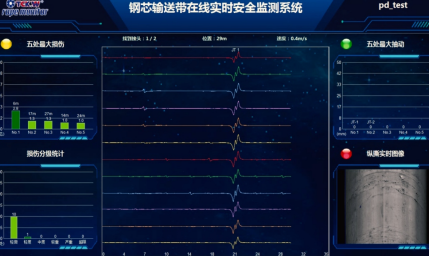
Conveyor Belt Intelligent Monitoring System
LUO YANG WIRE ROPE INSPECTION TECHNOLOGY CO., LTD.


TWP16 P-Band Tropospheric Wind Profile Radar
China Huayun Meteorological Technology Group Co., Ltd.




MUX Series Communication Interface Device for Security and Stability Control System
Nanjing NR Electric Co., Ltd.