Brazil's Imea forecasts a 55% increase in feedlot cattle inventory in Mato Grosso for 2026
en.Wedoany.com Reported - The Mato Grosso Institute of Agricultural Economics (Imea) in Brazil released its first survey on the 14th, showing that the state's feedlot cattle inventory is projected to reach 1.44 million head in 2026. This figure represents a 55.39% increase compared to 2025. The study indicates that large feedlots with a capacity exceeding 5,001 head will account for 80.92% of all feedlot expectations, approximately 1.17 million cattle.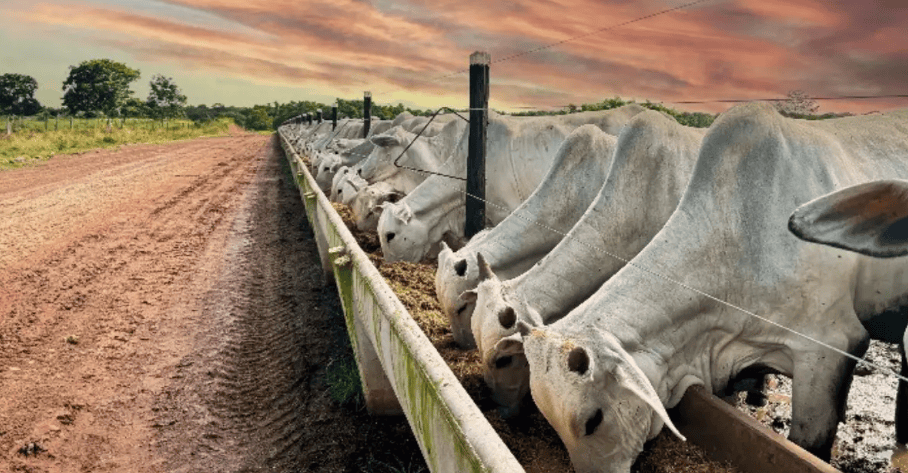
In terms of regional distribution, the West region leads with a feedlot intention of 407,912 head, a year-on-year increase of 50%. The North region follows with 333,487 head, while the Southeast, Northeast, South-Central, North-Central, and Northwest regions have 192,500 head, 153,414 head, 143,573 head, 134,573 head, and 78,154 head, respectively.
Imea stated in the report: "Even against a backdrop of high feedlot cattle prices, feedlots expanded their use of price protection mechanisms in 2026. This adjustment reflects a more prudent strategy adopted by the industry in the face of rising international economic and geopolitical uncertainties."
The survey shows an improvement in the exchange ratio between feedlot cattle and corn. The average daily feedlot cost slightly decreased from R$13.15 per head to R$13.05, mainly influenced by lower corn prices in Mato Grosso. However, rising freight and diesel costs continue to push up overall expenses.
The expansion of feedlot activity in the state is primarily concentrated in large-scale feedlots, whose numbers are expected to grow by 21.83% year-on-year. Meanwhile, small feedlots with a capacity of no more than 1,000 head are projected to contract by 4.58%, reflecting their insufficient capacity to absorb higher placement costs. The survey also points to growing market concerns about calf supply, due to high cow slaughter rates in previous cattle cycles. "This reduces the number of animals available for placement and keeps prices high," Imea emphasized.
Regarding the outlook for the second half of 2026, Imea believes feedlots will continue to provide strategic support to the slaughter industry during the livestock off-season. Between July and December, an estimated 82.6% of feedlot cattle are expected to be sent for slaughter, with supply heavily concentrated in the second half of the year. During this period, pasture carrying capacity declines, making feedlots even more critical within the cattle production system.
This article is compiled by Wedoany. All AI citations must indicate the source as "Wedoany". If there is any infringement or other issues, please notify us promptly, and we will modify or delete it accordingly. Email: news@wedoany.com
Related Products



714CD Series C-Band Weather Radar
Chengdu Zhongdian Jinjiang Information Industry Co., Ltd.

Industrial and Commercial Point-Type Gas Detector
Jinan Benan Technology Development Co., Ltd.
4HS-8 High-efficiency Peanut Inverted-laying Harvester
Hebei Yongfa Hongtian Agricultural Machinery Manufacturing Co., Ltd.