Luxembourg's Mission Space Develops Zohar Detector for Real-Time Orbital Radiation Monitoring
en.Wedoany.com Reported - Luxembourg-based space technology company Mission Space has officially unveiled its newly developed Zohar space weather detector platform. This compact sensor system is designed to enable real-time monitoring of the orbital radiation environment, providing satellite operators, spacecraft manufacturers, and mission planners with continuous awareness of hazardous space weather activity. As a lightweight radiation monitoring payload, the Zohar detector is capable of directly measuring high-energy particles and space weather activity in orbit.

The technical core of the Zohar detector lies in its dual pursuit of real-time capability and high resolution. According to published technical specifications, the detector is equipped with advanced spectrometers and Cherenkov detectors, capable of real-time sampling of 15 key environmental parameters at a frequency of up to 1,000 times per second. Its monitored particle range includes electrons, alpha particles, proton energy, and proton flux, thereby providing high-quality, high-timeliness radiation and particle activity data for space weather forecasting. This high-cadence data acquisition capability enables Zohar to capture transient events such as solar activity, geomagnetic disturbances, and changes in charged particle flux, providing critical operational warnings for spacecraft encountering high-radiation environments that could affect onboard electronics, communication systems, and mission reliability.
Unlike traditional large, high-power space environment monitoring instruments, Zohar's design philosophy emphasizes compactness, light weight, and low power consumption. The detector is developed for multi-platform adaptation and can be seamlessly integrated into various low Earth orbit and geostationary orbit spacecraft, including small satellites, CubeSats, and large commercial satellite platforms. This modular integration capability allows satellite operators to obtain professional-grade radiation monitoring functionality without significantly modifying spacecraft design, thereby substantially lowering deployment barriers and mission costs.
Mission Space CEO and co-founder Alex Pospekhov stated in a public announcement that the launch of Zohar marks a significant step forward in the company's vision to build a global space weather infrastructure. He emphasized that as low Earth orbit becomes increasingly congested, the impact of space weather on critical communication and navigation systems cannot be ignored, and real-time orbital radiation monitoring is evolving from a "nice-to-have" to a "mission necessity." The company plans to build a multi-orbit radiation monitoring constellation through the Zohar detector and its subsequent iterations, providing global customers with more precise and predictive space weather intelligence.
In March this year, Mission Space announced partnerships with France's GomSpace Luxembourg and Germany's AST Advanced Space Technologies to jointly advance the engineering and in-orbit validation of the Zohar detector. GomSpace Luxembourg is responsible for optimizing the integrated power and data interfaces between the detector and satellite platforms, while AST Advanced Space Technologies undertakes the customized design of the spacecraft structure. The goal of the tripartite collaboration is to accelerate the transition of Zohar from a laboratory prototype to in-orbit deployment. That same month, the company confirmed that the Zohar detector had completed adaptation testing with low Earth orbit satellites and is expected to conduct its first in-orbit flight validation aboard a commercial satellite platform in the coming months.
From the perspective of space communication assurance, Zohar's real-time radiation monitoring capability directly supports the stable operation of satellite communication links. High-energy particle events can trigger single-event upsets, charging/discharging effects, and communication signal scintillation in satellites, causing instantaneous interruptions or permanent damage to satellite-to-ground data transmission and inter-satellite links. By sensing changes in the radiation environment in advance, satellite operators can switch sensitive payloads to safe mode before a solar storm arrives, reducing the risk of communication disruptions. As the frequency of commercial space launches continues to rise and low Earth orbit constellations enter a phase of large-scale deployment, the market demand for such in-orbit environmental sensing tools is rapidly being unleashed.
This article is compiled by Wedoany. All AI citations must indicate the source as "Wedoany". If there is any infringement or other issues, please notify us promptly, and we will modify or delete it accordingly. Email: news@wedoany.com
Related Products


Industrial and Commercial Point-Type Gas Detector
Jinan Benan Technology Development Co., Ltd.
20 Inch 1600*900 Full HD 60Hz TFT LED Monitor with VGA and DP Interfaces for Desktop Computers-Business Use
Guangzhou Zanying Optoelectronics Technology Co., Ltd.
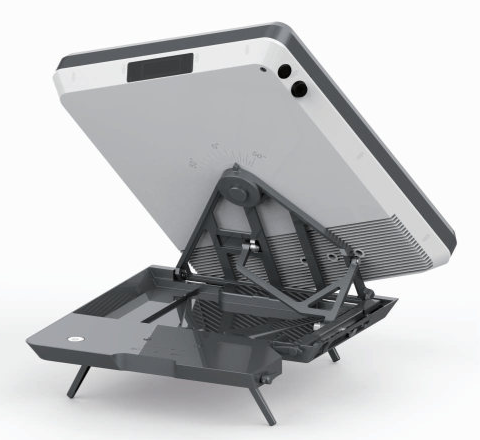
Flat Portable Satellite Terminal 0.35m Aperture Manual Portable Terminal
China Starwin Science & Technology Co., Ltd.
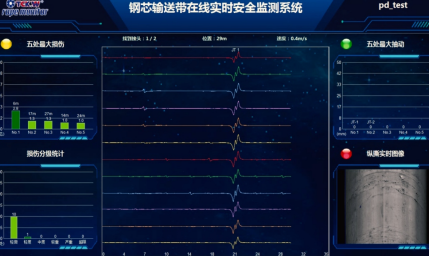
Conveyor Belt Intelligent Monitoring System
LUO YANG WIRE ROPE INSPECTION TECHNOLOGY CO., LTD.
KJD127(A) Mining Explosion-Proof and Intrinsically Safe Computer
Taiyuan Xiangming Intelligent Control Technology Co., Ltd.

One-Stop Steward Service for the Entire Logistics System Integration Chain
Zhongding Intelligent (Wuxi) Technology Co., Ltd.