Qatar Airways Achieves Record Operating Profit in FY2025/26, Prepares to Order 210 Boeing Wide-Body Aircraft
en.Wedoany.com Reported - Qatar Airways recently announced its full-year results for the fiscal year 2025/26 (April 1, 2025, to March 31, 2026), achieving a post-tax profit of 7.08 billion Qatari Riyals (approximately US$1.94 billion). The operating profit for the fiscal year reached 15.2 billion Qatari Riyals (approximately US$4.1 billion), which, according to Group Chief Executive Hamad Al-Khater, represents the highest operating profit level in the group's history.
This performance demonstrates the airline's strong growth in both passenger and cargo sectors. The financial report shows that Qatar Airways carried 41.8 million passengers in FY2025/26, while its cargo division handled over 1.43 million tonnes of chargeable weight, achieving a 12% global market share and maintaining its position as the world's largest air cargo carrier. Despite geopolitical tensions and economic uncertainty, the company maintained robust yields.
Qatar Airways currently operates approximately 270 aircraft, with a route network covering over 160 destinations worldwide, making it one of the largest long-haul carriers in the Middle East. Its fleet is predominantly composed of wide-body aircraft, mainly including the Airbus A350-900 and A350-1000, the Boeing 777 series, and the 787 Dreamliner. Additionally, the company also owns Airbus A380s, which are currently grounded.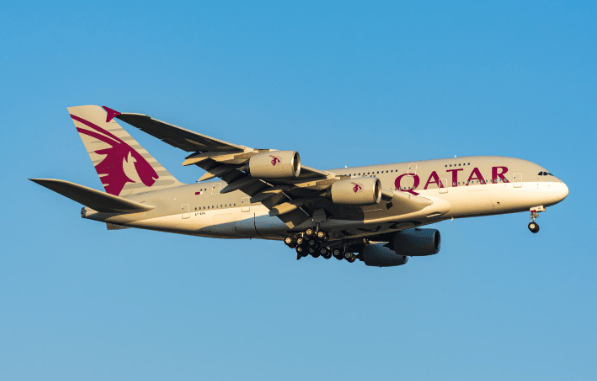
The airline is advancing a massive expansion plan, having previously announced an order for up to 210 new aircraft from Boeing. The order includes 130 787 Dreamliners, setting a record for the largest single order for this aircraft type, along with 30 Boeing 777-9s and 50 purchase options. This is the largest wide-body aircraft order in Boeing's history. This capacity expansion will support Qatar Airways' long-term development, with the new aircraft replacing older planes with an average age of about 10 years and lowering the overall average fleet age.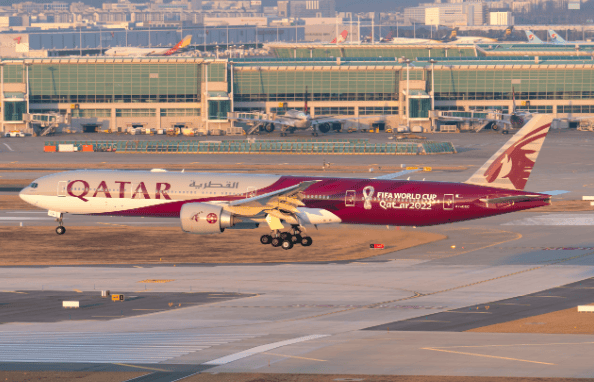
The escalating tensions in the Middle East region have put pressure on aviation operations, with major impacts including rising fuel costs and altered air traffic patterns. According to data from the US Energy Information Administration, Brent crude oil prices reached a high of US$138 per barrel on April 7. Jet fuel typically accounts for 15% to 20% of an airline's total operating costs, making oil price fluctuations significantly impactful on profitability. Furthermore, the temporary closure of airspace by some countries forced flight rerouting, with reports indicating that flight times on different routes increased by anywhere from 30 minutes to four hours, leading to flight delays, cancellations, and additional operating costs.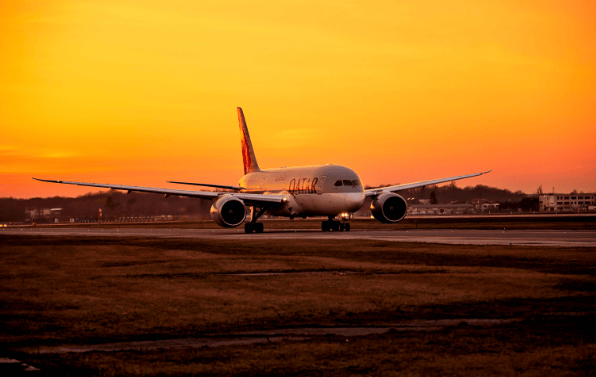
Despite challenges such as rising fuel prices and regional airspace disruptions, Qatar Airways still achieved record profits in FY2025/26, as strong passenger demand and cargo revenue effectively offset the pressure from increased operating costs.
This article is compiled by Wedoany. All AI citations must indicate the source as "Wedoany". If there is any infringement or other issues, please notify us promptly, and we will modify or delete it accordingly. Email: news@wedoany.com