en.Wedoany.com Reported - May 21 WeDoAny Global Daily - News in the transportation and logistics sector indicates that the international logistics system is shifting from "transport capacity competition" to comprehensive competition encompassing "corridor efficiency, low-carbon equipment, digital dispatch, and project delivery capabilities." Whether it's road concessions in Argentina, cross-ocean transport of Brazilian metro cars, global terminal charging infrastructure, air fleet renewal, or port handling capacity upgrades, all reflect that transportation infrastructure is no longer just standalone engineering projects but is closely linked to mining exports, manufacturing supply chains, air cargo, port operations, and urban transit renewal. For Chinese engineering firms, logistics companies, equipment manufacturers, and cross-border trade service providers, opportunities lie not only in "undertaking projects" but also in providing equipment, engineering, operations and maintenance, digital systems, and integrated delivery solutions around the construction of overseas corridors.
I. Key News Summary
1. Argentina Advances Road Concession Plan, Upgrading 9,000 km and Adding 12,000 km of Roads
Core Content: Argentina is advancing a road project bidding plan aimed at modernizing over 9,000 kilometers of existing roads and adding 12,000 kilometers of new roads. The plan is part of the Argentine government's strategy to reduce costs and promote private investment. According to data from the construction chamber Camarco, Argentina loses approximately $25 billion annually due to inadequate infrastructure maintenance. The federal concession network offers 20-year road concessions in phases, covering roads that carry 80% of the nation's traffic flow. The first phase involves an 841-kilometer section, including National Routes 12 and 14 and the Rosario-Victoria Bridge; the third phase is scheduled for bid opening on May 22, incorporating over 3,900 kilometers of national routes.
Global Outlook: The core of this news is not just Argentina building roads, but that Latin American transportation infrastructure is attracting social capital participation through concession models. For Chinese enterprises, such projects are more suitable for participation through a combination of "engineering construction + maintenance operations + toll systems + pavement materials + intelligent transportation," rather than being viewed solely as single construction projects. Particularly, the Mercosur-related highway corridors have a direct impact on freight efficiency within Brazil, Uruguay, and Argentina. Future demand may arise continuously for road maintenance, bridge inspection, traffic monitoring, toll systems, and engineering equipment.
2. Konecranes Launches Generation D Digital Cargo Handling Platform at TOC Europe in Germany
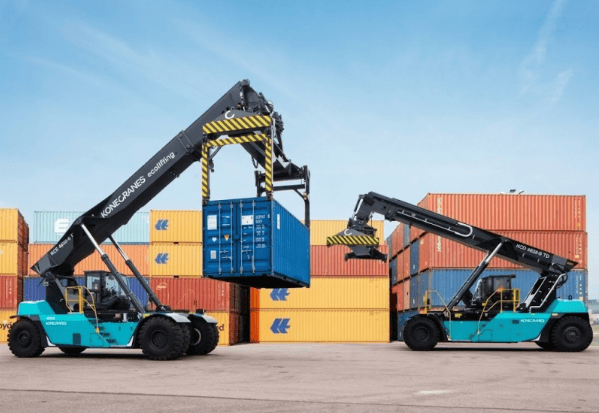
Core Content: Konecranes launched its new generation of cargo handling equipment platform, Generation D, at the TOC Europe exhibition in Hamburg, Germany. The first models are diesel and electric reach stackers, now available for order. The platform features a global modular architecture, allowing flexible configuration for different operational needs, and supports integration with Terminal Operating Systems (TOS) and third-party applications. Generation D supports over-the-air updates, remote monitoring, and diagnostics, with priority supply to European and North American markets to adapt to upcoming machinery safety and cybersecurity regulations.
Global Outlook: Competition in port equipment is shifting from "single-unit performance" to "digital architecture, regulatory adaptation, and lifecycle management." Chinese port machinery, straddle carrier, forklift, reach stacker, and related electronic control system companies entering the European and American terminal markets must consider cybersecurity, remote diagnostics, unified fleet management, and software update capabilities in advance. Future overseas customers are procuring not just mechanical equipment, but an operational platform that can be sustainably upgraded and integrated into the port's digital system.
3. Spain's Singular Logistics Launches Overhead Electric Rail System for Automated Handling of 1,500 kg
Core Content: Spain's Singular Logistics has launched an overhead electric rail system and autonomous vehicles O-RGV and OHT, capable of 24/7 automated handling of 1,500 kg loads without operators or batteries, requiring only 350 watts of power to operate. The system can integrate with ERP, WMS, and MES, using a modular plug-and-play design. Typical use cases include applications at Pfizer-Zoetis, Johnson Controls-Hitachi, Gestamp, and Ormazabal, aimed at saving floor space, reducing forklift traffic risks, and enhancing production line flexibility.
Global Outlook: The demand for automation in overseas manufacturing and warehousing logistics is extending from large-scale automated warehouses to internal factory logistics, production line replenishment, and handling in clean and safe areas. For Chinese logistics equipment companies, the overseas market competition involves not just AGVs, forklifts, and conveyor lines, but also how to help customers increase capacity without expanding factory buildings. More valuable future solutions will be internal logistics automation systems that simultaneously address space utilization, labor shortages, system integration, and safety management.
4. Rhenus Project Logistics Facilitates Delivery of New Trains for Belo Horizonte Metro in Brazil
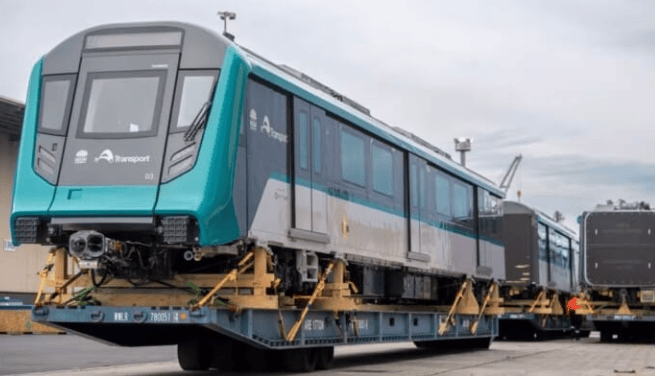
Core Content: German logistics company Rhenus Project Logistics is executing the transport of 24 new trains, totaling 96 metro cars, for the line renewal project of the Belo Horizonte metro system in Minas Gerais, Brazil. The project is coordinated by the Belo Horizonte Metro Company and the State Secretariat for Infrastructure, Mobility, and Partnerships. Rhenus is responsible for the project logistics scope and maintains close coordination with COSCO SHIPPING Engineering Logistics Co., Ltd. This marks the first cooperation between Rhenus and COSCO SHIPPING Specialized Carriers Co., Ltd. The first shipment took only 36 days to travel from Qingdao Port, China, to Sepetiba Port, Brazil. A single metro car measures 24 meters long, 3.2 meters wide, and 4.4 meters high, weighing 54 tons.
Global Outlook: The insight for Chinese enterprises from this news is very direct: exporting rail transit equipment is not just a vehicle manufacturing issue, but a systems engineering challenge involving out-of-gauge cargo transport, port customs clearance, land transfer, bonded warehousing, on-site lifting, and millimeter-precision placement. If Chinese rail transit equipment companies, specialized transport companies, and project logistics firms want to enhance overseas delivery capabilities, they should treat the full-process solution "from factory to overseas maintenance center" as a competitive advantage, rather than just focusing on product departure from port.
5. Argentina Secures $100 Million from IDB for Key Road Project to Strengthen Mining Logistics with Chile
Core Content: Argentina's Salta Province has secured $100 million in financing from the Inter-American Development Bank (IDB) to pave a 91-kilometer section of National Route 51. This road is crucial for local lithium, gold, and copper projects, which plan to export products through Chile's Pacific ports. RN 51 connects Salta Province with the Antofagasta Region in Chile, facilitating the transport of supplies, machinery, and service providers, and enabling mineral exports to Asia-Pacific, European, and US markets via the Chilean coast. Related projects include the Rincón project and Ganfeng Lithium's Mariana project. RN 51 is also part of the Capricorn Bioceanic Corridor, aimed at strengthening connectivity and trade integration among Argentina, Brazil, Paraguay, and Chile.
Global Outlook: Mining logistics is becoming a significant driver of transportation investment in Latin America. Lithium, copper, and other mineral projects require not only extraction and processing equipment but also roads, border crossings, port connections, heavy-haul transport, vehicle dispatch, and engineering maintenance capabilities. For Chinese mining equipment, engineering contracting, heavy truck transport, road materials, and logistics service companies entering the Latin American market, the focus should not only be on the mines themselves but also on the construction of the "mine - border crossing - port" transport corridor.
6. DHL Pilots Rail Freight in US-Canada F1 Logistics, Transporting Approximately 50 Containers
Core Content: DHL Group completed a pilot project using rail freight for the first time in F1 logistics, transporting approximately 50 containers of race equipment by rail from Miami, Florida, USA, to Montreal, Canada, covering a distance of nearly 2,000 kilometers. The shipment included 46 40-foot high-cube containers and 4 20-foot containers. About 68% of the F1 freight originally transported by road was shifted to rail. All containers were equipped with tracking devices and shock sensors to monitor handling, transit time, and cargo integrity. DHL and F1 will evaluate opportunities to expand rail use in North America starting from the 2027 season.
Global Outlook: High-timeliness logistics is reassessing the value of rail. F1 logistics demands extremely high standards for punctuality, cargo safety, and cross-border coordination. DHL's pilot demonstrates that rail is not only for bulk, low-timeliness goods but can also enter scenarios involving events, equipment, precision goods, and high-value project logistics. For Chinese international logistics companies, when participating in future transportation in regions like North America, Europe, and Central Asia, multimodal transport solutions, cargo tracking, shock monitoring, and low-carbon accounting capabilities will become important criteria for customers selecting service providers.
7. Qatar Airways Achieves Record Operating Profit in FY2025/26, Prepares to Order 210 Boeing Wide-body Aircraft
Core Content: Qatar Airways announced its FY2025/26 results, achieving a net profit of QAR 7.08 billion and an operating profit of QAR 15.2 billion. During the fiscal year, Qatar Airways carried 41.8 million passengers, and its cargo division handled over 1.43 million tonnes of chargeable weight, achieving a global market share of 12%, maintaining its position as the world's largest air cargo carrier. Qatar Airways currently operates around 270 aircraft, serving a network of over 160 destinations globally, and is advancing a massive expansion plan, having previously announced an order for up to 210 new aircraft from Boeing, including 130 787 Dreamliners, 30 777-9s, and 50 purchase rights.
Global Outlook: The expansion of Middle Eastern aviation hubs has practical implications for cross-border e-commerce, pharmaceutical cold chains, high-value industrial components, and emergency spare parts logistics. Qatar Airways' dual growth in passenger and cargo indicates that the Middle East continues to strengthen its global air transit capacity. When Chinese enterprises plan global supply chain layouts, they need to pay attention to the connecting value of Middle Eastern air cargo hubs to European, African, and South Asian markets, especially when maritime cycles are unstable or project delivery deadlines are tight, where air freight solutions become an important supplement.
8. Port Freeport in the US Receives Grant to Upgrade Velasco Terminal
Core Content: Port Freeport in the US has been awarded an $11 million grant from the US Maritime Administration's FY2025 Port Infrastructure Development Program for critical infrastructure improvements at the Velasco Terminal to enhance cargo handling capacity and operational efficiency. The project will transform an approximately 4-hectare area into a high-throughput cargo handling zone. Improvements include replacing stabilized limestone pavement with high-strength concrete pavement, installing an advanced stormwater drainage system, and adding high-mast lighting to support terminal operations.
Global Outlook: US port upgrade projects may not always be large in scale, but they have clear requirements for materials, lighting, drainage, pavement, handling yards, and safe operations. For companies looking to enter the North American port infrastructure chain, opportunities may not lie at the general contracting level but in specialized systems and supporting products, including high-strength pavement materials, drainage systems, lighting equipment, port security, yard digital management, and green handling equipment.
9. Finland's Kempower Signs Global Framework Agreement for Terminal Charging Infrastructure with APM Terminals
Core Content: Kempower, a global provider of DC fast charging solutions, has signed a three-year framework agreement with APM Terminals. APM Terminals, part of A.P. Moller-Maersk, operates container terminals in 35 countries worldwide. Under the agreement, Kempower will supply DC fast charging technology to APM Terminals' global network, supporting its operational decarbonization through battery-electric container handling equipment and renewable energy. The first three pilot projects have been initiated at APM Terminals Yucatán in Mexico, TM2 in Morocco, and Callao in Peru.
Global Outlook: Port decarbonization is extending from shore power, lighting, and energy management to the electrification of handling equipment and the construction of charging networks. Chinese companies in charging equipment, battery systems, port electric equipment, electronic control systems, and energy management platforms can focus on the framework procurement models of global terminal operators. Compared to individual port projects, the unified technical routes of global operators are more likely to create transnational replication opportunities, but they also require suppliers to possess standardized delivery, overseas operation and maintenance, and multi-country compliance capabilities.
10. Germany's Lufthansa Group Orders 10 A350-900 and 10 787-9 Aircraft
Core Content: The Lufthansa Group has signed a new aircraft purchase order for 10 Airbus A350-900s and 10 Boeing 787-9s, totaling 20 aircraft, with deliveries expected between 2032 and 2034, at a total list price of $7.7 billion. The Lufthansa Group stated this move aims to replace older aircraft in its fleet. Including this order, the Lufthansa Group currently has a total of 232 latest-generation aircraft on order yet to be delivered, including 107 new-generation long-haul aircraft.
Global Outlook: The impact of European airline fleet renewal extends beyond aircraft manufacturing to aviation maintenance, airport support, aviation material supply, cabin systems, ground equipment, and energy-saving services. If Chinese aviation parts, airport equipment, maintenance tools, aviation materials, and digital operation and maintenance companies want to enter the European supply chain, they need to pay more attention to certification systems, long-term supply stability, and collaborative relationships with OEMs and MRO organizations.
11. Peruvian Government and DP World Callao Discuss Port Infrastructure Development
Core Content: Peru's Minister of Foreign Trade and Tourism, José Reyes Llanos, held a working meeting with Marco Hernández, General Manager of DP World Callao, to discuss the main challenges and opportunities for strengthening national port infrastructure and logistics competitiveness. The meeting highlighted DP World's strategic role as the operator of the South Pier at Callao Port in enhancing port operational capacity and consolidating Peru's position as a regional logistics hub. Both parties also evaluated proposals to optimize the appointment system, improve inbound traffic dispatch, reduce congestion, and lower additional costs for transporters.
Global Outlook: The focus of Peruvian port construction has shifted from "expanding docks" to "corridor efficiency and digital management." The insight for Chinese enterprises from such projects is that entering the Latin American port market requires not only providing civil works or equipment but also the ability to participate in appointment systems, vehicle dispatch, port congestion management, and port-hinterland logistics coordination. For companies specializing in smart ports, TOS systems, gate recognition, fleet dispatch, and port traffic organization, the Latin American market holds long-term tracking value.
12. Germany's Liebherr and HAECO Complete World's First C909 Landing Gear Overhaul
Core Content: Liebherr-Aerospace and HAECO jointly completed the world's first landing gear overhaul for the COMAC C909 regional jet. In the project, Liebherr-Aerospace was responsible for technical oversight and process validation, while HAECO provided maintenance, repair, and overhaul services. Through the C909 landing gear overhaul, operators in China and Southeast Asia will gain access to efficient, high-quality maintenance services, improving aircraft availability. The related service infrastructure will support the market share growth of China's first self-developed regional jet, benefiting markets including Indonesia, Vietnam, Laos, and Cambodia.
Global Outlook: The key to aviation equipment going global is not just completing delivery, but establishing regional maintenance and support capabilities. As the C909 expands into markets like Southeast Asia, the MRO system, spare parts supply, technical validation, and local service network will directly impact customer confidence. Chinese aviation manufacturing and supporting enterprises should proactively incorporate "full lifecycle services" into their overseas market plans, especially in regions like Southeast Asia where regional aviation demand is growing rapidly.
13. Henderson County Riverport in the US Opens Bulk Terminal
Core Content: The Henderson County Riverport Authority held a ribbon-cutting ceremony in Kentucky, announcing the official opening of its bulk terminal and the introduction of a Sennebogen 865E Hybrid electric material handler. This terminal allows for direct port operations. The new material handler works in conjunction with the port's existing 125-ton cable crane, enabling the facility to unload two barges simultaneously for the first time in decades. The port handles cargoes such as coal, petroleum coke, gravel, sand, lime, fertilizer, grain, as well as steel pipe, wire rod, aluminum, zinc, and finished products.
Global Outlook: Inland river ports are re-emerging as important nodes for reducing costs and increasing efficiency in regional industrial chains. The upgrade of the Henderson County Riverport in the US demonstrates that the transport of bulk goods, agricultural materials, metal materials, and finished products places higher demands on port handling efficiency, low-carbon equipment, and warehousing and distribution capabilities. Chinese enterprises can focus on the demand for electric material handlers, bulk cargo handling systems, warehousing facilities, port lighting, intelligent dispatch, and equipment maintenance in inland river ports. Such projects are typically closer to industrial customers, and the path to commercial conversion is more concrete.
II. Global Changes in Transportation and Logistics Seen from the News
1. Transportation infrastructure investment is increasingly tied to resource exports and regional trade.
Argentina's road concessions, the financing for RN 51, and discussions on Peruvian port competitiveness all indicate that road and port construction is no longer just a public transit issue but is related to mineral exports, regional trade corridors, and cross-border supply chain efficiency. Especially in the Latin American market, exports of lithium, copper, agricultural products, and commodities are driving the continuous upgrading of roads, border crossings, ports, and logistics corridors.
2. Port equipment is entering a phase of "electrification + digitalization + global framework procurement."
Konecranes' Generation D, the Kempower-APM Terminals agreement, and the upgrades at Port Freeport and Henderson County Riverport collectively illustrate that port customers are increasingly valuing low-carbon equipment, remote diagnostics, charging infrastructure, fleet management, and operational efficiency. Future port equipment suppliers will compete not just on hardware prices but also on system compatibility, operation and maintenance capabilities, standard adaptation, and transnational deployment capabilities.
3. Project logistics is becoming a key capability for engineering going global.
The transport of Brazilian metro cars from Qingdao Port, China, to Sepetiba Port, Brazil, followed by land transport and precise on-site delivery, demonstrates that large-scale transportation equipment going global is inseparable from project logistics capabilities. Out-of-gauge transport, route survey, customs clearance, bonded warehousing, on-site lifting, and risk control are becoming crucial links determining whether equipment manufacturing companies can successfully complete overseas deliveries.
4. The aviation market is simultaneously driving passenger recovery, cargo expansion, and localization of maintenance services.
The news about Qatar Airways, the Lufthansa Group, and the C909 landing gear overhaul correspond respectively to the expansion of Middle Eastern air cargo hubs, the renewal of European long-haul fleets, and the construction of regional service networks for Chinese regional aircraft. Opportunities in the aviation industry chain lie not only in aircraft orders themselves but also include aviation materials, MRO, airport ground equipment, aviation logistics, digital operation and maintenance, and energy-saving retrofits.
5. Logistics automation is moving from warehouses to production lines and high-value scenarios.
Singular Logistics' overhead electric rail system and DHL's F1 rail freight pilot both indicate that logistics innovation is entering more complex scenarios: the former solves internal factory space, safety, and labor issues, while the latter addresses the balance between high-timeliness cross-border transport and low-carbon goals. The future competitiveness of logistics companies will increasingly come from scenario design capabilities, rather than purely transport resources.
III. Opportunities for Chinese Enterprises Going Global
1. Provide "engineering + equipment + operation and maintenance" combined solutions for Latin American road and mining logistics corridors.
The mining logistics corridor between Argentina and Chile, the Mercosur highway corridors, and the efficiency improvements at Peruvian ports all require pavement engineering, bridge engineering, heavy-haul transport, intelligent transportation, port dispatch, and operation and maintenance services. Chinese enterprises can provide road construction materials, engineering machinery, heavy truck transport, border crossing informatization, port connection, and long-term maintenance services around the mining export chain.
2. Export electric handling equipment and charging infrastructure for port low-carbon upgrades.
Global terminal operators are promoting the implementation of battery-electric container handling equipment and high-power charging infrastructure. Chinese enterprises have an industrial foundation in charging piles, batteries, electric drive systems, port shore power, electric straddle carriers, electric reach stackers, and energy management systems. They can focus on the technical standards and pilot paths of global terminal operators like APM Terminals.
3. Strengthen project logistics and after-sales delivery capabilities for overseas rail transit projects.
The Brazilian metro car transport case shows that exporting rail transit equipment requires coordination of transnational shipping, port transshipment, inland out-of-gauge transport, and on-site delivery. Chinese rail transit enterprises can form joint solutions with project logistics, insurance, customs clearance, lifting, and local maintenance partners to improve the controllability of overseas project delivery.
4. Position in MRO, aviation materials, and ground support services for the aviation supply chain.
The growth of Middle Eastern air cargo, European fleet renewal, and regionalized maintenance for the C909 will all generate demand for aviation materials, maintenance tools, landing gear maintenance, ground equipment, cabin systems, and airport support services. When going global, Chinese enterprises need to focus on breaking through certification, quality traceability, long-term supply, and local service networks, rather than just providing one-time equipment sales.
5. Export integrable scenario solutions for factory logistics automation.
The demand for automated handling systems among European companies reflects that overseas manufacturing is addressing labor, space, and safety issues through internal logistics upgrades. Chinese logistics equipment companies can leverage their ERP, WMS, and MES system integration capabilities to provide integrated solutions for AGVs, conveyor lines, overhead rail handling, smart warehousing, and production line distribution.
6. Seek entry points for small and medium-sized projects in inland river ports and regional logistics nodes.
Projects like the Henderson County Riverport and Port Freeport in the US illustrate that overseas transportation and logistics opportunities are not necessarily limited to large-scale port and airport projects. Regional inland river ports, bulk terminals, handling yards, and warehousing centers also have continuous upgrade needs. Chinese suppliers can enter through specialized products such as bulk handling equipment, lighting, drainage, yard paving, weighing systems, and dispatch software.
IV. Industry FAQ
Q1: When transportation and logistics companies go global, should they prioritize large port projects or regional logistics nodes?
A: Both types of projects are worth attention, but the entry methods differ. Large port projects have high barriers to entry, typically requiring global track records, qualification certifications, and long-term operation and maintenance capabilities. Regional logistics nodes, inland river ports, bulk terminals, and port area renovation projects are relatively more manageable in scale, making them more suitable entry points for equipment suppliers, system integrators, and engineering support companies going global.
Q2: What specific procurement demands will port electrification bring?
A: Mainly includes electric container handling equipment, high-power DC fast charging systems, port shore power, energy storage systems, battery management systems, fleet dispatch platforms, energy management systems, operation and maintenance spare parts, and safety monitoring equipment. In the future, customers will value more whether the entire system is stable, easy to maintain, and compliant with local electrical and safety standards.
Q3: How can Chinese project logistics companies participate in overseas rail transit and large equipment delivery?
A: They need to upgrade from pure transport services to overall project logistics coordination capabilities, including factory pickup, port loading, sea freight, destination port customs clearance, bonded warehousing, out-of-gauge land transport, route survey, on-site lifting, insurance, and risk control. For large cargo like metro cars, tunnel boring machines, wind power equipment, and port machinery, project logistics capability directly impacts project fulfillment.
Q4: What are the practical barriers for Chinese enterprises in Latin American transportation infrastructure projects?
A: Main barriers include local financing structures, concession rules, tax compliance, labor policies, environmental assessment requirements, exchange rate risks, and the selection of local partners. Chinese enterprises should not only look at the project scale but also assess the payment source, operational cycle, government credit, and whether the project is tied to stable cargo flows like mining, ports, or agricultural exports.
Q5: When going global in the aviation industry chain, should equipment manufacturers focus on complete aircraft orders or the aftermarket?
A: The aftermarket is more likely to generate long-term opportunities. Complete aircraft orders are mainly concentrated among OEMs and core supply chains, but fleet expansion will continuously bring demand for MRO, aviation materials, ground support equipment, airport services, cabin retrofits, energy-saving systems, and digital operation and maintenance. Equipment manufacturers can enter through specialized product segments with relatively clear certification and continuous replacement demand.
Q6: What key issues do logistics automation companies need to address when entering the European market?
A: European customers typically focus on safety standards, energy-saving performance, system scalability, compatibility with ERP/WMS/MES, and after-sales response. If Chinese companies only sell standalone equipment, it is difficult to form an advantage; if they can provide scenario design, system integration, maintenance plans, and data interfaces, their competitiveness will be stronger.
Q7: Do small and medium-sized suppliers have opportunities to participate in overseas transportation and logistics projects?
A: There are opportunities, but they need to choose a specific niche. For example, port lighting, drainage systems, pavement materials, fenders, weighing systems, sensors, onboard terminals, warehousing equipment, charging modules, and spare parts are often more suitable for small and medium-sized suppliers to enter than general contracting projects. The key is to find the procurement chain of local general contractors, operators, or equipment integrators.
This article is compiled by Wedoany. All AI citations must indicate the source as "Wedoany". If there is any infringement or other issues, please notify us promptly, and we will modify or delete it accordingly. Email: news@wedoany.com