Russia Loses 7 Million Tons of Grain Annually to Storage Pests, Authorities Plan to Strengthen Granary Oversight
en.Wedoany.com Reported - At the All-Russian Grain Forum, Sergey Dankvert, head of the Federal Service for Veterinary and Phytosanitary Surveillance (Rosselkhoznadzor), revealed that the country loses up to 7 million tons of grain annually due to storage pests. Pests, particularly the granary weevil, also cause up to a 90% loss in the germination rate of wheat seeds. Dankvert stated, "The losses are quite significant," and noted that some of the country's granaries, built during the Soviet era, are one of the reasons for this situation.
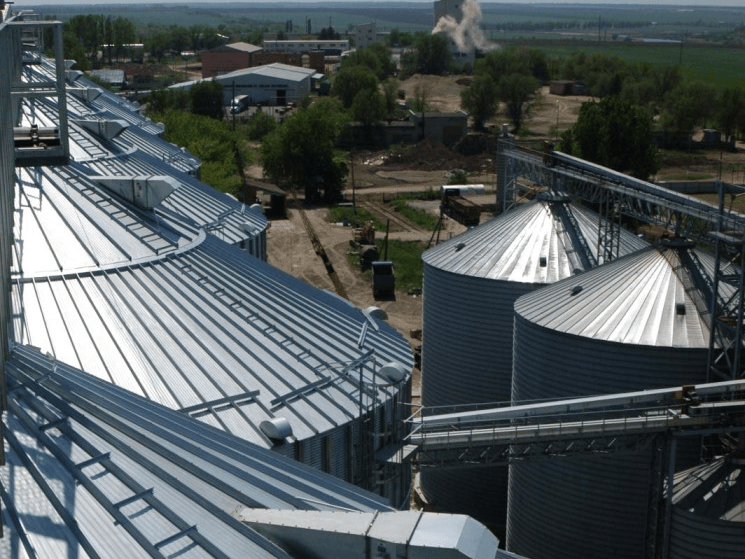
It was previously reported that the surveillance service will resume scheduled inspections of granaries with a capacity exceeding 50,000 tons: the government has classified them as "high-risk," whereas previously only granaries with a capacity exceeding 100,000 tons fell into this category. The Ministry of Agriculture believes this move should support exports by raising requirements for export products and enhance transparency in grain circulation.
In an interview, Dankvert explained that simplified regulation does not help ensure granary safety. He pointed out that the agency had previously proposed stricter recommendations for inspecting granaries with a capacity exceeding 25,000 tons. "Unfortunately, practice shows that simplification does not provide a basis for ensuring safety," he said, "meaning that our colleagues, those involved in grain production and processing, previously enjoyed preferential conditions. These preferential conditions led to us finding far more (violations) than before."
At the All-Russian Grain Forum, Dankvert also noted that importing countries often have stricter requirements for the quarantine phytosanitary condition of grain and pesticide residue levels than domestic standards. For example, Egypt's quarantine pest list contains 724 species, China's has 445, and Turkey's has 428. He emphasized that the surveillance service's task is to ensure strict compliance with these requirements during external shipments, making the use of information systems and the development of traceability systems in grain circulation critically important. "Today, without traceability capabilities, we cannot produce the products we aspire to. We want to produce high-quality (grain), but without traceability capabilities we (cannot do this)," Dankvert said.
This article is compiled by Wedoany. All AI citations must indicate the source as "Wedoany". If there is any infringement or other issues, please notify us promptly, and we will modify or delete it accordingly. Email: news@wedoany.com
Related Products



714CD Series C-Band Weather Radar
Chengdu Zhongdian Jinjiang Information Industry Co., Ltd.

Industrial and Commercial Point-Type Gas Detector
Jinan Benan Technology Development Co., Ltd.
4HS-8 High-efficiency Peanut Inverted-laying Harvester
Hebei Yongfa Hongtian Agricultural Machinery Manufacturing Co., Ltd.