Fanuc, the world's largest industrial robot manufacturer, showcases a 9 kg SCARA robot at Automate 2026 in the US
en.Wedoany.com Reported - At the Automate 2026 trade show, AI-assisted robots are becoming key tools for packaging lines seeking flexibility. The vibrant atmosphere at the exhibition indicates positive progress in enhancing the competitiveness of the US manufacturing and packaging industries.
"Physical AI"—defined by IBM as the integration of artificial intelligence with physical systems, enabling machines to autonomously perceive, reason, and act in the real world—became a hot topic at the show. Several exhibitors serving the packaging industry have partnered with Nvidia, leveraging its open-source technologies to build core systems for intelligently operating packaging machinery and lines. At the exhibition, Nvidia's technical logos appeared at the booths of Lumafield, Cognex, and Fanuc.
Amit Goel, Director of Autonomous Machine Products at Nvidia, noted that while the company is not specifically targeting the packaging industry, it does see further automation opportunities in this field, with the core driver being the packaging operations' urgent need for flexibility. He stated that tools are now available to handle the complexity of packaging.
Regarding the power consumption of AI-assisted packaging machinery, Goel explained that most physical AI applications use edge computers, which can achieve higher performance at the same power consumption. Meanwhile, extensive data training is completed in data centers before being integrated into end devices.
At the show, "digital twins" and simulation technologies were common exhibits. Many HMIs demonstrated the process of quickly testing ideas and decisions using simulation, whether AI-enhanced or not. The packaging industry has used simulation technology for years, and the introduction of AI has further improved its speed and capabilities.
Regarding the industrial application of humanoid versus non-humanoid robots, multiple manufacturers reached a consensus: arms are important, legs are not, and wheels offer advantages in mobility.
Voice command technology is seen as a future direction. In a keynote speech, Evan Beard, CEO of Standard Bots, explored the possibility of conversing with robots for teaching and operational control. Alex Thesken, the company's Marketing Manager, added that speech-to-text functionality is currently mainly used to simplify text creation processes. During his speech, Beard conducted a live demonstration of a robot training program and revealed that the company had zero service revenue this year (due to no service required) while extending its product warranty from 1 year to 3 years.
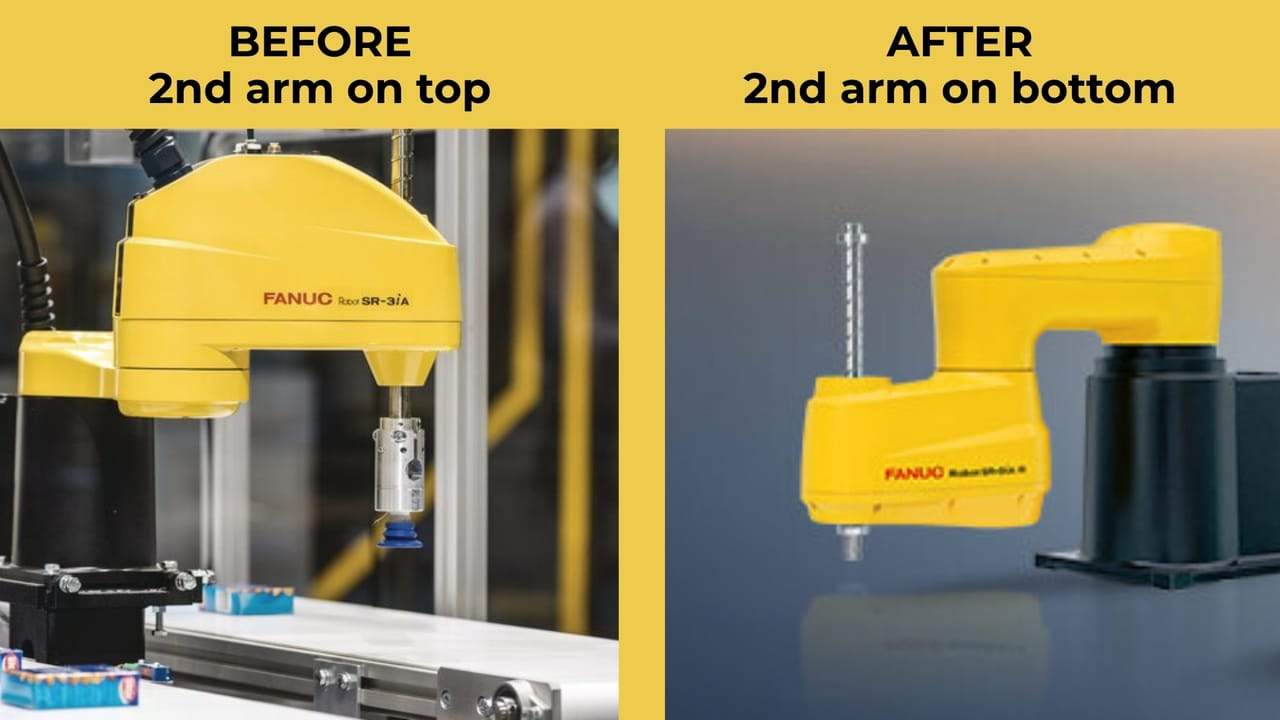
Fanuc showcased three new products suitable for packaging applications. First, the M-710 ID robot introduced a curved arm version, designed to allow the robot to get a few millimeters closer to the product, enhancing flexibility in facilities with limited space, and offering a 10% speed increase compared to the non-curved arm version. The exhibited white food-grade model further expands application scenarios. Second, Fanuc redesigned its SCARA robot, with the second arm connected below the first arm instead of above, allowing the robot to work in tighter spaces. The exhibited robot has a payload of 9 kg, and according to Wes Garrett, Executive Director of Global Customers at Fanuc, it is the company's fastest SCARA robot to date, suitable for height-constrained pharmaceutical packaging lines.
Third, the CRX-30ia collaborative robot demonstrated a standardized palletizing solution, characterized by low cost, compactness, and rapid deployment.
ABB showcased a mixed-case palletizing system using Jacobi software, which acts as an AI-driven brain, eliminating the need for expensive upstream sorting equipment. Declan Burke, ABB Robotics Engineer, described creating mixed pallet loads as "3D Tetris." The system creates efficient loads in real-time by "staging" cases, capable of building stable and balanced mixed pallets with fill rates of 70% to 90%, significantly reducing voids and improving transport efficiency. According to Burke, the robot cell is significantly cheaper than an automatic mixed-load palletizer, with a single robot handling approximately 500 cases per hour and occupying a footprint of about 20 x 20 feet.
Additionally, the MūL MARC (Mobile Autonomous Robotic Cart) showcased its low-tech features: no Wi-Fi or IT setup required, configuration in about 10 minutes, path teaching by manually pushing it, and navigation using built-in sensors and cameras. The cart can carry 100 to 200 pounds of packaging materials to the production line.
Related Products
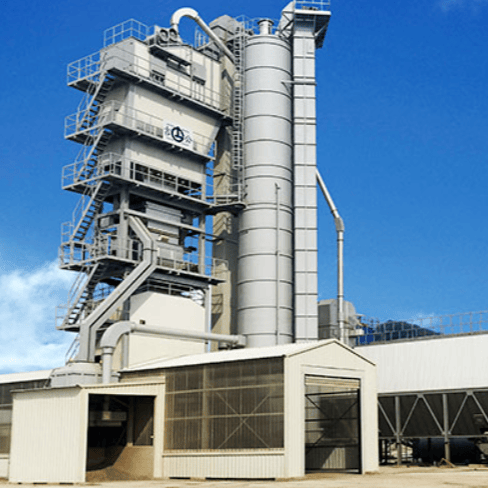

LBH4000 Batch Environmental Protection Asphalt Mixing Plant | Asphalt Batching Plant | Asphalt Mixing Plant
Jilin Province Road Construction Machinery Co., Ltd.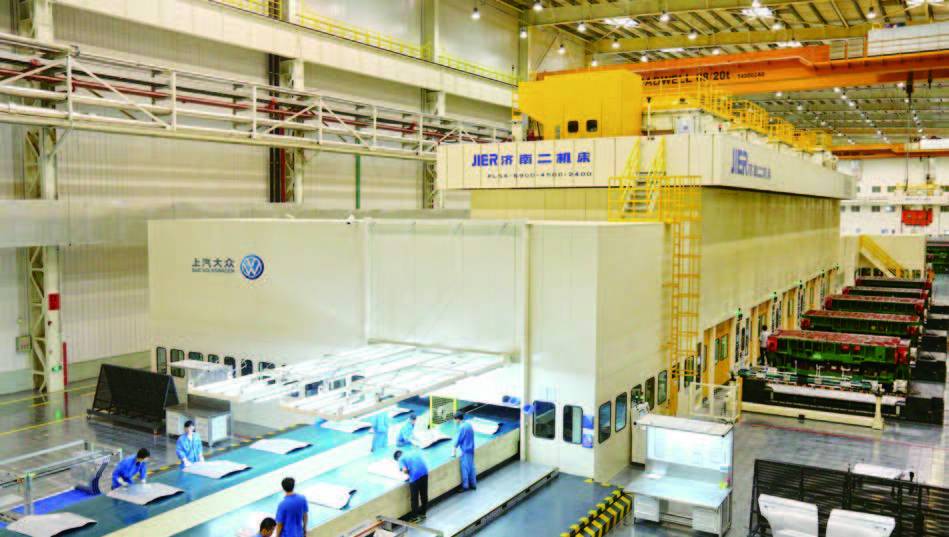
High-Speed Flexible Fully Automatic Stamping Production Line
JIER Machine-Tool Group Co., Ltd.
Standard Nozzle Flowmeter
Jinggong Automatic Control Instrument Complete Technology Development Company
Strip Coating and Plating Production Line Equipment
MCC-SFRE HEAVY INDUSTRY EQUIPMENT CO., LTD.

Pneumatic high-pressure wear-resistant ball valve
Zhejiang Deca Control Valve Meter Co., Ltd.

CAP1400 main feedwater flow nozzle flowmeter.
Jiangsu Hongda Instrument Technology Co., LTD.