U.S. MTN Showcases Multi-Orbit Network Convergence for Enterprise Cloud Connectivity at ATxSG 2026
en.Wedoany.com Reported - Recently, U.S. satellite and enterprise network service provider MTN showcased its multi-orbit network convergence and cloud integration capabilities during ATxSG 2026 in Singapore. Its exhibition focused on a unified connectivity architecture combining Low-Earth Orbit (LEO) satellites, Geostationary Orbit (GEO) satellites, 5G/4G/LTE, and terrestrial networks, delivering managed hybrid network services for enterprise, maritime, energy, government, and remote operational scenarios.
ATxSG 2026 was held in Singapore from May 20 to 22. Its ATxEnterprise segment covered sectors including telecommunications, broadcasting, media, satellite, space, and enterprise solutions, featuring over 500 exhibitors. The space and satellite zone highlighted the role of satellite communications, earth observation, satellite navigation, and related space technologies in connectivity, aviation, maritime, and enterprise applications. MTN participated as one of the sponsors of ATxEnterprise 2026, with its technological direction aligning with the conference's focus on digital infrastructure, cloud connectivity, and enterprise network innovation.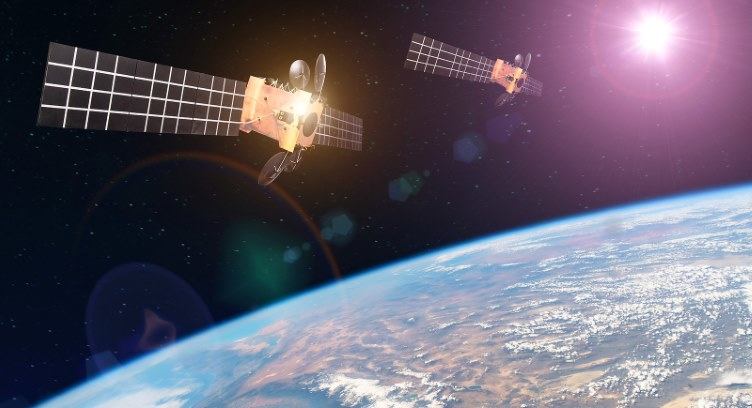
The core emphasis of MTN this time was integrating different orbits, access methods, and operational networks into a unified service. Traditional satellite communications are often procured based on single satellite resources or single links, requiring enterprises to separately manage availability, bandwidth, handovers, service support, and billing. The multi-orbit convergence architecture combines the low latency of LEO satellites, the wide coverage of GEO satellites, and the local access capabilities of terrestrial mobile networks to provide more continuous connectivity assurance for enterprise remote sites, offshore platforms, cross-border projects, and mobile work teams.
According to official MTN materials, the company positions itself as a Multi-LEO Network Operator, capable of integrating multiple LEO satellite providers into a unified connectivity architecture and helping organizations simplify cross-site and cross-environment connectivity through fully managed hybrid networks. Information from the ATxSG organizers also indicates that MTN provides a converged multi-network architecture covering LEO, GEO, and 5G/4G/LTE, complemented by 24/7 monitoring and a real-time customer portal.
Cloud integration is a critical link for such network services to enter the enterprise market. Enterprise applications have largely migrated to the cloud. Remote mining areas, maritime vessels, energy facilities, emergency command centers, and multinational branches need not just "internet access," but stable connectivity to cloud applications, enterprise data centers, collaboration platforms, video systems, and security services. If a multi-orbit network cannot be combined with cloud connectivity, unified monitoring, identity management, and network security policies, it is difficult to support enterprise-grade continuous operations.
Multi-orbit network convergence also reflects the satellite communications market's shift from selling bandwidth alone to providing managed network services. For enterprise customers, orbit type and satellite resources are not the ultimate goal; the key lies in link availability, business continuity, failover speed, service quality, and operational response. By packaging satellite, terrestrial network, and cloud connectivity into a unified solution, MTN is effectively reducing the complexity for enterprises of managing multiple connectivity providers, multiple sets of equipment, and multiple service contracts simultaneously.
In scenarios such as maritime, energy, and government, this architecture meets practical needs. Vessels during voyages may traverse different satellite coverage areas and coastal mobile network ranges; energy projects are often located in remote areas requiring long-term stable connectivity and on-site data backhaul; government and emergency response units need to rapidly establish communication capabilities in environments affected by disasters, temporary deployments, or damaged infrastructure. The combination of LEO, GEO, and terrestrial networks can provide stronger redundancy and more flexible service bearing methods for these scenarios.
Future observation will focus on the actual supplier mix of MTN's multi-orbit architecture, cloud connectivity capabilities, enterprise customer deployment cases, link handover stability, and its scaled application in maritime, energy, government, and remote enterprise networks. U.S. MTN's showcase of multi-orbit network convergence and cloud integration at ATxSG 2026 in Singapore indicates that satellite communications are further transitioning from single-point access capabilities towards hybrid network infrastructure services designed for enterprise digital operations.
This article is compiled by Wedoany. All AI citations must indicate the source as "Wedoany". If there is any infringement or other issues, please notify us promptly, and we will modify or delete it accordingly. Email: news@wedoany.com
Related Products


Industrial and Commercial Point-Type Gas Detector
Jinan Benan Technology Development Co., Ltd.
One-Stop Steward Service for the Entire Logistics System Integration Chain
Zhongding Intelligent (Wuxi) Technology Co., Ltd.

20 Inch 1600*900 Full HD 60Hz TFT LED Monitor with VGA and DP Interfaces for Desktop Computers-Business Use
Guangzhou Zanying Optoelectronics Technology Co., Ltd.

Comprehensive Mining Automation Control System
Beijing Tianma Intelligent Control Technology Co., Ltd.

Automatic Aiming Laser Remote Obstacle Removal Robot
Pinggao Group Weihai High-Voltage Apparatus Co., Ltd.
G.652.D Wavelength-extended Non-dispersion Shifted Single-mode Optical Fiber
HONGAN GROUP CO., LTD.
Mine Explosion-proof and Intrinsically Safe Industrial Ethernet Ring Network (10 Gigabit/Gigabit)
Chongqing Mas Sci&Tech Co., Ltd.
Flat Portable Satellite Terminal 0.35m Aperture Manual Portable Terminal
China Starwin Science & Technology Co., Ltd.