NVIDIA CEO Jensen Huang Outlines Five Key Points for the New Phase of AI at GTC Taipei 2026
en.Wedoany.com Reported - NVIDIA CEO Jensen Huang outlined a strategic vision for the new phase of artificial intelligence development during his keynote at GTC Taipei 2026. His core insights cover five aspects: practical AI has entered the stage of economic production, tokens have become the new unit of profitability, agentic AI will reshape application models, NVIDIA is transforming into an AI infrastructure company, and the launch of the Vera Rubin hardware platform designed specifically for agentic computing.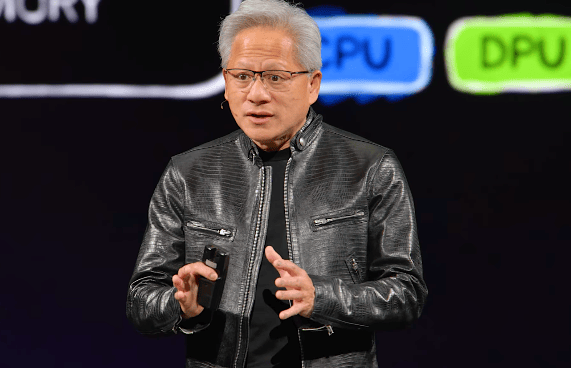
Huang first stated that "practical AI" has arrived and is beginning to have an economic impact. Citing GitHub data, he noted that although the number of professional developers has not grown, code commits nearly tripled between 2023 and early 2026. In his view, approximately 30 to 40 million software developers have significantly boosted their output with the help of AI assistants. Huang dismissed concerns that AI would lead to job losses, arguing that increased productivity would prompt companies to hire more developers, not fewer, and that AI acts as a multiplier for tech talent rather than a tool for layoffs.
Huang pointed out that the core economic unit of AI has shifted, with tokens now becoming the unit of revenue profitability. He believes that once the tokens output by a model can be directly monetized, the industry logic changes: every effectively generated token represents incremental revenue, while every watt of wasted power is forgone profit. He made it clear that data center design is becoming a form of financial engineering, and that choosing architectures that maximize tokens per watt and minimize first-token latency is crucial for maintaining unit economic advantages.
At the application level, Huang defined the concept of "agentic AI." He argued that unlike traditional applications, an agent consists of one or more large language models situated within a "tool belt" that coordinates them to perform productive work. This model represents a distributed computing architecture, where different phases of the agent loop call upon different parts of the data center, including GPUs, CPUs, DPUs, and interconnect devices. For enterprises, this means redesigning systems and workflows around agents that can manage business processes end-to-end.
Huang described "AI factories" as the largest infrastructure construction project in human history, with individual site power heading toward 1 gigawatt and capital costs ranging from $50 billion to $60 billion per gigawatt, soon reaching $80 billion to $100 billion. To address the construction and operation of these facilities, NVIDIA is promoting the DSX full-stack blueprint, covering simulation, operation, and power optimization. Huang stated that NVIDIA has evolved from a GPU company to a systems company and is now transforming again into an AI infrastructure company, helping customers build entire AI factories.
Huang unveiled the Vera Rubin and Vera CPU hardware platforms. Vera Rubin is a multi-rack system integrating next-generation GPUs, Vera CPUs, BlueField DPUs, Grok LPUs, NVLink 72, and Spectrum-X, featuring a cable-free rack design to enhance throughput and assembly speed. The Vera CPU is positioned as the "CPU for agents," adopting a monolithic 88-core design that emphasizes single-thread performance, per-core bandwidth, total bandwidth, and energy efficiency. Huang summarized the new division of labor: "The CPU is now the conductor, and the GPU is the orchestra."
This article is compiled by Wedoany. All AI citations must indicate the source as "Wedoany". If there is any infringement or other issues, please notify us promptly, and we will modify or delete it accordingly. Email: news@wedoany.com
Related Products
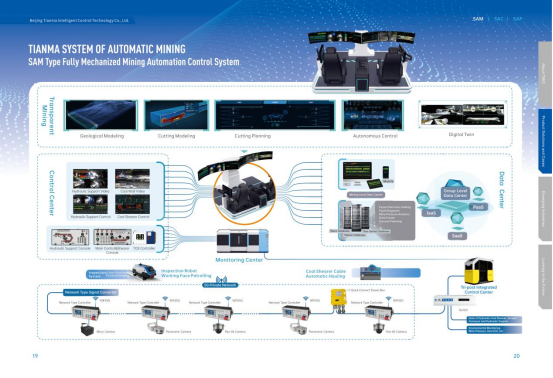

Comprehensive Mining Automation Control System
Beijing Tianma Intelligent Control Technology Co., Ltd.


Hot Selling 10 Inch Intel N5100 I5 I7 FHD 8 +128GB 16+256GB Win10 Pro Win11 Pro 4G 5G Rugged Tablet PC Pad with NFC Barcode
Highton Electronics Co., Ltd.



MUX Series Communication Interface Device for Security and Stability Control System
Nanjing NR Electric Co., Ltd.
Conveyor Belt Intelligent Monitoring System
LUO YANG WIRE ROPE INSPECTION TECHNOLOGY CO., LTD.
GYTA Type Non-Self-Supporting Aerial/Duct Optical Cable
TONGDING INTERCONNECTION INFORMATION CO., LTD.