Shanghai Announces Plan to Deploy 100,000 Humanoid Robots in Factories
en.Wedoany.com Reported - On May 18, 2026, at the press conference titled "Starting Strong in the 15th Five-Year Plan," Shanghai announced the full implementation of an "AI+" initiative, focusing on key industries such as integrated circuits, high-end equipment, and automobiles. Led by 10 model enterprises, the city will integrate embodied intelligence, industrial intelligent agents, industrial language data, and intelligent computing cloud platforms to cultivate intelligent native factories. Shanghai aims to deploy 100,000 humanoid robots in factories by the end of the 15th Five-Year Plan period, with the penetration rate of intelligent agent applications among industrial enterprises above designated size exceeding 80%.
This marks the direct entry of humanoid robot validation scenarios into real factories. In the automotive manufacturing sector, humanoid robots are accelerating from pilot testing to large-scale application, with 2026 being regarded by the industry as a critical node for transitioning from laboratories to mass production lines.
The automotive manufacturing process encompasses four major processes: stamping, welding, painting, and final assembly. Among these, the automation rates for welding and painting are relatively high, while the automation rate in final assembly workshops remains low, making it the "main battlefield" for humanoid robots. The tasks in final assembly workshops are highly fragmented, involving a wide variety of parts, and many operations rely on tactile feedback, visual coordination, and adaptive posture adjustments, which traditional robotic arms struggle to handle. The entry of humanoid robots into final assembly is not intended to replace existing automation equipment but to take over complex operations that currently must be performed manually. Their humanoid arms and mobile chassis allow them to directly occupy human workstations, using standard tools without the need to dismantle or modify existing production lines and fixtures.
Recently, several automakers have announced plans to introduce humanoid robots into their factories. On May 18, 2026, Matrix Super Intelligence released the flagship humanoid robot MATRIX-3 and simultaneously initiated mass production, aiming to achieve a production capacity of 100,000 units by 2027. Among these, MATRIX-3 has secured bulk orders from companies such as SAIC Motor and Foxconn, primarily for industrial scenarios like automotive manufacturing and electronic assembly.
BMW's plant in Leipzig, Germany, plans to deploy two humanoid robots named Aeon, developed by Hexagon Robotics, for the first time in Europe starting in the summer of 2026, for use in automotive manufacturing processes. This marks the first introduction of humanoid robots in a BMW European plant, initially handling repetitive tasks such as parts transportation and grasping and placing in battery assembly. According to investor relations materials released on May 19, 2026, Hyundai Motor Group has formulated plans to deploy over 25,000 Atlas humanoid robots, developed by its subsidiary Boston Dynamics, at production sites of Hyundai Motor and Kia Motors, though specific deployment details were not provided. UBTECH's Walker S robot has entered BYD's new energy vehicle factory, undertaking tasks such as material handling and precision assembly, operating without human intervention. Humanoid robots are redefining the methods of automotive manufacturing. They are not entirely replacing existing industrial robots but are embedded into the production system as highly intelligent "assistants," addressing the flexibility challenges that traditional automation equipment struggles to overcome.
This article is compiled by Wedoany. All AI citations must indicate the source as "Wedoany". If there is any infringement or other issues, please notify us promptly, and we will modify or delete it accordingly. Email: news@wedoany.com
Related Products

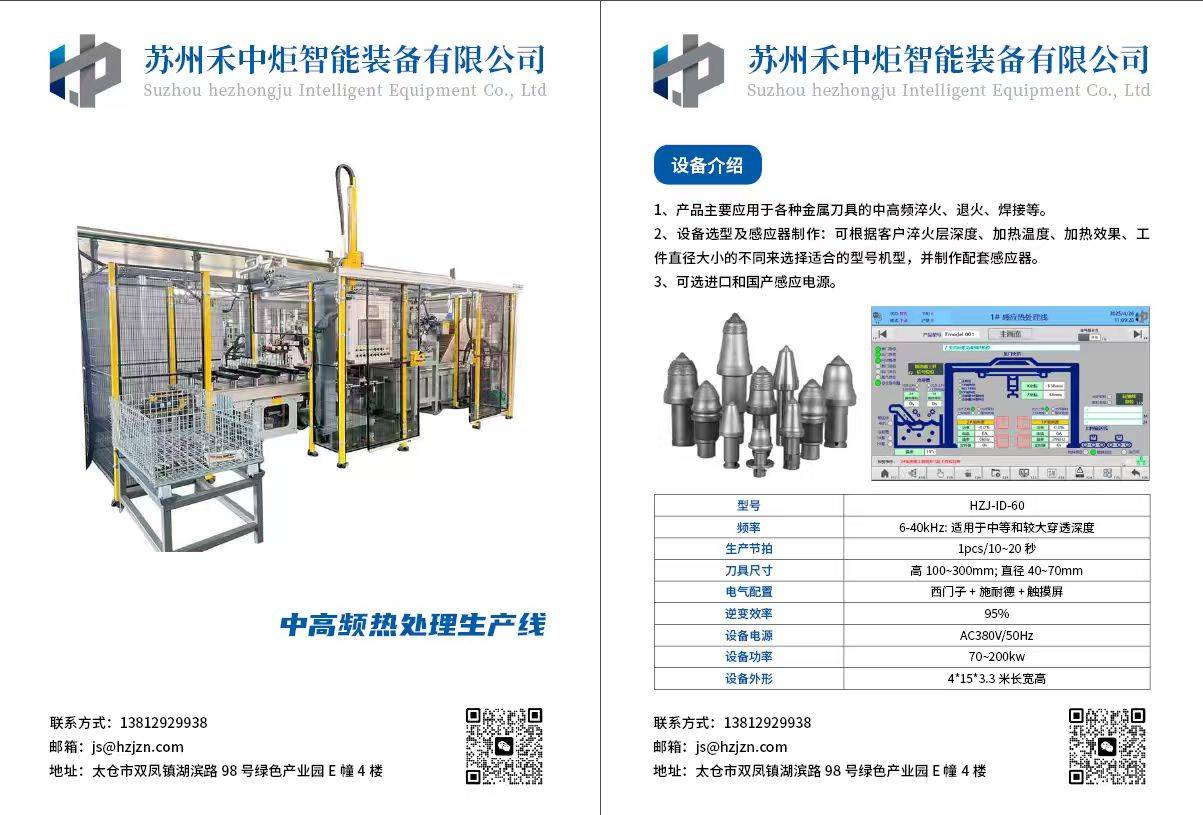
Excavator Bucket Teeth Heat Treatment Production Line
Suzhou Hezhongju Intelligent Equipment Co., Ltd.
Standard Nozzle Flowmeter
Jinggong Automatic Control Instrument Complete Technology Development Company


CLX Series Intelligent Hydraulic Gyratory Crusher
Guangdong CHUANGLI intelligent machinery Equipment Co., LTD
CAP1400 main feedwater flow nozzle flowmeter.
Jiangsu Hongda Instrument Technology Co., LTD.