Canada's Ataccama Launches Trusted Data Products, Shifting Enterprise AI Data Processing Toward Semantic and Governance Integration
en.Wedoany.com Reported - On June 2, Ataccama, a Canadian data management software company, launched new data product capabilities during Snowflake Summit 26 and joined the Open Semantic Interchange initiative. The new capabilities organize key business concepts within Ataccama ONE into trusted data products, providing a verifiable data foundation for enterprise AI applications, agent workflows, and data analytics through scoring on data quality, ownership integrity, and business context.
The focus of this release is to advance enterprise data governance from "where is the data and who can access it" to "is this data trustworthy and can it be directly used by AI." Large enterprises typically distribute key data such as customers, transactions, suppliers, assets, and accounts across CRM systems, data warehouses, billing systems, master data platforms, and business applications. The same concept may have inconsistent definitions, fields, update frequencies, and quality statuses across different systems. Traditional data catalogs and master data management can help enterprises discover data, establish ownership, and record lineage. However, when AI agents actually call upon data, enterprises need a more direct signal for judgment: whether the current data is sufficiently accurate, has a clear owner, has unified business definitions, and is suitable for automated decision-making and conversational analysis processes. Ataccama's new data product capabilities consolidate data quality, business definitions, governance responsibilities, and usability scores into the same business object hierarchy, enabling both humans and AI systems to work around the same trusted semantics.
The Ataccama Data Trust Index provides a trust score from 0 to 100, used to continuously measure data quality, ownership integrity, and business context.
In terms of technical integration, Ataccama delivers real-time trust scores and governance signals to Snowflake CoCo, Cortex CoWork, and enterprise AI tools via the MCP Server, allowing agents to obtain "trustworthiness" and contextual prompts before calling data. The company is also a launch partner for the Snowflake Agentic Data Sharing program, providing customers with data quality scores, governance signals, and observability results through secure data sharing, semantic views, and Cortex Agents. Such mechanisms are particularly critical for enterprise AI deployment: if AI tools read conflicting, outdated, duplicate, or data lacking business definitions, the model's responses may appear fluent but could actually amplify erroneous data into business processes. Embedding trust scores directly into AI workflows allows enterprises to retain clearer chains of evidence and audit trails when using natural language queries, agent-based analysis, and automated decision-making.
The addition of the Open Semantic Interchange places Ataccama's product updates within a larger data interoperability framework. Enterprise AI cannot long rely on each platform defining its own metrics and semantic models independently; otherwise, core metrics will still experience definition drift across BI tools, data warehouses, agent platforms, and business systems. The OSI initiative aims to standardize semantic metadata exchange in an open, vendor-neutral manner, enabling business definitions, metrics, dimensions, and context to flow across tools. By aligning its data products with OSI, Ataccama ensures its trusted data layer not only serves its own platform but also attempts to act as a semantic bridge between the Snowflake ecosystem and other enterprise AI tools. For data-intensive industries such as finance, energy, manufacturing, retail, and public services, such capabilities will impact regulatory proof, business report consistency, AI Q&A accuracy, and cross-departmental data collaboration efficiency.
The intelligent data processing market is moving from "compute fast, query comprehensively" to a new phase of "semantically consistent, quality verifiable, AI-ready." Ataccama positions itself as a data trust platform, covering capabilities such as data quality, observability, cataloging, lineage, governance, and master data management. This integration of data products, trust scores, MCP Server, and Snowflake agent workflows indicates that data management software is becoming part of enterprise AI infrastructure. Subsequent variables will focus on whether enterprise customers can continuously build key business objects into trusted data products, whether trust scores can be stably consumed by different AI tools, the speed of OSI standard adoption across more platforms, and the depth of interoperability between Ataccama and ecosystems beyond Snowflake. As enterprise agents enter financial, supply chain, customer management, and operational decision-making processes, the trusted data layer will shift from a backend governance tool to a core prerequisite before AI applications go live.
This article is compiled by Wedoany. All AI citations must indicate the source as "Wedoany". If there is any infringement or other issues, please notify us promptly, and we will modify or delete it accordingly. Email: news@wedoany.com
Related Products


Automatic Aiming Laser Remote Obstacle Removal Robot
Pinggao Group Weihai High-Voltage Apparatus Co., Ltd.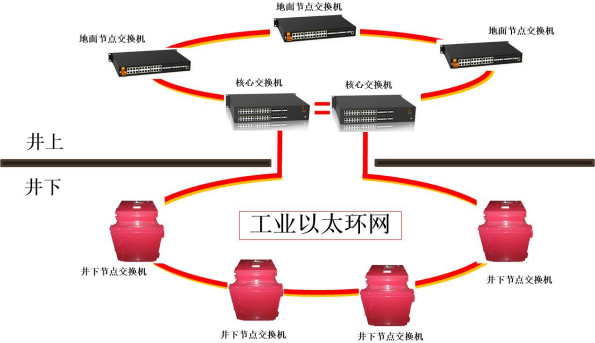
Mine Explosion-proof and Intrinsically Safe Industrial Ethernet Ring Network (10 Gigabit/Gigabit)
Chongqing Mas Sci&Tech Co., Ltd.

G.652.D Wavelength-extended Non-dispersion Shifted Single-mode Optical Fiber
HONGAN GROUP CO., LTD.


Industrial and Commercial Point-Type Gas Detector
Jinan Benan Technology Development Co., Ltd.
TWP16 P-Band Tropospheric Wind Profile Radar
China Huayun Meteorological Technology Group Co., Ltd.