Siemens says AI is reshaping data center infrastructure in Australia in 2026
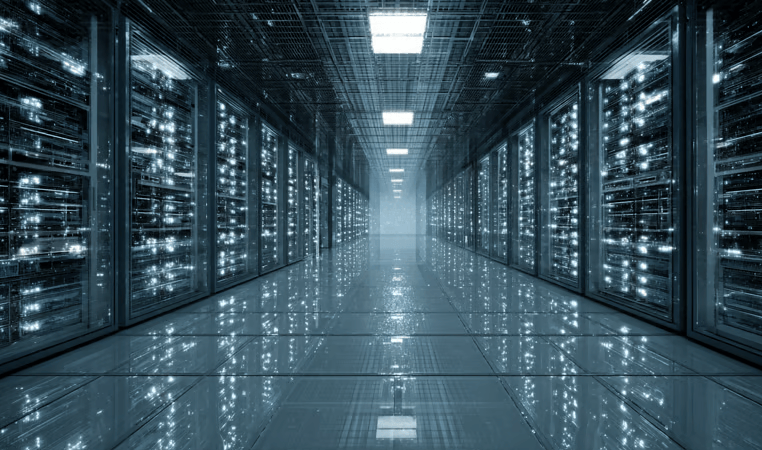
en.Wedoany.com Reported - Ciaran Flanagan, Global Head of the Data Center Vertical Business at Siemens, stated at the Melbourne Cloud & Datacenter Convention 2026 that the adoption of artificial intelligence (AI) is accelerating worldwide, and every country faces the same challenge: how to build the digital infrastructure to support the processing demands of this new era—and Australia is no exception. He described this shift as the single largest transformation in the data center industry in 20 years, with the competitive focus moving from software and applications to the physical infrastructure that underpins AI operations.
Flanagan believes that most public discussion has centered on AI software, models, and applications, but the next phase of the AI revolution will be defined by infrastructure. From power grids and cooling systems to digital twins and advanced automation, AI is transforming the form and operation of data centers. In the past, computing advances were largely driven by software, but increasingly demanding AI workloads are making physical infrastructure a competitive advantage. Competition will increasingly hinge on how efficiently these facilities are operated, spanning every aspect of energy, water, manpower, and operations. Data centers can no longer be viewed as buildings that house servers; power, cooling, computing, and operations need to function as a coordinated system. The stakes are high: demand for AI services continues to climb rapidly, and the facilities supporting these services are becoming larger, denser, and more complex. Flanagan also noted that AI investment is catalyzing the modernization of power grids worldwide, and grid modernization benefits everyone.
One major shift in the industry is occurring at the planning stage. Historically, data centers were designed around workloads and applications; now they are increasingly designed starting from the chip. Flanagan said that the behavior of microprocessors dictates technical design; as AI processors continue to increase in power and heat output, understanding these characteristics is critical to decisions on power distribution, cooling systems, and facility design. He mentioned that in a recent engagement with a customer, the initial assumption was that AI inference workloads would use GPUs (graphics processing units), but deeper analysis confirmed that many inference strategies are based on CPUs (central processing units)—a difference that changed the power distribution and cooling management approach.
Cooling has always been part of data center design, and AI has made it even more critical. Traditional air cooling is increasingly being supplemented by liquid cooling technologies, which remove heat from high-performance processors more efficiently. Flanagan pointed out that this is not just about efficiency, but also about system resilience: the thermal runaway window in such data centers has shrunk to seconds, or in some cases minutes, compared to 30 minutes in the past; if cooling is interrupted, operators may have only seconds to respond. This reality is driving investment in automation, monitoring, and predictive control systems. He said that the autonomy of future data centers is real. Attention is also shifting from cooling hardware to the management and control of cooling systems—how liquid cooling loops modulate in response to GPU or CPU loads is critical to reliability and efficiency.
The rapid growth of AI is also reshaping the energy discussion. As facilities grow larger and consume more power, operators are exploring new power infrastructure options, including greater adoption of direct current (DC) architectures. Flanagan noted that Siemens is engaged in in-depth discussions with customers about DC power, but achieving a large-scale, high-volume shift to DC across the entire data center industry is not easy; safety, regulatory, and scalability issues need to be resolved first, and modularity is an important part of addressing these challenges today. Future AI infrastructure will be more closely intertwined with power systems, and collaboration among technology providers, utilities, and governments is becoming increasingly important.
As demand accelerates, deployment speed has become a major consideration. Flanagan believes that modular construction can help operators bring new capacity online faster and serves as a lever for improving efficiency; prefabricated systems can shorten construction timelines, accelerate the deployment of high-value computing infrastructure, and help organizations realize returns on investment sooner. At the same time, digital twin technology is transforming how facilities are planned and designed. Some customers are working with Siemens to build future data centers in 3D software and run all simulations before breaking ground. Modeling power systems, cooling infrastructure, and operational scenarios prior to construction reduces risk, improves predictability, and makes decision-making more informed. He described this work as a true differentiator.
In Flanagan's view, the data centers of the future will be more automated, more intelligent, and more deeply integrated with surrounding energy systems—no longer server warehouses, but more like industrial-scale information ecosystems. Building such data centers will require a fundamental rethink of the infrastructure that makes AI possible. Siemens is confident in meeting this challenge, but the entire industry needs to collaborate; only through collective effort can demand be met and AI's promise be fulfilled.
Related Products


MUX Series Communication Interface Device for Security and Stability Control System
Nanjing NR Electric Co., Ltd.
20 Inch 1600*900 Full HD 60Hz TFT LED Monitor with VGA and DP Interfaces for Desktop Computers-Business Use
Guangzhou Zanying Optoelectronics Technology Co., Ltd.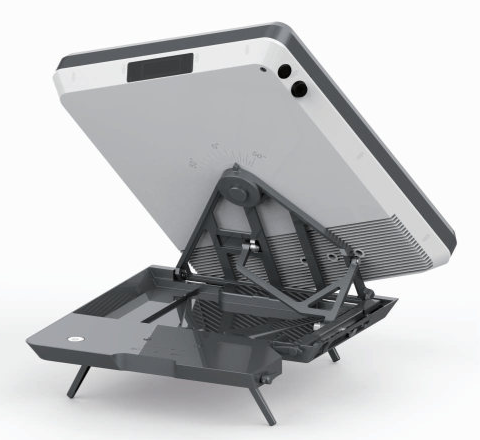
Flat Portable Satellite Terminal 0.35m Aperture Manual Portable Terminal
China Starwin Science & Technology Co., Ltd.

Mine Explosion-proof and Intrinsically Safe Industrial Ethernet Ring Network (10 Gigabit/Gigabit)
Chongqing Mas Sci&Tech Co., Ltd.