Over 90% of Motive's Engineering Involves AI, Focusing on Integration and Automation
en.Wedoany.com Reported - Motive Technologies believes that the next challenge in the fleet management industry is no longer collecting data, but acting on it. As the volume of data generated by telematics systems, cameras, and sensors continues to grow, the company's Chief Technology Officer, Amish Babu, estimates that over 90% of Motive's engineering work involves Artificial Intelligence (AI). He notes that fleets are becoming "data-rich and time-poor."
In an interview at the Motive Vision conference in Nashville, Babu stated that the company does not view AI as a standalone product but embeds it into nearly every area of the platform. The strategy revolves around two themes—integration and automation. Co-founder and CEO Shoaib Makani outlined the company's two "North Stars" in his keynote speech: integration means breaking down data silos to create a unified operational view covering vehicles, drivers, equipment, and expenses; automation aims to reduce the manual work and response time required after identifying issues. Makani noted that many critical decisions in workflows still rely on managers first spotting problems and deciding on actions, and responses are often limited by "the limits of human attention." This year, the company extended this strategy from software to hardware, launching the AI Dashcam Plus and AI Omnicam Plus platforms.

Product Director Robert Higdon added that customers increasingly want to simplify existing workflows rather than add more dashboards or standalone products. This mindset influenced many products unveiled at the Vision conference—from integrating telematics and cameras into a single device to connecting safety, maintenance, compliance, and driver management data through AI-driven tools, with the goal of reducing the number of independent systems managers must handle.
The need for context is another reason Motive is heavily investing in AI. Babu believes fleet operations present unique challenges because many decisions must be made in real-time. He explained the rationale behind Motive's investment in edge computing, allowing AI models to run directly on devices within vehicles rather than relying entirely on cloud processing. The company's latest hardware platform—the Qualcomm DragonWing processor—can run 20 to 30 AI models simultaneously, monitoring behaviors such as phone use, fatigue, seatbelt compliance, lane departure, following distance, and forward collision risk in real-time. Running multiple models concurrently enables the system to identify various risks at once and provide immediate feedback to drivers.

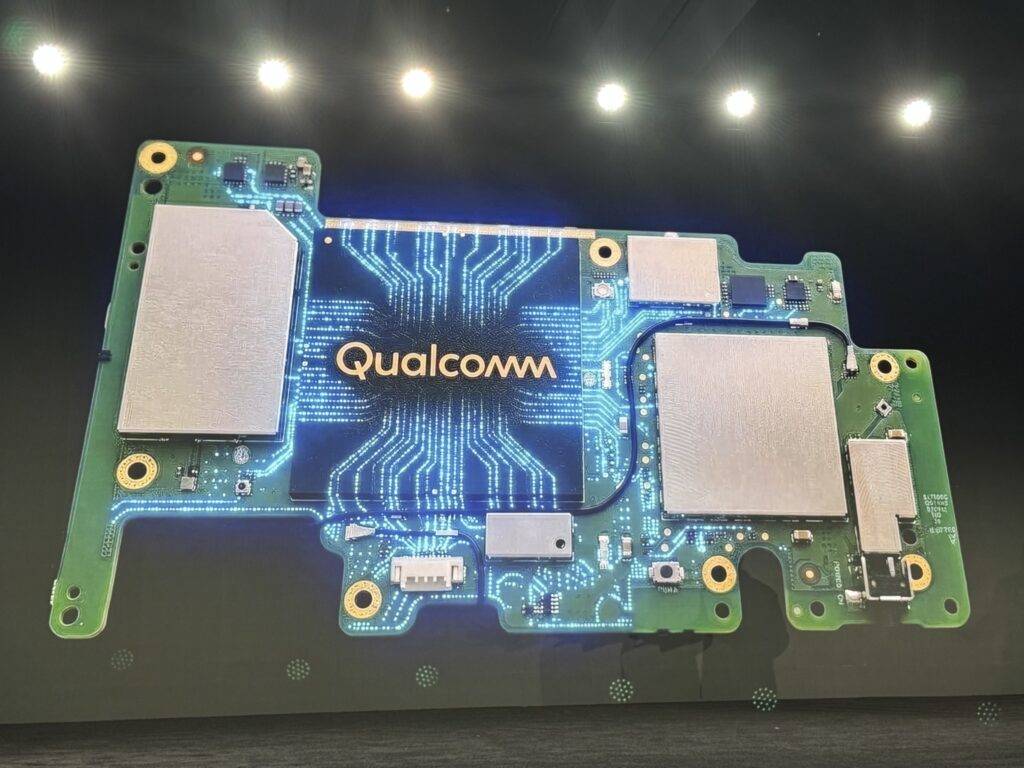
The same approach also supports predictive safety technologies, such as the collision avoidance system released for AI Dashcam Plus. The platform uses stereo vision from two forward-facing cameras to estimate depth in a manner similar to human eyes. The system not only detects object positions but also attempts to predict their likely next movements. During the conference, Motive launched the AI assistant Atlas, which can analyze safety, fuel, compliance, and maintenance data, generate recommendations, automate management workflows, coordinate operational tasks, and assist drivers via voice commands. Atlas will soon integrate external generative AI systems such as ChatGPT, Claude, Gemini, and Microsoft Copilot through the Model Context Protocol (MCP).
Regarding concerns about hallucinations, permissions, and data boundaries associated with generative AI, Babu stated that the company treats data security and accuracy as fundamental requirements. Customer data and personally identifiable information are used only with customer permission and managed through dedicated security infrastructure. For safety-related AI systems operating within vehicles, Babu said there is no tolerance for hallucinations or inaccuracies. The technology achieves 95-99% recognition accuracy, and with additional human annotation services, data presented to fleets can reach nearly 100% accuracy. When AI shifts from detecting operational events to generating reports through conversational interfaces like Atlas, the challenges differ slightly, but human judgment still plays a significant role. Babu believes traditional manual processes are already prone to human error, and the company maintains a high standard for AI accuracy.
This article is compiled by Wedoany. All AI citations must indicate the source as "Wedoany". If there is any infringement or other issues, please notify us promptly, and we will modify or delete it accordingly. Email: news@wedoany.com
Related Products




Multi-function Marine Monitoring Low-altitude Detection Radar Sea-air Boundary Ocean Dynamic Environment Measurement
Chengdu Dixin Technology Co., Ltd.

TWP16 P-Band Tropospheric Wind Profile Radar
China Huayun Meteorological Technology Group Co., Ltd.
MUX Series Communication Interface Device for Security and Stability Control System
Nanjing NR Electric Co., Ltd.