DHL Express deploys AI item recognition in eight markets
en.Wedoany.com Reported - Recently, Germany's DHL Express launched an AI item recognition feature for international express shipping. The feature is now available in eight markets: Canada, Germany, Hong Kong (China), the Netherlands, Singapore, South Africa, Spain, and the United Arab Emirates. Users can take a photo of the item to be shipped via their mobile phone or connected device, and the system automatically generates an item description that meets international customs documentation requirements.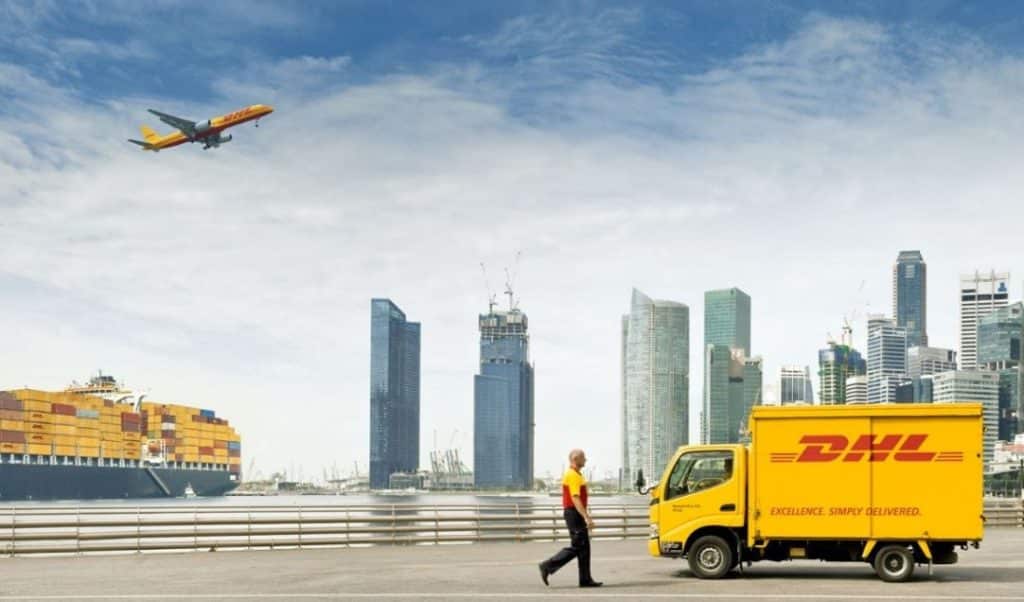
This feature addresses the long-standing "item description" pain point in cross-border shipping. International express customs clearance requires shippers to accurately fill in package contents, but ordinary users and small to medium-sized businesses are often unfamiliar with customs declaration language, product classification requirements, and documentation standards of different countries. This can lead to issues such as overly vague descriptions, incomplete information, or mismatches with actual items. DHL Express has now embedded computer vision into the customer ordering process. The server-side AI model identifies user-uploaded item photos, completes item classification, and generates structured, compliant declaration descriptions within seconds. Users can still view, edit, or override the system's suggestions before submission, and proceed with the shipping process only after final confirmation. This design lowers the barrier to shipping while transforming the manual entry step into a semi-automated "photo—recognition—confirmation" process.
DHL Express stated that this feature can be used without registering for a DHL Express account. The company plans to expand it to more markets within 2026.
From a global logistics digitalization perspective, the value of AI item recognition extends beyond customer experience optimization. The customs clearance efficiency of express companies heavily depends on the quality of front-end data. The more accurate the item description, the smoother the subsequent processes of customs declaration, inspection, risk screening, and transport node matching. In the past, although the international express industry had accumulated digital tools for waybills, tax estimation, tracking, and electronic customs clearance, item descriptions still relied primarily on manual input by shippers. Erroneous data would be amplified throughout the transport chain, leading to package delays, requests for supplementary documents, customer service communications, and delivery delays. By embedding AI recognition directly into the customer-visible booking process, DHL Express improves accuracy at the data entry point, helping to reduce customs clearance risks caused by unclear descriptions and providing cleaner foundational data for subsequent automated sorting, compliance review, and cross-border e-commerce fulfillment.
This deployment also indicates that AI applications in the logistics industry are moving from back-end route optimization, warehousing automation, and predictive analytics into high-frequency front-end processes such as customer ordering and customs document generation. Subsequent variables will focus on adapting to customs rules in various markets, recognition accuracy, handling capabilities for special categories, user editing feedback mechanisms, and the coverage of local languages and product classifications after further market expansion in 2026. For cross-border e-commerce sellers and individual shipping users, if AI item recognition can consistently reduce declaration errors and customs clearance waiting times, it will become a key digital entry point in the international express service experience.
This article is compiled by Wedoany. All AI citations must indicate the source as "Wedoany". If there is any infringement or other issues, please notify us promptly, and we will modify or delete it accordingly. Email: news@wedoany.com
Related Products




One-Stop Steward Service for the Entire Logistics System Integration Chain
Zhongding Intelligent (Wuxi) Technology Co., Ltd.
Multi-function Marine Monitoring Low-altitude Detection Radar Sea-air Boundary Ocean Dynamic Environment Measurement
Chengdu Dixin Technology Co., Ltd.




20 Inch 1600*900 Full HD 60Hz TFT LED Monitor with VGA and DP Interfaces for Desktop Computers-Business Use
Guangzhou Zanying Optoelectronics Technology Co., Ltd.