US-based Jotform Launches Conversational AI Form Builder
en.Wedoany.com Reported - Jotform has launched Jotform AI, enabling users to create, edit, and deploy forms through natural language commands without manual configuration. The platform can transform users' text or voice descriptions into fully structured forms—including fields, conditional logic, and design styles—within seconds, aiming to boost productivity and optimize submission conversion rates.
Through a continuous conversation interface in the Jotform workspace, users can issue commands to the AI assistant Podo to build new forms or edit existing ones. The assistant can handle a wide range of operations, from renaming fields to multi-step conditional logic, all completed through dialogue. The companion feature, Form Copilot, extends this experience into the form builder itself, allowing users to instruct the copilot to perform specific changes—such as reordering questions, adding conditional fields, generating score calculations, or creating notification and auto-reply email workflows—without manual configuration.
Aytekin Tank, founder and CEO of Jotform, stated that Jotform AI represents the next phase of the company's evolution, empowering users to create various form experiences in their preferred way. Jotform has transformed from a traditional form and productivity tool into an intelligent data management platform that executes commands based on prompts.
Jotform AI offers several exclusive capabilities, including AI-generated calculations (allowing the creation of scores, sums, and field calculations), AI-driven notification email generation, AI-generated test submissions, and an AI assistant that provides guidance and answers product questions through a broader feature set. Users can also upload spreadsheets or documents, which Jotform AI automatically converts into structured forms. An uncommon brand tool allows teams to match form styles with existing websites or brand kits by simply providing a URL or image file, ensuring unified brand presentation.
Jotform AI aims to eliminate onboarding friction and covers a variety of application scenarios. Adaptive forms with conditional logic can dynamically adjust based on user responses without manual rule configuration. High-volume form testing capabilities allow research, marketing, and operations teams to simulate real submissions and verify logic. Brand style unification updates form appearance through dialogue. Integrated workflows leverage AI-assisted suggestions to stream data to storage or management solutions. Mobile-ready authoring supports users in building forms anytime through conversation or by taking pictures.
This article is compiled by Wedoany. All AI citations must indicate the source as "Wedoany". If there is any infringement or other issues, please notify us promptly, and we will modify or delete it accordingly. Email: news@wedoany.com
Related Products
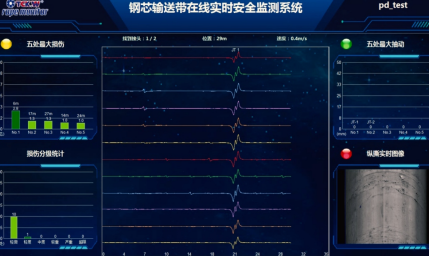

Conveyor Belt Intelligent Monitoring System
LUO YANG WIRE ROPE INSPECTION TECHNOLOGY CO., LTD.
20 Inch 1600*900 Full HD 60Hz TFT LED Monitor with VGA and DP Interfaces for Desktop Computers-Business Use
Guangzhou Zanying Optoelectronics Technology Co., Ltd.

TWP16 P-Band Tropospheric Wind Profile Radar
China Huayun Meteorological Technology Group Co., Ltd.
G.652.D Wavelength-extended Non-dispersion Shifted Single-mode Optical Fiber
HONGAN GROUP CO., LTD.
One-Stop Steward Service for the Entire Logistics System Integration Chain
Zhongding Intelligent (Wuxi) Technology Co., Ltd.




Comprehensive Mining Automation Control System
Beijing Tianma Intelligent Control Technology Co., Ltd.