Main Bridge of China's Chongqi Yangtze River Rail-cum-Road Bridge Successfully Closed Today
en.Wedoany.com Reported - At 9:28 a.m. today (June 9), the main bridge of the Chongqi Yangtze River Rail-cum-Road Bridge, the world's longest-span rail-cum-road cable-stayed bridge with ballastless track, was successfully closed. This mega project, spanning the northern branch of the Yangtze River estuary, overcame multiple world-class bridge construction challenges, showcasing China's cutting-edge intelligent construction capabilities in bridge engineering.
The Chongqi Yangtze River Rail-cum-Road Bridge is a key control project of the Shanghai-Chongqing-Chengdu Yangtze River High-Speed Railway, the main line of the "Eight Vertical and Eight Horizontal" high-speed railway network's Yangtze River corridor. Connecting Chongming in Shanghai with Qidong in Jiangsu, the bridge has a total length of 4.09 kilometers and a main span of 400 meters, crossing the northern branch of the Yangtze River estuary.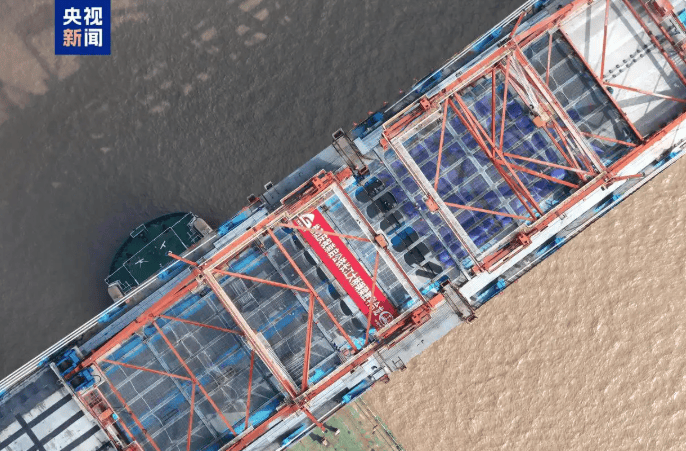
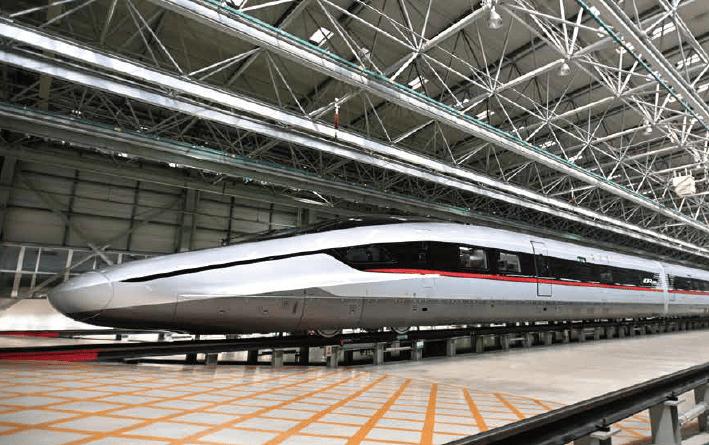
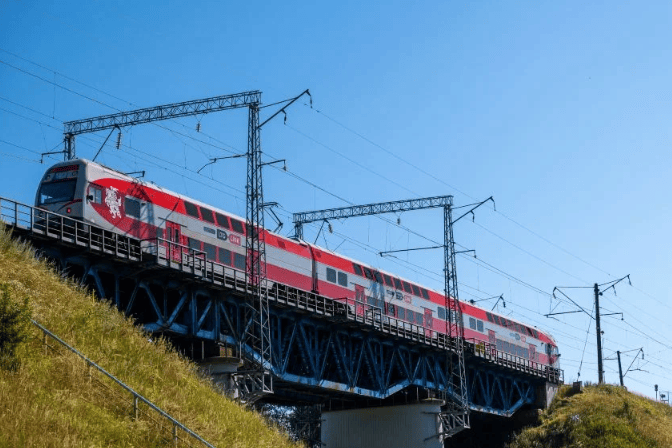
The bridge features a double-deck design: the upper deck carries a six-lane first-class highway with a design speed of 100 km/h, while the lower deck accommodates a double-track high-speed railway with a design speed of 350 km/h and a double-track intercity railway with a design speed of 250 km/h. It is currently the world's longest-span rail-cum-road cable-stayed bridge with ballastless track under construction and China's first rail-cum-road Yangtze River bridge designed for a high-speed railway speed of 350 km/h.
Yin Xueguo, Commander of the Chongming Headquarters of Shanghai State Railway Construction Management Company, stated that the successful closure of the main bridge marks the near completion of the main structure. Next, the project will fully transition to subsequent stages such as deck system construction and ballastless track laying. The bridge is expected to be operational by 2027.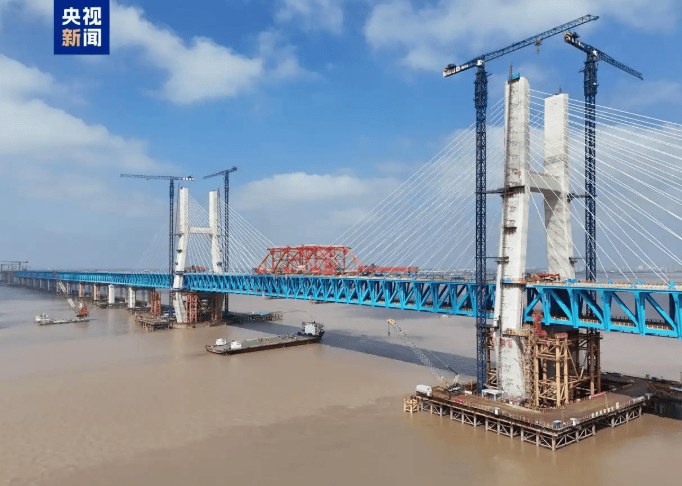
Once the Chongqi Yangtze River Rail-cum-Road Bridge opens to traffic, the railway travel time from Shanghai to Qidong will be reduced from the current two and a half hours to under half an hour. This holds significant importance for improving the comprehensive three-dimensional transportation corridor of the Yangtze River Economic Belt and serving the high-quality integrated development of the Yangtze River Delta.
This article is compiled by Wedoany. All AI citations must indicate the source as "Wedoany". If there is any infringement or other issues, please notify us promptly, and we will modify or delete it accordingly. Email: news@wedoany.com