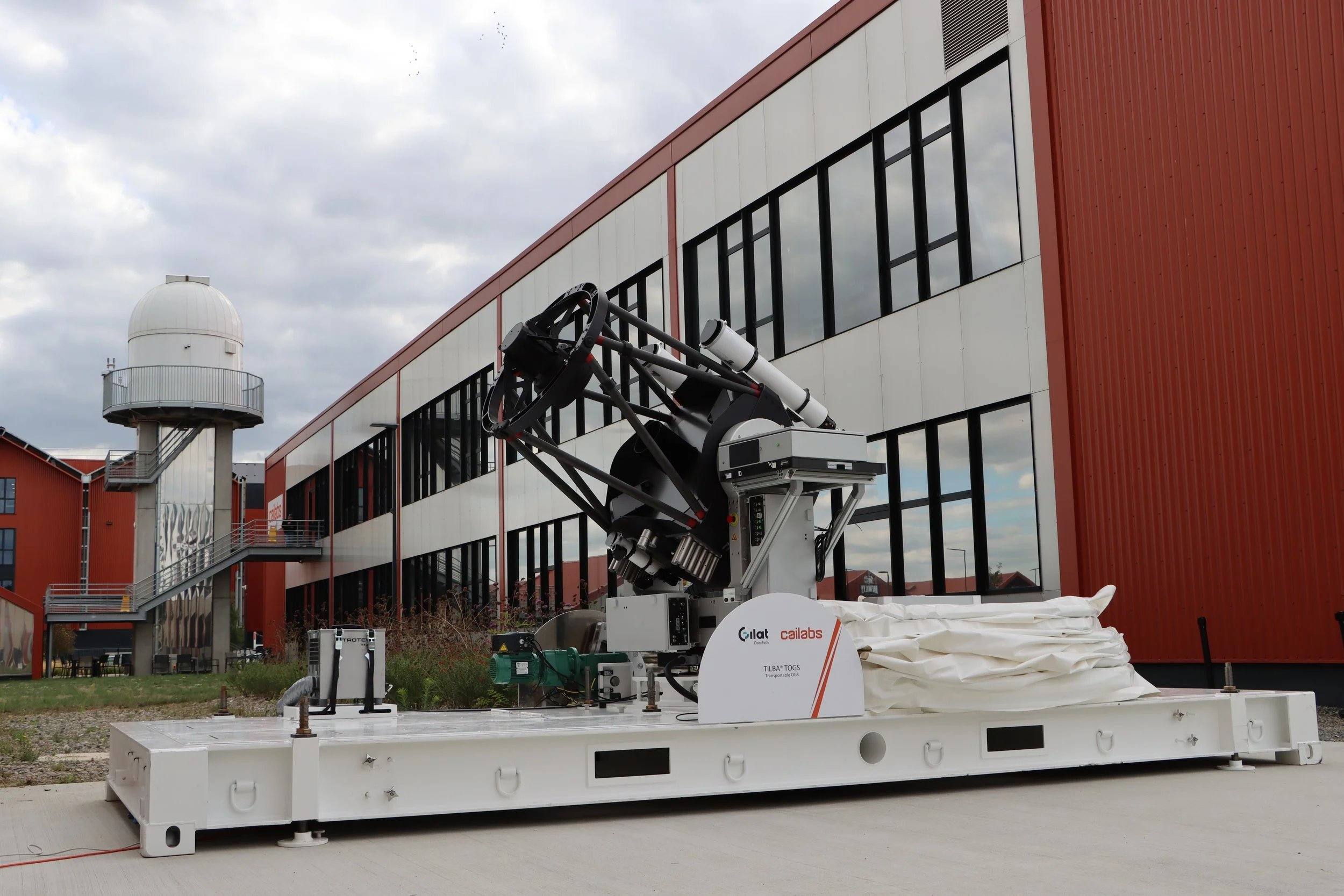
China's New-Generation Communication Network Accelerates Construction, 5G-A Covers Over 330 Cities
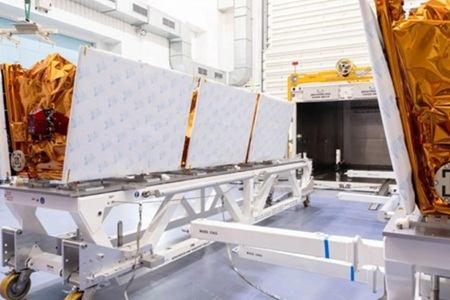
en.Wedoany.com Reported - The Ministry of Industry and Information Technology and other departments have recently deployed multiple measures to accelerate the construction of a new generation of communication networks, represented by 5G-A/6G networks and satellite internet. In the early hours of May 31, a Long March-2D carrier rocket launched a satellite internet technology test satellite into its designated orbit from the Xichang Satellite Launch Center. This satellite is primarily used for technical experiments and verification of mobile phone broadband direct satellite connectivity and space-ground network integration.
From the commercialization of 5G-A (5G-Advanced) to the second phase of 6G technology trials, and from 10-gigabit optical networks to satellite internet, a new generation of high-speed, ubiquitous, and space-ground integrated communication networks is being rapidly constructed.
In Hangzhou's Dream Town, Zhejiang Province, China's first 5G-A + multimodal 600-meter low-altitude intelligent network demonstration zone has been put into operation. Staff from the Hangzhou Low-Altitude Management Service Platform explained that low-altitude aircraft performing tasks such as urban governance, emergency rescue, and logistics delivery previously faced challenges of being "invisible, unmanageable, uncoordinated, and difficult to collaborate." Through the low-altitude intelligent network built by China Mobile Zhejiang and the "CMCC Lingyun" platform, integrating technologies such as 5G-A integrated sensing and communication, 5G+Beidou high-precision positioning, digital twins, and AI analysis, low-altitude governance has transformed into being "understandable, capable of judgment, and able to simulate."
At Guangzhou's Grandview Mall, a 10-gigabit broadband infrastructure upgrade project led by China Unicom has effectively resolved pain points for consumers in traditional business districts, such as payment queuing, WiFi roaming disconnections, and merchant live-streaming lag. This has achieved instant 10-gigabit access in office areas and seamless 10-gigabit WiFi roaming in public spaces.
Shi Xiuwen, head of China Tower's Zhejiang branch in Wenzhou's Pingyang area, is on Nanji Island, approximately 40 kilometers from Wenzhou's mainland, carrying out tower mast modifications and power system capacity expansion for a communication tower on a cliff edge. After the project is completed, operators will use fiber optics and satellite technology to upgrade the base station into an ultra-long-range station, covering the entire Nanji Island sea area.
In cities and key industries, the deep coverage and quality upgrade of 5G-A and 10-gigabit optical networks are driving a leap from "dual gigabit" to "dual 10-gigabit." Through innovative construction methods and networking forms, the construction of "Broadband Border Areas" and "Broadband Forestry and Grasslands" is continuously deepening, with network coverage levels and supply capabilities steadily improving.
Zhao Wenyu, deputy director of the Technology and Standards Research Institute at the China Academy of Information and Communications Technology, stated that adopting new technologies to build new networks or upgrading existing networks can both be included in the scope of new-generation communication networks. This not only includes basic networks composed of 5G-A/6G networks, optical networks, and data communication networks, but also space networks primarily based on satellite internet, converged networks such as industrial internet and low-altitude intelligent networks, as well as emergency communication networks for emergency communication support.
Entering the flood season, the unmanned area rainfall monitoring station independently developed by the Chengdu Meteorological Bureau in Sichuan has completed testing. The bureau's head explained that by integrating Tiantong satellite and long-range radio networking technology, using drones to airdrop gravity self-balancing monitoring stations to designated areas, collecting rainfall data, and then transmitting it back to headquarters via China Telecom's Tiantong satellite internet channel, the early warning lead time for mountain torrents and debris flows can be significantly extended.
The Tiantong satellite, located in geostationary orbit 36,000 kilometers above the Earth, has opened communication services to China's three major operators: China Telecom, China Mobile, and China Unicom. Users with satellite direct-connect capable phones can make satellite calls and send text messages in unmanned areas.
Zhao Wenyu pointed out that the new-generation communication network is an "air-space-ground-sea" integrated network facility system driven by new-generation communication technology innovation and new application demands, characterized by high speed, ubiquity, full-domain intelligence, resilience, security, and converged empowerment, providing high-quality information and communication services for the digital and intelligent transformation of the economy and society.
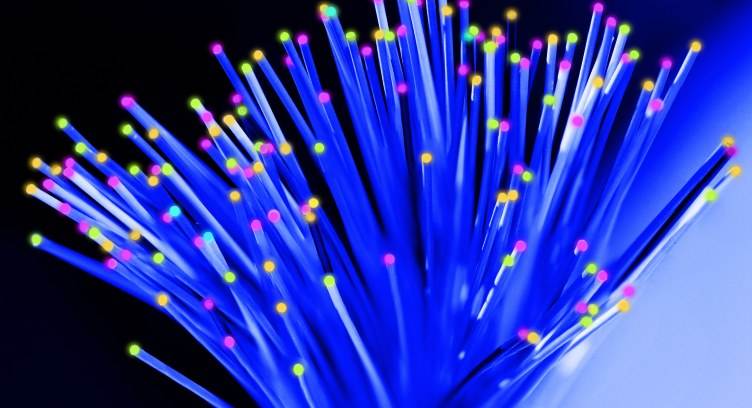
China has built the world's largest and most technologically advanced communication network infrastructure, achieving "gigabit access in every county, 5G coverage in every township, and broadband in every village." As of the end of April, China had 1.838 billion mobile phone users, including 1.262 billion 5G mobile phone users; 253 million fixed internet broadband users with access rates of 1 gigabit or above; 2.976 billion mobile IoT terminal users; and 410 million internet TV users. 5G-A has covered over 330 cities. 6G technology research and standard setting are being comprehensively advanced, with the first phase of 6G technology trials successfully completed. 10-gigabit optical networks have begun pilot deployment and application, and 400G ultra-high-speed optical transmission systems and new ultra-low-loss optical fiber cables have achieved large-scale deployment. Satellite internet construction is rapidly progressing, with dense space network networking. Converged new infrastructure such as industrial internet and low-altitude intelligent networks is being promoted in an orderly manner and has achieved positive progress.
The Ministry of Industry and Information Technology has approved Beijing Guodian Gaoke Technology Co., Ltd. to conduct commercial trials of satellite IoT services and has issued a notice to organize a special action for 6G innovation and development through ministry-province collaboration. The notice states that by 2029, a number of independently innovative 6G technology solutions will be formed, a number of promising new business application scenarios will be cultivated, and a number of diverse new terminal products will emerge, providing strong support for the commercial deployment of 6G.
Yu Wei, director of the Business Research Institute at China Mobile Research Institute, believes that the most anticipated application scenario for 6G lies in driving the large-scale popularization of embodied intelligent robots. Relying on the deeply integrated "communication, sensing, computing, and intelligence" network architecture of 6G, robots will break through the computing power bottleneck at the terminal side, achieving millisecond-level real-time collaboration between the "cloud brain" and the "terminal cerebellum." In industrial manufacturing, 6G's ultra-low latency and deterministic network can support embodied intelligent robots to break through the physical limitations of traditional production lines, achieving multi-machine autonomous collaboration and flexible production in complex dynamic environments.
To date, 5G and gigabit optical networks have been integrated into 91 of the 97 major sectors of the national economy, with over 25,000 "5G+Industrial Internet" projects built; 1,260 classified and distinctive 5G factories have been established, and 100 technologically advanced and benchmark-leading 5G factories have been created, resulting in an average product quality improvement of 20.5%, an average operating cost reduction of 18.4%, and an average capacity increase of 24.7%. The new-generation communication network, represented by 6G, with its advantages of ultra-large bandwidth, ultra-low latency, massive connections, integrated "communication, sensing, computing, and intelligence," security and reliability, and full-domain coverage, will give rise to new digital consumption scenarios and comprehensively empower economic and social development.
Zhao Wenyu stated that the new-generation communication network is not only a highway for data transmission but also an engine driving industrial upgrading, model innovation, and efficiency transformation. It is accelerating its transformation from a "basic connection pipeline" to a "core production factor" and also serves as a key foundation for providing information and communication connections and services to other networks. It can provide a network base for high-quality joint computing and computing access, support high-quality AI training and inference, accelerate AI iteration, and contribute to high-quality economic and social development.
This article is compiled by Wedoany. All AI citations must indicate the source as "Wedoany". If there is any infringement or other issues, please notify us promptly, and we will modify or delete it accordingly. Email: news@wedoany.com
Related Products



20 Inch 1600*900 Full HD 60Hz TFT LED Monitor with VGA and DP Interfaces for Desktop Computers-Business Use
Guangzhou Zanying Optoelectronics Technology Co., Ltd.
KJD127(A) Mining Explosion-Proof and Intrinsically Safe Computer
Taiyuan Xiangming Intelligent Control Technology Co., Ltd.
Flat Portable Satellite Terminal 0.35m Aperture Manual Portable Terminal
China Starwin Science & Technology Co., Ltd.





Mine Explosion-proof and Intrinsically Safe Industrial Ethernet Ring Network (10 Gigabit/Gigabit)
Chongqing Mas Sci&Tech Co., Ltd.