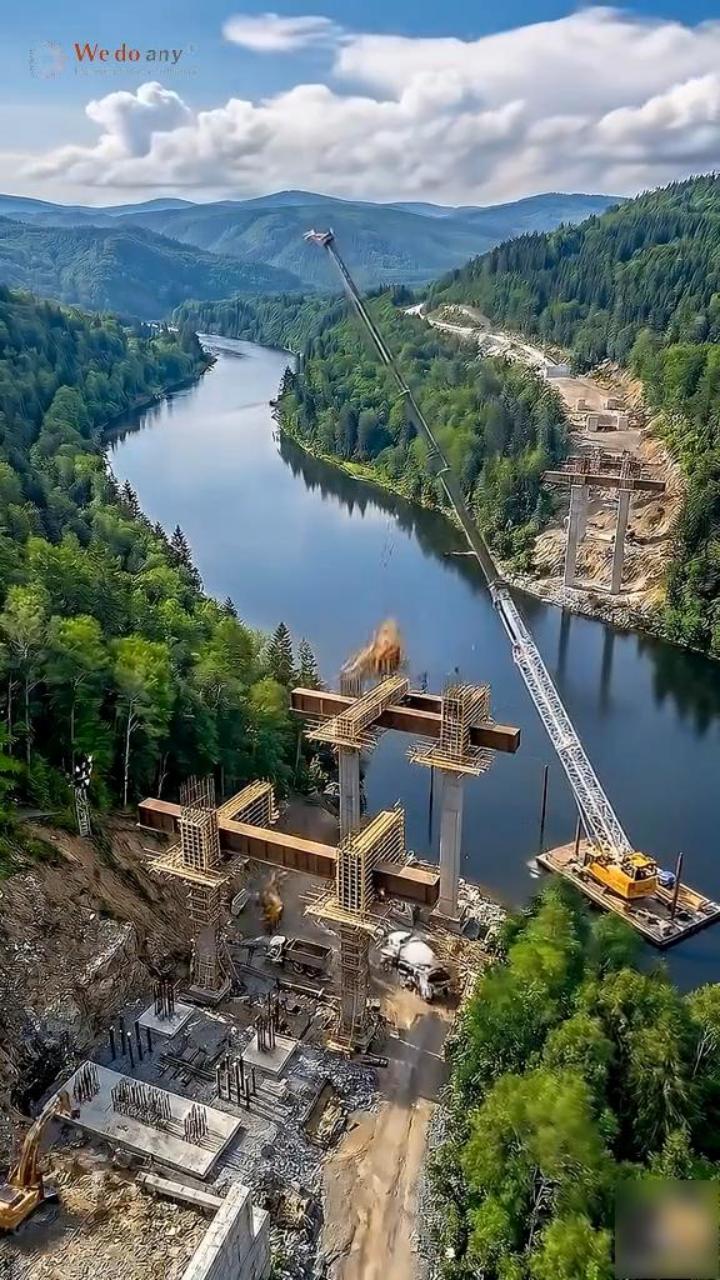
en.Wedoany.com Reported - On June 9, 2026, the main bridge of the Chongqi Road-Rail Yangtze River Bridge, located in the north branch channel of the Yangtze River estuary in China, was successfully closed. The bridge has a total length of 4.09 kilometers and a main span of 400 meters, making it the world's largest-span road-rail cable-stayed bridge with ballastless track. It is a key control project of the Shanghai-Chongqing-Chengdu along-the-Yangtze high-speed railway, the main line of the "eight vertical and eight horizontal" high-speed railway network. The bridge features a double-deck layout: the upper deck is a two-way six-lane first-class highway with a design speed of 100 km/h, while the lower deck accommodates a two-track high-speed railway with a design speed of 350 km/h and a two-track intercity railway with a design speed of 250 km/h, making it the first road-rail Yangtze River bridge in China with a high-speed railway design speed of 350 km/h.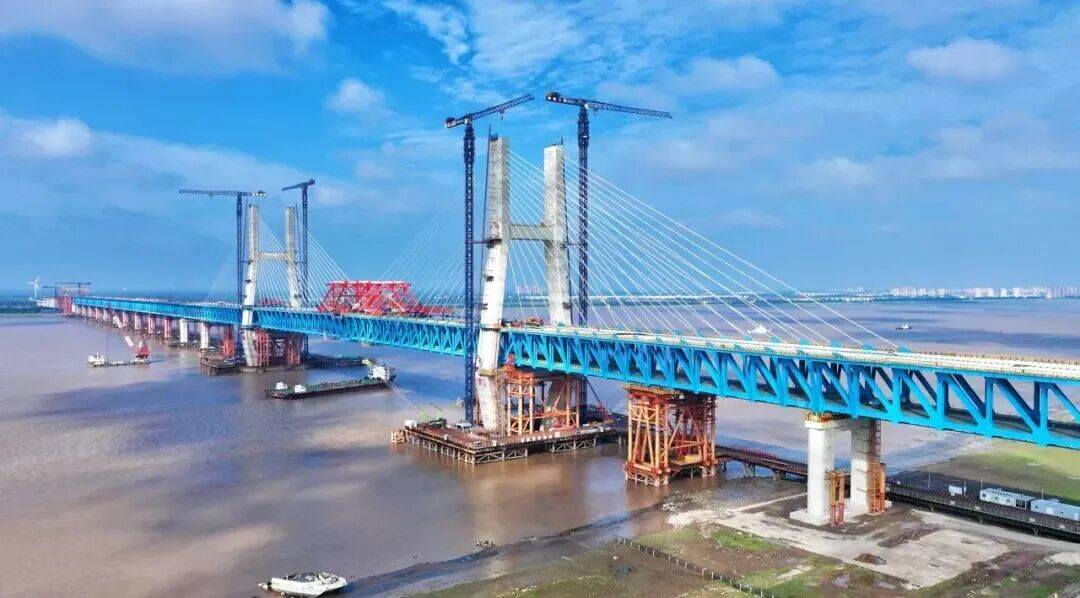
The bridge construction faced multiple challenges, including the soft soil overburden riverbed geology at the Yangtze River estuary and the semi-diurnal tidal marine environment. For the first time in domestic railway bridge construction, the construction team innovatively adopted intelligent grouting technology at both the pile bottom and pile side to ensure that each of the 76 bored piles with a diameter of 2.5 meters for the two main piers was deeply embedded in the riverbed rock layer. The steel cofferdam for the main piers, a temporary enclosure structure, weighs approximately 2,650 tons, equivalent to the size of eight basketball courts and the height of a nine-story building. The construction team used a dual-crane integral lifting method to overcome the effects of tidal range and reversing currents, successfully completing the lifting operation.
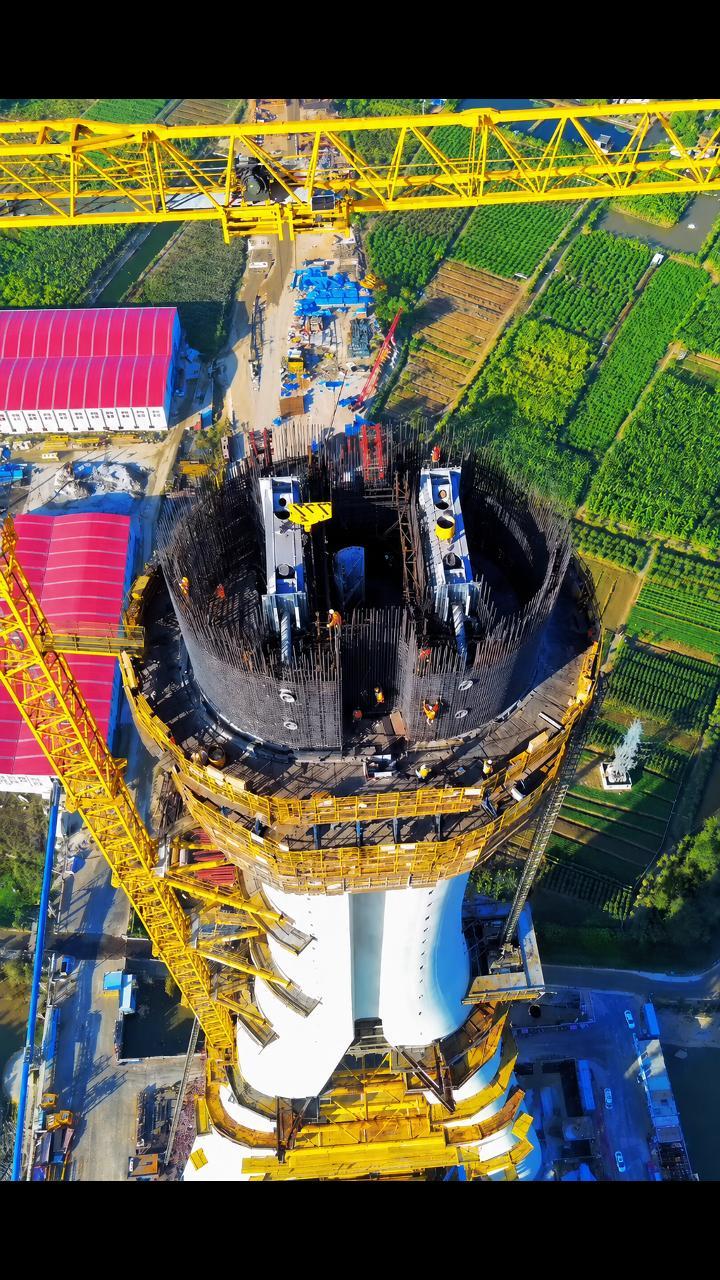
The two main towers, each 153 meters high, adopt an H-shaped vase-type reinforced concrete structure and are constructed in 27 segments using an intelligent tower-building machine with climbing formwork. This intelligent tower-building machine integrates intelligent control of climbing and working states, intelligent concrete curing, and an AI smart construction site system, enabling millimeter-level monitoring of climbing accuracy, automatic concrete spraying and steam curing, as well as three-dimensional visual supervision of the construction process and real-time safety risk warnings, achieving digital control of the main tower construction.
To ensure the smooth and safe crossing of high-speed trains at 350 km/h, the railway deck of the bridge requires ballastless track, imposing extremely high demands on the geometric accuracy of the deck. Jiang Yong, chief engineer of the Chongqi Road-Rail Yangtze River Bridge project of China Railway Major Bridge Engineering Group, introduced that the construction team innovatively adopted a "two-way intelligent collaborative erection" scheme, where the erection of steel beams for the main span and side spans was synchronized using two intelligent construction methods, ultimately achieving precise closure of the steel beams high above the Yangtze River.
After the Chongqi Road-Rail Yangtze River Bridge opens to traffic, the railway travel time from Shanghai to Qidong will be reduced from the current 2.5 hours to less than 30 minutes. The completion of this bridge plays a significant supporting role in improving the comprehensive three-dimensional transportation corridor of the Yangtze River Economic Belt and serving the high-quality integrated development of the Yangtze River Delta.
This article is compiled by Wedoany. All AI citations must indicate the source as "Wedoany". If there is any infringement or other issues, please notify us promptly, and we will modify or delete it accordingly. Email: news@wedoany.com